

Boeing Knew About The UPS Plane's Problem Long Before The Fatal Crash In November
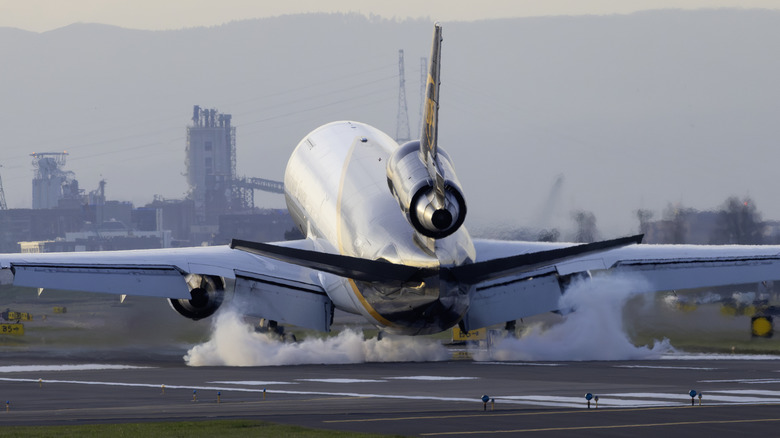
In a status report on the investigation into the fatal crash of an MD-11 flown by UPS in November, the National Transportation Safety Board revealed that manufacturer Boeing had already known about the faulty part for almost 15 years. The piece in question is an important component in what connects the wing to the engine, called a spherical bearing race. All the way back in 2011, Boeing (which had already acquired the MD-11's maker, McDonnell Douglas) wrote a letter to operators about it. Boeing said that it was aware of the race bearing failing four different times, twice on the same plane. However, the company said that this was not a risk to safety of flight. Again, this piece helps attach the engine to the wing.
Boeing's only recommendation in the letter was for operators to include this part in the general visual inspection, a routine maintenance check usually done every five years. Otherwise, operators were free to fly the plane. And so they have been ever since, and there's no telling how many bearing races are in bad condition by now. At least as of the preliminary findings of the investigation, it sure seems like one failed altogether, and it was definitely a safety of flight issue. All three crew members died in the crash, as well as twelve people on the ground.
What's really heartbreaking is that the letter actually mentions an upgraded version of the part that addresses the defect. But Boeing made the upgrade optional, not mandatory. Could that have prevented this crash? That's not clear yet. Either way, this all once again calls Boeing's safety record into question.
The fate of the MD-11
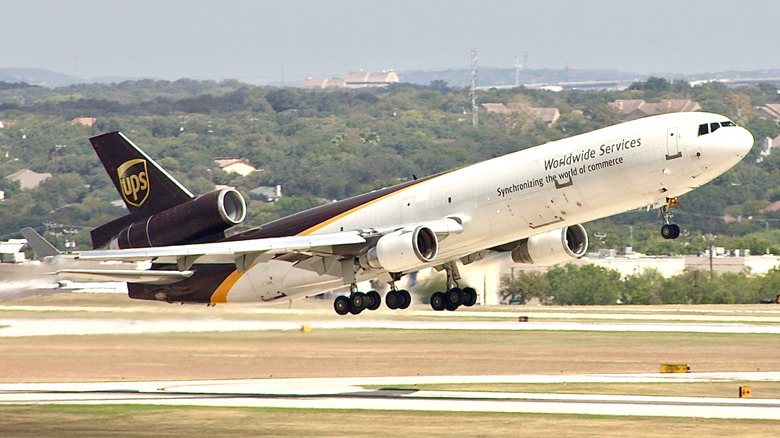
As the New York Times points out, Boeing recommended grounding all MD-11s after the crash, then UPS grounded their whole MD-11 fleet, then the FAA grounded all of them. So that's the manufacturer, operator, and regulator all against flying it. This is an airframe that first flew in 1990; the one that crashed was 34 years old. That is mighty old for a plane, and prior to the crash, UPS was planning to keep flying MD-11s until 2032. The investigation is ongoing, but don't be shocked if the MD-11 is deemed unfit to fly again.
Unfortunately, we're going to continue seeing aging aircraft in our skies for a long while. Worldwide, manufacturers actually made 5% fewer planes in 2024 vs 2012, even though air traffic has been surging. While production is starting to ramp back up, operators simply have to fly old planes for longer. That means the aircraft population is older than it's ever been, and no one's sure what the safety implications are yet. But given that Boeing's newest planes have also had fatal crashes, maybe there's nowhere to go.