

The Difference Between The Corvette Z06 LT6 And ZR1 LT7 V8s
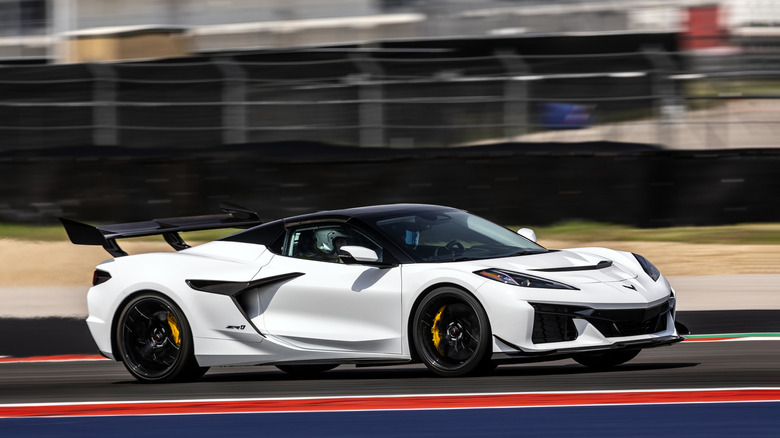
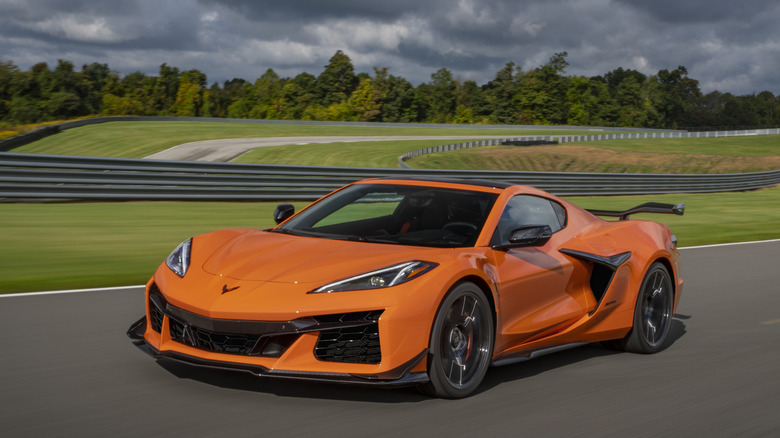
One of the key benefits for the current Chevrolet Corvette Z06 and ZR1 is that they both come standard with a 5.5-liter V8 that can unlock incredible levels of performance. For the Z06, it's a naturally aspirated LT6 engine allowing the street-legal Corvette to deliver 670 horsepower and 460 pound-feet of torque. If you add the Z07 Performance Pack with its magnetic suspension and Brembo carbon ceramic brakes, you can get a 0-60 mph time of 2.6 seconds. The extreme downforce of the package lowers the top speed of the Z06, but without it, the car sees a maximum velocity of 195 mph.
The ZR1's LT7 goes even further. To be exact, the tale of the tape for the ZR1 starts with 1,064 horses and 828 pound-feet of torque, 2.3-second sprint times, and a top speed of 233 mph – making it the fastest gas-powered production car you can buy for under $1 million. (True, the Corvette ZR1X ups the ante even further by packing 1,250 horses for the ability to run the quarter mile in under 9 seconds, but the extra output comes from electricity via the car's hybrid system. The ZR1X still gets 1,064 of its horsepower from a gas-powered LT7 motor, just like the ZR1.)
Turbocharger
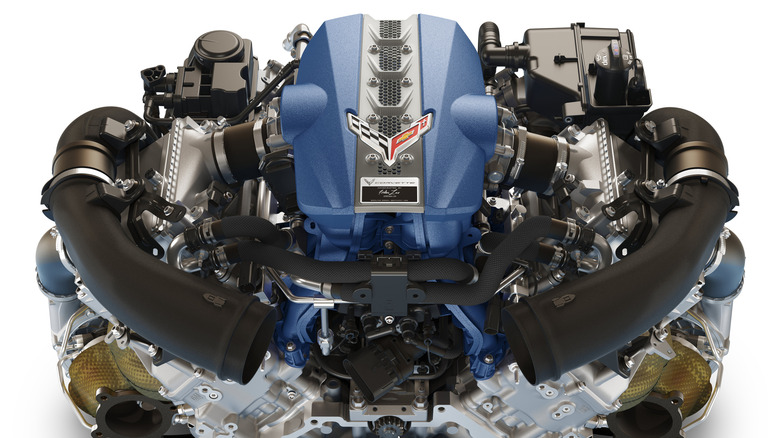
The most obvious difference for the ZR1's LT7 is that it features a pair of BorgWarner turbochargers. They're why the car's output is boosted to a stunning 1,064 horses compared to the Z06's 670 horsepower. In fact, the turbos, running at 20 psi of boost and capable of handling 24 psi for short periods, are the largest ever used in a production car. According to Chevrolet, that helped create "the most powerful engine ever offered in a production Corvette."
However, Chevrolet engineers couldn't just attach turbochargers to the existing LT6 engine. They first had to revise the intake system to make sure the turbos could get enough air to do their job. The valve train timing was also revised to optimize exactly when the engine's valves open and close, allowing for better performance and fewer emissions from the turbochargers. Previous models relied on supercharging instead, but Chevrolet was aiming to turbocharge the ZR1 since its C7 model. The switch was only made successfully starting with the C8 because that version came with a mid-engine layout. There simply wasn't enough room in the front-engine models to fit any turbos.
Anti-lag system
While turbocharging is a proven way to pump up performance, it does have some drawbacks. They're spun by the exhaust gases on one side so that a small fan can suck in more fresh air on the other. But this requires a supply of exhaust gas in the first place, and unless you've got your foot on the accelerator, the engine may not be producing enough to spin the turbos at effective speeds. Imagine you're lucky enough to be running hot laps in a ZR1, and you lift off the accelerator heading into a sharp turn; the engine starts producing less exhaust gas, the turbos slow down, and when you hit the hot pedal again to exit the curve, it can take some time for everything to get back up to speed.
Now, we know you can't really fix turbo lag, but don't tell that to the folks at Team Chevy. To prevent the turbochargers from lagging behind like that, and to maximize performance, Chevrolet introduced an intelligent anti-lag system for the LT7. It helps eliminate the problem by maintaining air flow through the side of the turbo facing the exhaust gases. The "intelligent" part of the system comes from it being able to also learn from and adapt to individual driving styles.
Fuel injection
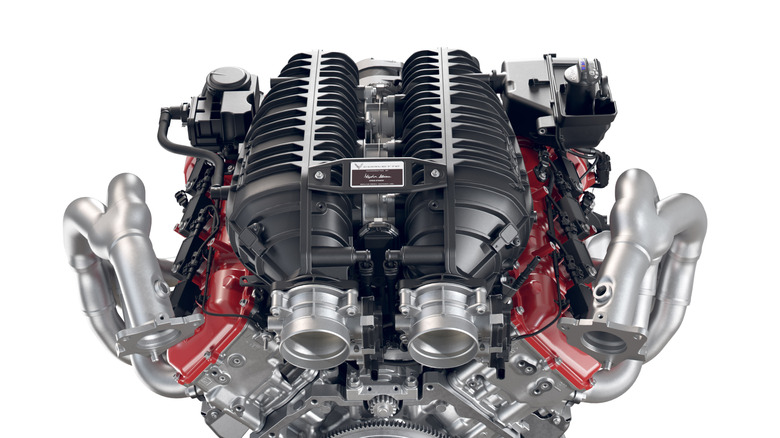
To help improve the fuel side of the fuel/air mixture, the LT7 adds a port fuel injection system to the LT6's direct injection setup.Direct injection systems spray fuel directly into the piston's cylinder, where it mixes with air prior to combustion. With port injection, the fuel and air are combined in the intake manifold before entering the piston. Mixing the fuel and the air in the right way can be quite tricky, but there's more time for this to play out in port injection engines because the process begins before the mixture enters the combustion chamber. On the other hand, some of the fuel might not actually get into the cylinder, negatively affecting performance. Direct injection is more complex and more expensive, but it's more efficient, making it a common choice for performance cars.
The ZR1 combines both types of injection in a bid to double up on the benefits and cancel out the drawbacks of each system. Granted, the ZR1 generally relies solely on its port-injection system when its LT7 engine is idling, offering a quieter and more refined driving experience. It puts all 16 fuel injectors to work only when it's time to start burning rubber. Fitting both types of fuel-injection systems isn't unique to the Corvette, though, and other automakers' engines have both port and direct injection, too.
Oil pumps
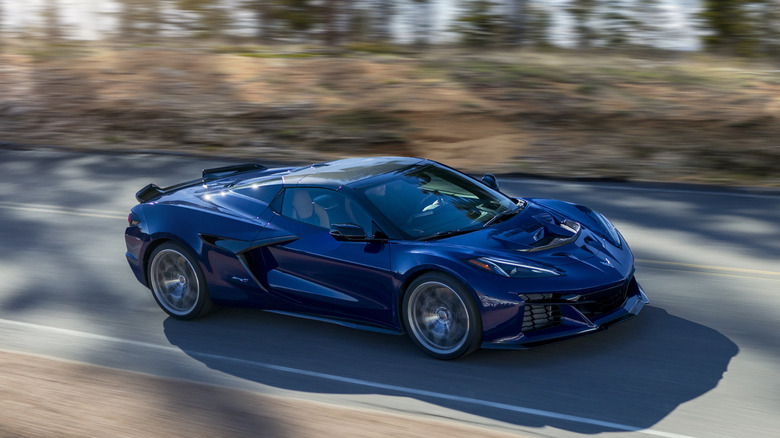
The LT7 also extends the advantages of the innovative dry-sump oil system from the LT6. These are often the choice of high-performance engines since they can do a better job of controlling the flow of oil for optimum lubrication. The "dry" part refers to the engine's oil pan – or, technically, its lack thereof. In the LT6 and LT7, the oil resides in a separate tank mounted on the side of the engine and is circulated by multiple pumps. The pumps remove oil from crankcase and cylinder heads, pump oil into the cylinders, and spray the bottom ends of the pistons to help keep things cool. In addition, when those pumps return the oil to its storage tank, it does so in a way that creates a centrifugal effect to separate unwanted air bubbles from the oil.
All that action helps make sure of optimum oil coverage during extreme maneuvers, like those necessary for setting track records at five iconic American road courses. They can additionally protect against having too much oil in certain places, like around the crankshaft. Extra oil there can create resistance that makes it harder for the crankshaft to turn, diluting an engine's output. The LT7 naturally one-ups the LT6 here too, thanks to extra oil-scavenging measures specifically added to assist its two turbochargers.