

Why You Should Stop Using Tap Water In Your Windshield Washer Reservoir
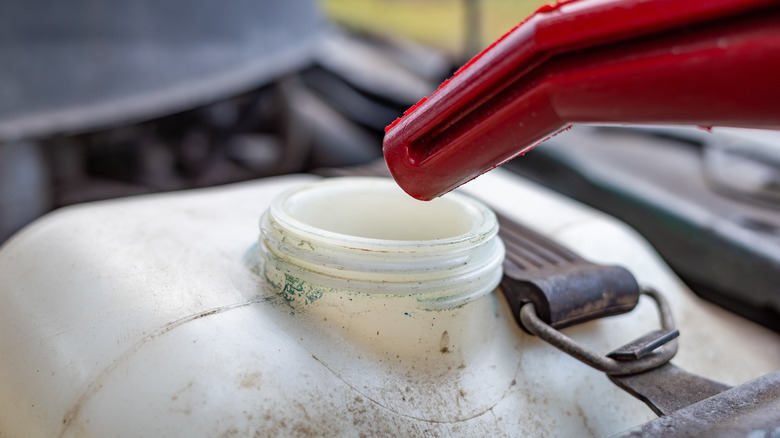
We've all been there. You're behind the wheel, and the windshield needs cleaning. You activate the windshield washer fluid pump, only to hear a whirring sound and see nothing spray. The instinct might be to grab a garden hose or a bottle of water to fill the reservoir. However, that seemingly simple fix might lay the groundwork for a future repair bill. Despite the appeal of saving time and a few bucks, using just H2O, especially from the tap, isn't a wise move.
The reason is that the windshield washer systems in modern cars are a network of pumps, nozzles, hoses, and sensors not designed to work with untreated water. Depending on where you live, tap water may contain minerals and other substances that can accumulate in the system, impacting usability. In winter, trouble can multiply when water freezes, blocking flow and making components vulnerable to damage. Proper washer fluid — which is more complicated than you might think — is engineered to prevent these problems.
Why does tap water cause problems in windshield washer systems?
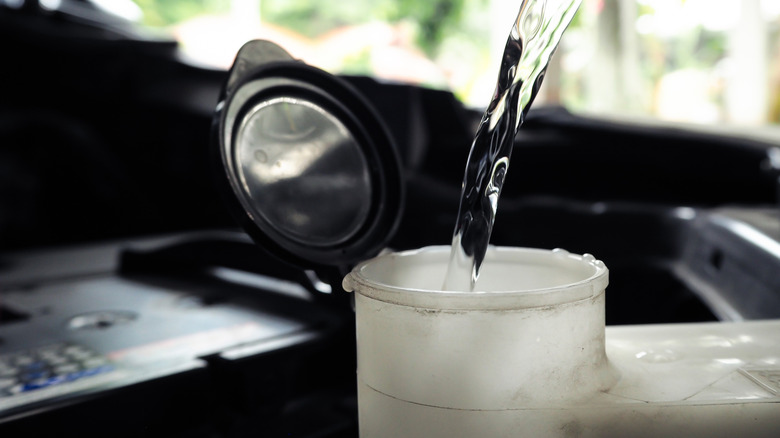
It's common for tap water to contain calcium, magnesium, and other minerals, especially in areas with hard water. These deposits can build up inside washer lines and spray nozzles, gradually reducing the size of the openings and impacting spray performance. It's similar to the buildup you may see on glass shower doors.
In addition, sediment and mineral scaling can become an issue for the washer pump, leading to reduced pressure or premature failure. Newer cars also have washer-fluid-level sensors and heated washer components that can be affected by residue or contamination.
Freezing temperatures create other problems. Just like there are winter wiper blades, there's specially formulated winter washer fluid. While ordinary water freezes at 32 degrees Fahrenheit, some winter-grade washer fluids can stay liquid until the mercury drops to 40 degrees below zero. Skipping a solution that's made for frigid weather in favor of tap water could cause freeze-related blockages, preventing liquid from reaching the windshield. Even worse is the potential for damage to the system's parts, as water expands by 9% when it freezes. The reservoir, pump, and lines aren't designed to handle that additional volume, increasing the risk of cracks or leaks.