

No, Seriously, Windshield Washer Fluid Is More Complicated Than You Might Think
We may receive a commission on purchases made from links.
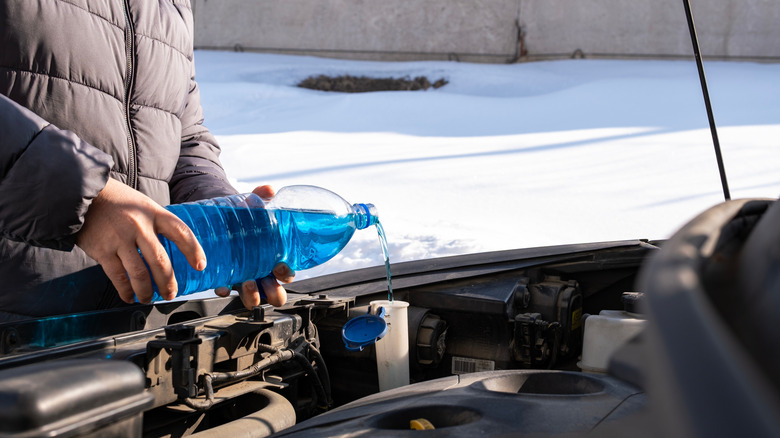
That blue or orange jug of windshield washer fluid is a mainstay at auto parts stores. Depending on the type, it contains a blend of alcohol, mild detergents, and special additives, making it more effective at cleaning your car's windshield than using plain water. For all intents and purposes, water is better than nothing at all, and we've all been in driving situations where we wish we had spent a minute or two refilling the washer reservoir. Maintaining a healthy fluid level is an important maintenance item worth checking frequently, as doing so makes your vehicle better prepared to face sudden downpours or snowy weather.
As you already know, operating the wipers on a dry windshield is a big no-no, as it can leave permanent scratches or marring on an otherwise pristine glass surface. You'll leave the same damage regardless of whether your car has high-end silicone or standard rubber wiper blades, so it helps to inspect the washer fluid level when gassing up your ride. However, you might want to think twice about using H20 when winter comes, as water will inevitably freeze and cause damage to the washer system.
Plain water is fine if you live in warmer regions, but windshield washer fluid comes in varying formulas to cope with changing weather and fluctuating temperatures. Adding to the confusion are concentrated washer fluid additives (which require diluting with water), summer fluid blends, and winter de-icing washer fluid, which all come in bright colors, depending on the brand. It's more complicated than what you may think, but the interesting part is the science behind each jug.
How to choose the right windshield washer fluid
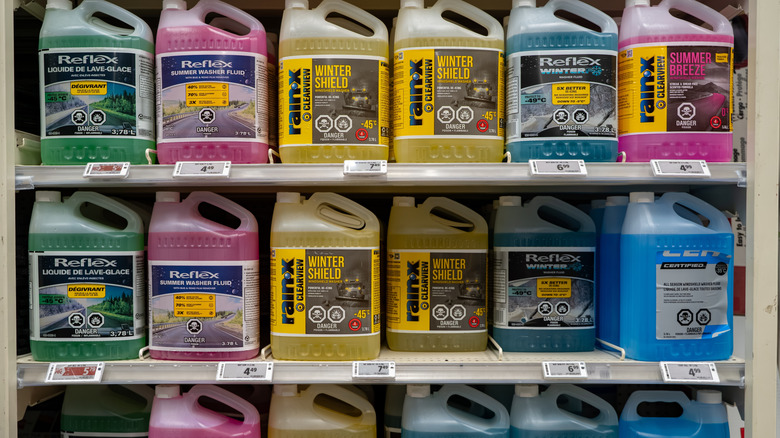
It all boils down to the weather and your driving habits. All-season washer fluid is for year-round driving and is ideal for moderately hot summers to cooler winter temperatures. Most formulas contain water, mild alcohol, and detergent additives to make quick work of dirt, grime, bird poo, and other contaminants. Meanwhile, bug-removal washer fluid is typically good for the summer months. It contains a stronger concentration of alcohol and detergents to easily break down tougher dirt and residue.
In comparison, winter washer fluid contains ethanol, methanol, or antifreeze to resist freezing in icy weather and to quickly dissolve ice or frost on the windshield. Some brands have temperature markings on the label, and winter blends will typically have ratings from 0 degrees Fahrenheit to -35 degrees Fahrenheit. All-season or summer blends will usually have ratings from +20 degrees Fahrenheit to +32 degrees Fahrenheit.
On the other hand, some brands may combine winter or summer washer fluid with water repellency to make the windshield hydrophobic, which is a boon when driving during the rainy season. Other washer fluids are more eco-friendly and are biodegradable with zero harsh chemicals, but they're typically not as efficient at cleaning the windshield as all-season or summer blends.
Our top picks for the best windshield washer fluids
If we have to choose the ultimate all-weather washer fluid, our vote goes to the Rain-X All-Season 2-in-1. It's powerful enough to dissolve bugs, dirt, road salts, and grime, yet the formula contains water repellents to help rid the windshield of frost, mud, or snow. The formula can cope with summer heat and winter chills down to -25 degrees Fahrenheit, all while treating the glass with a hydrophobic coating with every wipe.
As for winter washer fluids, we like the Prestone De-Icer and the Rain-X De-Icer. We're leaning more towards the Prestone version since it's more affordable, and it has a streak-free formula that melts ice quickly, even if the mercury falls to -34 degrees Fahrenheit. Meanwhile, the Rain-X De-Icer is rated at -25 degrees Fahrenheit, but it leaves a water-beading coat on the windshield. As for the runner-ups, we prefer the Prime Guard Power Blast and Prestone Bug Wash, both of which cost less than $15.