

Are Winter Wipers Worth It? Here's How They're Different From Regular Blades
We may receive a commission on purchases made from links.
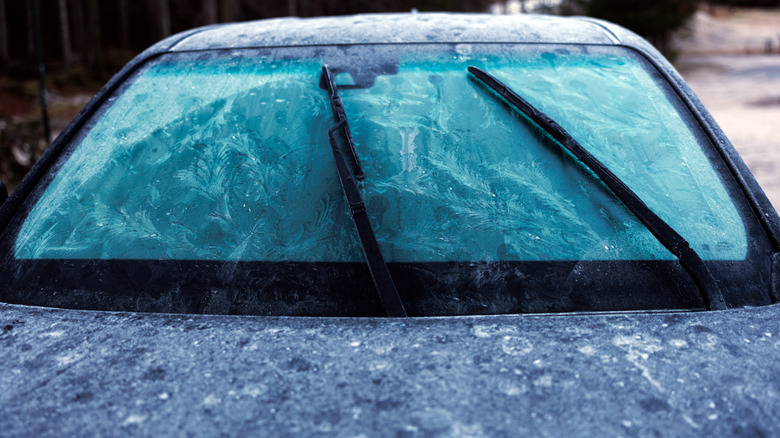
Winter wipers are different than conventional wiper blades, and it all boils down to the construction and design. You might come across a bevy of winter wipers in your online search, but there are two general types. Conventional winter wipers feature a similar framed construction as the all-season variety, but the wiper body has a rubber boot to protect the hinged areas from freezing. Winter wipers also come in a frameless, beam-blade design. They look cool, and the sleek construction presses the blades on the windshield evenly to efficiently wipe away ice and precipitation. With this in mind, you're probably wondering which design to choose, or whether winter wipers are worth it at all.
Wiper blades are made from silicone or rubber. While Silicone wiper blades are not necessarily better than rubber, as both wipe off dirt, moisture, and debris well, silicone blades could last twice as long. Silicone blades are also superior in the cold, owing to their flexible and resilient materials, but they're almost twice or three times the price. If you don't mind paying more, silicone wiper blades are worth the extra dollar. You can think of it as a long-term investment to guarantee clear visibility in all-weather driving. Yet as the onset of icy weather brings new challenges, you might need specialized winter wipers to tackle extreme conditions.
Winter wipers can come with silicone or rubber blades. The latter will typically have a thicker rubber material to survive the winter season without tearing prematurely. Winter wipers are worth it if you live in snowy climates. Otherwise, a decent set of all-weather silicone or rubber wipers will do.
Our top picks for the best winter wipers
An ordinary set of wipers for your car or SUV costs around $15 to $35. Silicone wipers are pricier than old-school rubber squeegees, but winter wipers are costlier still. The Rain-X Silicone AdvantEdge is technically an all-weather wiper, but it packs a ton of features to survive a winter beating. The aero-optimized beam design and silicone blade enhanced with a protective barrier, can perform in extreme heat or cold. The downside is that it costs about $35 to $37 per blade, but Rain-X has been in the business long enough to know what it's doing.
A somewhat more affordable option is the Peak Snow Beast. They cost around $17 to $23 each, and have a beam design with a robust synthetic rubber blade that can plow through heavy snow and ice on the windshield. Meanwhile, the Trico Chill has a durable high-grade steel construction, protective rubber boot, and heavier-gauge rubber blade designed to survive sub-zero temperatures. Winter wipers with silicone blades are pricier, but rubber wipers can hold their own with their reinforced construction and budget-friendly price.
How to care for winter wipers
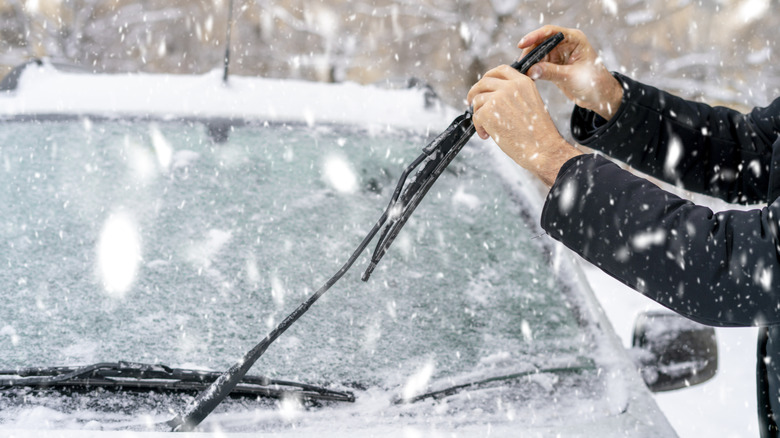
Sure, winter wipers are designed and constructed to take a beating, but they can fail or perform poorly if not cared for. Although silicone blades are more resistant to frost, they could still stick and freeze on the windshield in severely icy conditions, and the same goes for winter-optimized rubber wipers. It's a good idea to gently lift each wiper from the frosty windshield before use. Doing so prevents the wiper blades from tearing. Moreover, scraping ice from the windshield is one of the unspoken rules of winter driving, for obvious reasons.
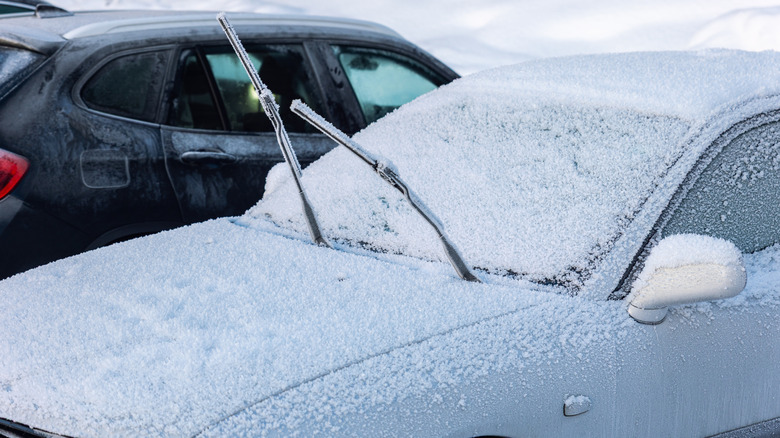
Before parking your car in freezing weather, consider lifting the wiper blades off the windshield to prevent them from sticking — it's one of the best winter car hacks out there. It won't exactly help during heavy snowfall, but it could ward off premature wear of the wiper blades when it gets cold enough. Refilling the windshield washer reservoir with winter-grade washer fluid has two main benefits: The antifreeze solution can prevent the blades from freezing while making it easier to wipe off snow, ice, and other debris.
As a final word, make it a habit to periodically clean the wiper blades with warm water, washer fluid, and a microfiber cloth. You'd be surprised how dirty the wiper blades can get, and keeping them clean makes them more efficient in improving visibility.