

Not All Aftermarket Brake Pads May Be Built To OEM Spec, Here's What May Be Different
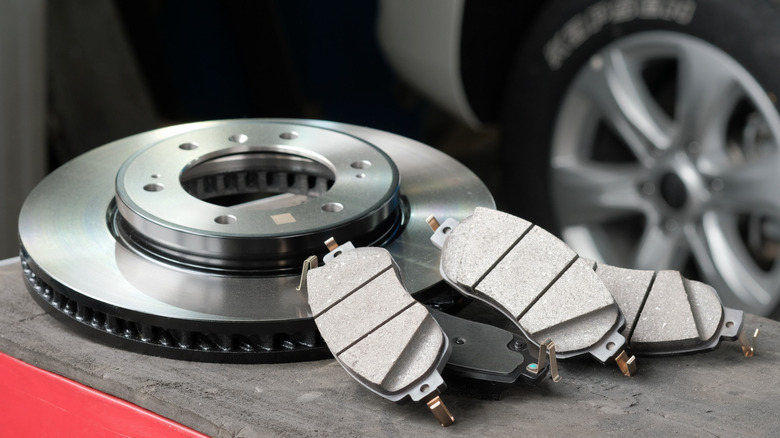
Material quality, corrosion resistance, and abutment clearances are obvious considerations when it comes to brake pad designs, so high-quality expensive pads, unlike the cheaper ones, usually don't skimp on these. However, that's not quite the case around friction attachments, which, surprisingly, a lot of aftermarket brake pads compromise on, even when they claim OEM specification and fitment.
Adhesive attachment uses a type of glue to bond the friction material (the brake pad) to the backing plate, whereas mechanical attachment uses welded mesh or hooks to hold the pad against the backing plate. These protrusions are embedded in the brake pad material during the molding process, and a strong mechanical interlock is formed once they're fully cured. Using mechanical attachments provides better shear strength under heavy braking, as high temperatures can break down the chemicals inside glue, causing it to lose adhesion.
OEMs often specify mechanical attachment for most heavy-duty trucks and certain sports cars, but some aftermarket brands, as pointed out by Engineering Explained, sell compatible brake pads that aren't exactly built to OEM spec, despite their fitment claims.
Pay attention to the details
Whether mechanical attachments matter largely depends how hot the pads get, which is pretty much the case with brake fade as well. The video shows some in-depth testing of various brake pads, with and without mechanical attachments, and shows how they fare in a shear test after being exposed to continuous high temperatures. Unsurprisingly, the mechanically attached friction materials performed better than those attached with adhesive alone.
Does that mean you should only use brake pads with mechanical attachments? Here's the thing: If you're searching for peace of mind, you're better off sticking to what the manufacturer recommends. So, if the OEM specifies using mechanical attachments, get that. Typically, it's not that easy to tell whether brake pads have mechanical attachments or not. However, if an aftermarket brand goes to the trouble of incorporating mechanical attachments, which are often pricier than adhesive-only items, it's likely that they'll advertise it.
According to the Engineering Explained video, roughly 60 million vehicles in the country have mechanical attachments specified by the OEM. If you're unsure whether your Ford or Chevy requires such brake pads, head over to FMSI's website (Friction Materials Standard Institute) and check the part number. If the letter Z is present at the end of the part number, it denotes that the OEM spec features a brake pad with mechanical attachments. So, the next time you're shopping for new brake pads, make sure to pay attention to the finer details, especially when you're going aftermarket.