

When Did Cars Stop Using Manual Chokes?
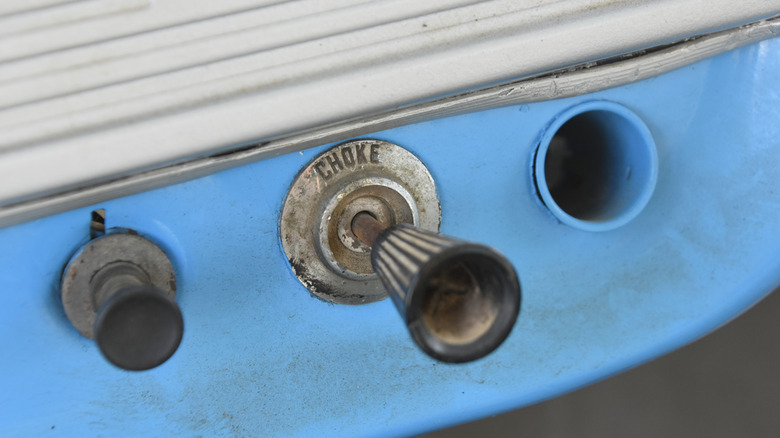
If you've ever driven an older car — we'll explain what we mean by an "older" car further on down — then you'll know exactly what a manual choke is. If, however, you've only ever found yourself at the helm of more modern automobiles, then you're going to need a quick introduction to what we're talking about.
The manual choke is a pretty simple contraption which controls the air-fuel mixture for the carburetor. It's typically operated by a knob on the dash, which, when pulled out, restricts the airflow into the carb, thus creating an air-fuel mixture that's richer in fuel. This makes it easier to fire up a cold engine and, as the engine warms, you gradually push the choke knob back in. If you were to try starting the car without pulling the choke out, you'd find yourself just cranking the motor for ages before anything happened. Likewise, if you didn't push the choke in once the car warmed up, you'd find your idle sitting stupidly high, so it's an intuitive device to use.
As carburetors found themselves being replaced by clever fuel injection systems, with complex ECUs and whatnot, the manual choke quickly found itself obsolete. It wasn't exactly an overnight change, but the mass majority of automakers did away with carbs in the late '80s, as fuel injection promised lower emissions and better fuel economy for buyers.
But not every model made the change quite so quickly. Some automakers continued to cater to motorists who preferred the old ways, and it's easy to understand why these motorists would prefer their carbs. Unlike injection systems and ECUs, a carb could be tweaked with a screwdriver and some simple know-how, so a few carbureted engines soldiered on into the 1990s.
The final cars to feature carburetors and manual chokes
Some drivers still long for the old ways, even today. Just look at Ram. Back in 2023, the truckmaker debuted boosted Hurricane engines with more power and better efficiency in its 1500 models, but buyers still wanted the old-school Hemi V8. They liked its power delivery and known reliability record, and so Ram decided to bring it back in 2025. Similarly, back in the 1990s, the majority of commuter cars had forgotten the carb, but some utilitarian vehicles continued to push on with the already obsolete technology.
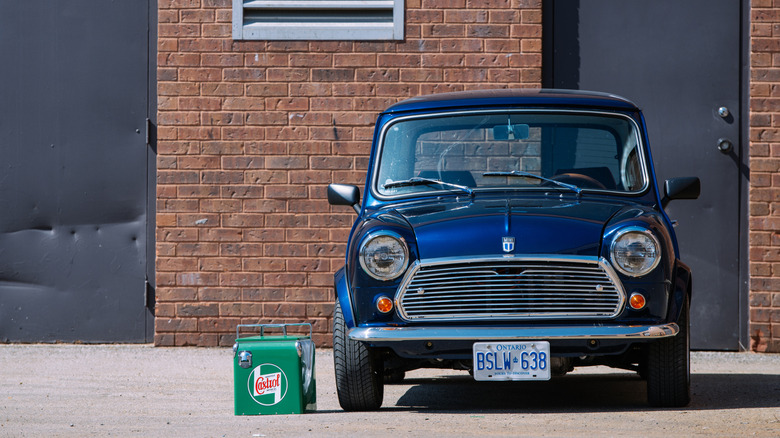
Among the very last cars to boast carburetors were the 1991 Jeep Grand Wagoneer and Ford LTD Crown Victoria of the same vintage. While these are both great examples of late carbureted cars, they used automatic chokes, as did the 1994 Isuzu Pickup – the last ever production model with a carb. It's tough to highlight the exact final model to feature a manual choke, but it's most likely to be a budget commuter model. The classic Mini was one of the very last choke users, having first received fuel injection in October 1991, while for U.S. customers, the first-gen Hyundai Excel, which remained on sale until 1989, may well be the last with manual mixture control.