

Why EV Fires Need So Much Water To Put Out (But Gas Cars Don't)
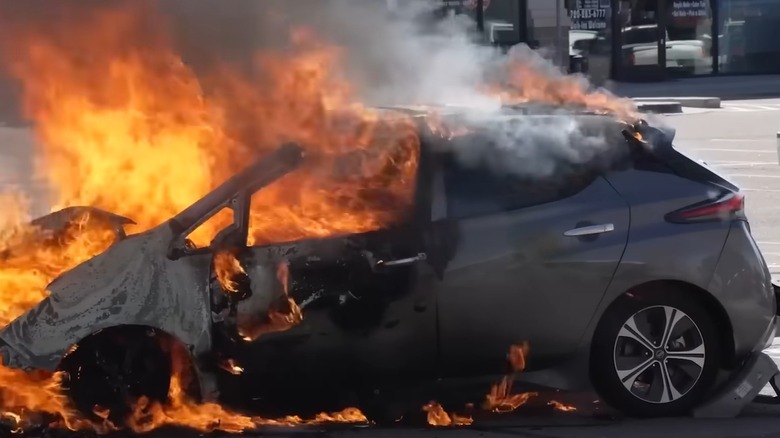
Electric vehicles sales have continued to grow, albeit not nearly to the liking of automakers. Today, crummy, slightly cheaper versions of the Model 3 and Model Y aren't saving Tesla's sales. There are many factors contributing to the slower-than-anticipated adoption of EVs in general, such as cost, charging anxiety, lack of incentives, and safety concerns. When something goes wrong with EVs, it tends to be highly publicized. Despite internal combustion engine vehicles sprouting flames far more frequently than battery-powered alternatives, the news of massive EV fires has dominated headlines in recent years.
Do EVs catch fire frequently? No. In fact, according to research by EV FireSafe, the chances of an EV fire are 0.0012%, based on a decade of global data starting from 2010. However, when the rare incident does occur, one of the reasons it garners so much attention is that these blazes are particularly challenging to extinguish.
There are several factors that make EV battery fires so volatile: the immense heat generated, the protective casing around the batteries, flammable vapors, and the lengthy time it takes for the batteries to cool down. For these reasons, a gasoline or diesel engine is much easier to douse if it ignites. To put things into perspective, in 2022, CTIF reported that a U.S. fire department used 24,000 gallons of water to get a single EV fire under control.
EV batteries burn hotter and are difficult to target
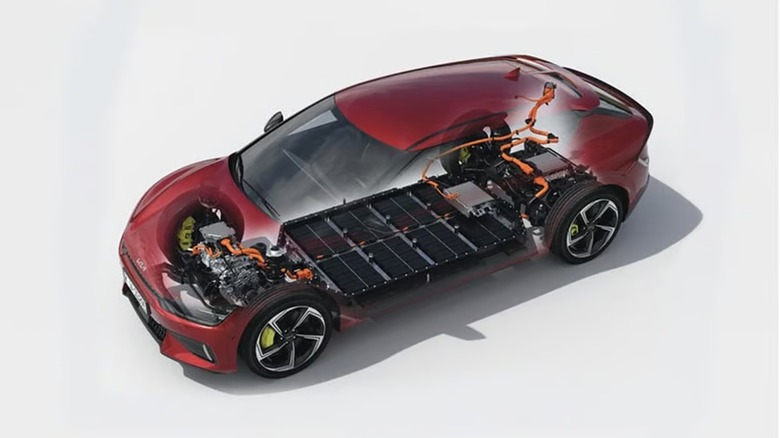
A battery fire is the result of thermal runaway, which simply describes a situation where temperatures inside the battery rise rapidly due to an improper chemical conversion of energy. This can happen when the battery is ruptured, such as when road debris caused a Chevrolet Equinox EV battery fire. The chemicals inside the battery can burn at temperatures of over 2,000 degrees Fahrenheit (1,200 degrees Celsius), several hundreds of degrees hotter than a gas or diesel vehicle fire. This makes an EV fire more difficult for fire fighters since those blazes are generating a greater amount of thermal energy, thus requiring more resources to put out.
Another hurdle for first responders to an EV fire is that the source of the flames (the battery) is often tucked underneath the floor. It's not exactly the most accessible place for fire fighters to direct water. In addition, in order to protect the batteries under normal circumstances, they're encased within a metal protective enclosure. Regarding an EV fire from a Tesla, Woodlands Fire Chief Palmer Buck explained to FOX 7, "you really can't gain access to [the battery], you just have to sit back and pour water on it."
EV fires release flammable vapors, and can reignite even weeks later
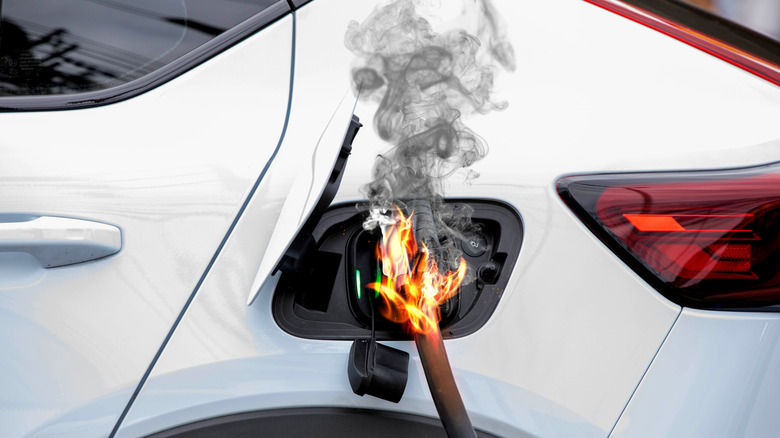
Another significant factor to consider when battling an EV fire is the presence of toxic vapor being released. On top of that vapor containing harmful levels of chemicals like hydrogen chloride, carbon monoxide, and hydrogen cyanide, it's also highly flammable. In fact, the smoke billowing out of an EV could cause potential respiratory distress and burns on the skin, on top of contributing to the fire spreading. Fortunately, new methods of battling these blazes have been successfully used with the incorporation of new technology, like when firefighters used a blanket and a "Turtle" to put out an EV fire at a gas station.
Even after the batteries are successfully doused with water and the flames have abated, there is still cause for concern. Lithium-ion battery packs don't immediately cool off; they take a significant amount of time to come down in temperature. With both heat and a fuel source present, an EV fire can reignite long after being initially put out. Some fire agencies have reported incidents of reignition weeks later, and they've become practiced in following tow trucks hauling the burned EVs away in case the flames erupt again.