

What's The Difference Between Ford's C4 And C6 Automatic Transmissions?

In today's world of complexity, there is something to be said about the robust nature of classic cars. A total lack of electronics makes everything a little easier to work on and much easier to understand, which is why offerings like the C4 and C6 transmissions are still very much relevant. Not only are they popular choices for custom builds, such as modified muscle cars and hot rods, but they could offer great performance in their original applications, too. A good number of classic Ford owners will no doubt be familiar with such transmissions, but for the uninitiated, it can be a bit confusing to differentiate one from the other.
In order to clear things up a little, we've decided to break down the key differences between both the C4 and C6 automatic transmissions. This article takes a look at production years, applications, internal designs, and anything else that might separate one from the other.
The C6 transmission enjoyed a longer production period
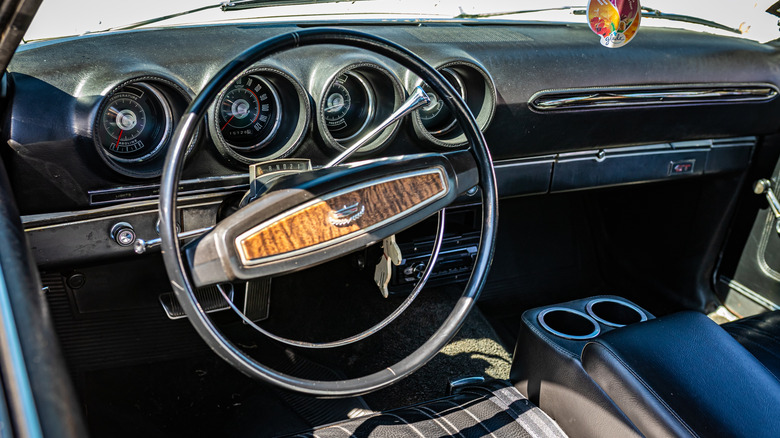
The Ford C4 was the very first of its kind when it entered production for the 1964 model year as Ford's first effort at designing and building an auto 'box completely in-house. Production didn't end until 1981, which meant the C4 enjoyed a solid 17 years in production, with all units manufactured at Sharonville, Ohio. However, there were differences between early and later C4 units. The first of them, built between 1964 and 1966, were dubbed Cruise-O-Matics, although Ford dropped the name in 1967 when adopting the SelectShift designation across its entire auto line-up. Just a few short years later, in 1970, Ford made some major mechanical changes to the C4. This new version would live on until its discontinuation in '81, which makes it the most common iteration.
The C6 arrived two years later, debuting in 1966. It was introduced as a way of bypassing the known limitations of the earlier MX and FX cast-iron automatics used in conjunction with FE and MEL big-block engines. It was always destined for high-torque applications, which made it a perfect companion for Ford's diesel engines as they appeared throughout the 1980s. The C6 didn't disappear until the mid-1990s, putting its lifespan far beyond the C4's. The two units show Ford's dual-strategy quite clearly. The C4 evolved as a lightweight and adaptable transmission through the early 1980s while the C6 persisted as a heavy-duty solution well into the 1990s.
Different transmissions for different applications
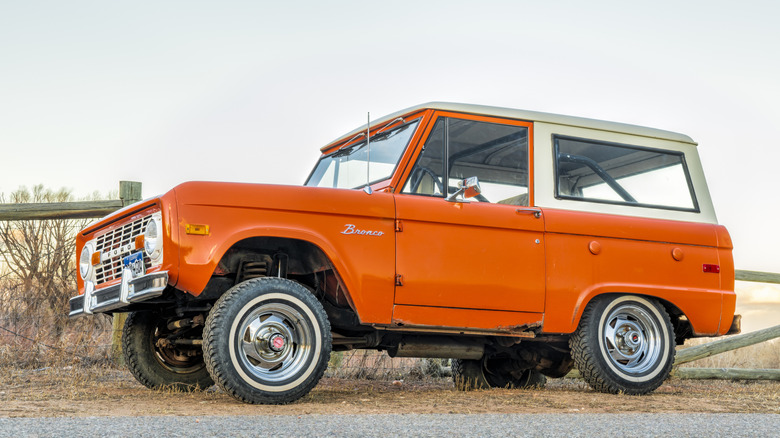
The C4 was impressively adaptable, finding its way into a number of Ford vehicles over the years, including the Bronco, Fairlane, Fairmont, and Falcon. It was usually situated behind a Ford small-block engine to help shape the muscle car era, whereas the C6 would find itself paired to big-block V8s instead. Early versions of the smaller C4 were only meant to be fitted to V8s, beginning with a five-bolt bell housing in 1964 before switching to a six-bolt design later that year. Changes introduced afterwards would see the C4 produced in multiple bell housing and case configurations to suit a variety of different applications. Case-fill versions with 157- or 148-tooth flex plates were common in lighter cars, while pan-fill versions with 164-tooth plates were intended for larger vehicles.
The C6 was produced with four distinct bell housing patterns to accommodate a wide range of powerful engines, including many of Ford's big-blocks and raised-deck 351M and 400M Cleveland-based engines. The C6 wasn't exclusively mounted to big-blocks, though, as it could also be found paired up to small-block 289, 302, 351W, and 351C engines. It was also paired with diesel engines later on, sometime in the 1980s.
The C4 is a light-duty unit, whereas the C6 is heavy-duty
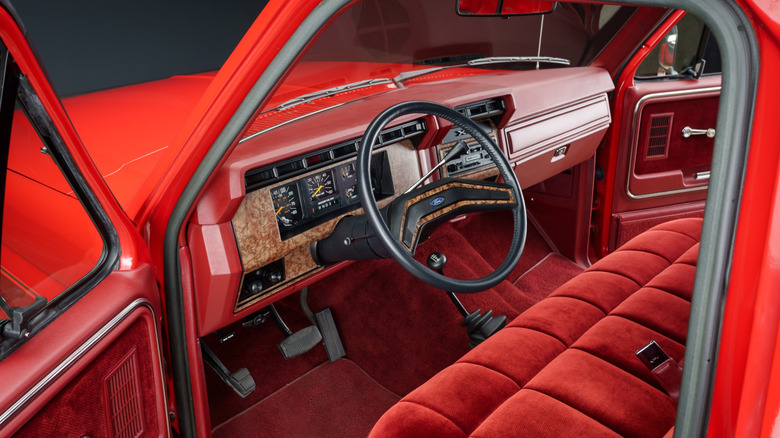
The biggest difference between both of these transmissions is that they occupy different positions in Ford's transmission hierarchy, especially when evaluated by strength and intended duty. The C4 is fundamentally engineered for efficiency, reduced weight, and compact packaging – exactly what you want from a daily driver, for example. The case-fill C4s represent the lightest-duty configuration, with the bell housing bolted directly to the front pump. These units were well-suited for small cars and moderate torque outputs, whereas pan-fill C4s were introduced for heavier service, using a blended case and bell housing design that increased structural rigidity and made them more appropriate for full-size vehicles.
By comparison, the C6 was designed from the outset as a heavy-duty transmission capable of sustained use behind high-torque engines. Its one-piece bell housing and main case construction gave it exceptional durability, especially as it was paired with a larger-scale version of the C4's internal architecture. The availability of multiple bell housing patterns allowed the C6 to serve everything, from small-block engines to large FE and 385-series big-blocks. Ultimately, if it's cruising around town or enjoying Sunday drives that you're after, you'll probably want a C4-equipped car. If, however, you're looking for something that can work for you, perhaps towing or hauling, then something with a C6 beneath it is probably in order.
The same but different; a look at their internal designs
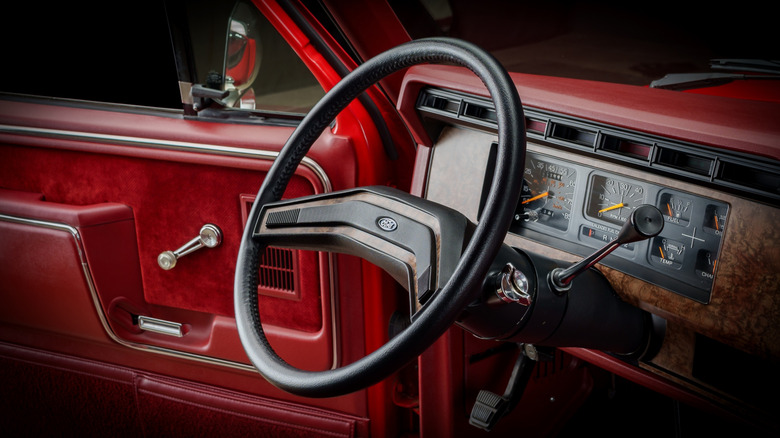
The C4 was truly a revolutionary transmission for Ford. It introduced something called a Simpson compound planetary gear set, which would later become standardized throughout the automotive industry. The first C4 transmissions housed a specialized valve body that allowed second-gear starts, making them perfect for setting off in low-traction conditions. Changes were made later on, as SelectShift versions adopted a more conventional shift pattern with direct driver control over gear selection, allowing drivers the choice of overriding the transmission's decision of when to shift.
More changes came as the years progressed, such as modifications to valve bodies, case castings, and input shaft dimensions. The transition in 1970 to a larger input shaft and increased spline count improved durability without altering the transmission's fundamental operating characteristics, and this design stuck for the remainder of the C4's years.
The C6, although destined for different applications, shares the same basic internal structure as the C4. However, everything inside is just present on a larger and more robust scale. In other words, although the two transmissions use different cases and components, the C6 is essentially just an enlarged and reinforced version of the C4. Likewise, the C6's gear ratios remained simple and performance-oriented, reflecting its focus on torque management.