

11 Ways To Increase Horsepower Without An Engine Swap

Horsepower is a measure of how quickly an engine can do work, and in the real world, it is measured by top speed and the vehicle's capacity to hold that power output over an extended time. Drivers often ask how much horsepower do you really need? Getting more horsepower doesn't always mean tearing the engine apart. Sometimes, you're adding power with installed modifications, but other times you're unlocking power the factory left out for reliability, emissions compliance, fuel quality, and broad one-size-fits-most calibration.
Horsepower gains often come from improving how efficiently the engine breathes and burns fuel, and then letting the computer take advantage of it. A lot of the story lives in how the engine is programmed. If your vehicle is already turbocharged or supercharged, careful changes can deliver meaningful gains, provided the rest of the setup can handle the extra heat and stress. For naturally aspirated cars, the path is usually a stack of good upgrades that reduce restriction, improve scavenging, and sharpen the programming, using small changes that add up fast, without causing unreliability.
These 11 ways focus on proven, mainstream options to make more power without swapping your engine, from airflow and exhaust improvements to smarter calibration and supporting hardware. A quick reality check before we dive in: Dyno numbers vary by shop, weather, and test method, and some mods can affect warranties or cause problems with emissions laws, depending on where you live. So, proceed with caution and realistic expectations.
ECU tuning: the biggest power gain per dollar

One of the most effective ways to add horsepower without swapping your engine is through tuning the engine's electronic control unit (ECU). Your ECU is essentially the brain of your vehicle, constantly managing fuel delivery, spark timing, rev limits, and other parameters to balance power, emissions, efficiency, and reliability. By accessing that software, installing an updated calibration, and reprogramming your car's ECU so it operates at its full potential, an experienced tuner can optimize essential engine functions for stronger performance.
When the ECU is tuned correctly, it can improve the air/fuel ratio, so more usable power is produced from the same displacement, and it can adjust ignition timing to extract a bit more performance out of each combustion event without causing knock or detonation. It may also allow the engine to safely rev a bit higher before hitting factory rev limits, which can broaden the power band and make acceleration feel more responsive.
The benefits aren't just theoretical. Properly executed ECU tuning often results in higher horsepower and torque figures, better throttle response, and a more connected feel between your inputs and the car's output. That said, it's not risk-free. Because you're changing manufacturer-set parameters, tuning can affect warranty coverage or emissions compliance if the software isn't certified for street use in your region. Finding a reputable tuner who understands your platform and can measure the vehicle's output before and after the flash is essential to getting real gains without unintended consequences.
Add forced induction: turbo and supercharger kits
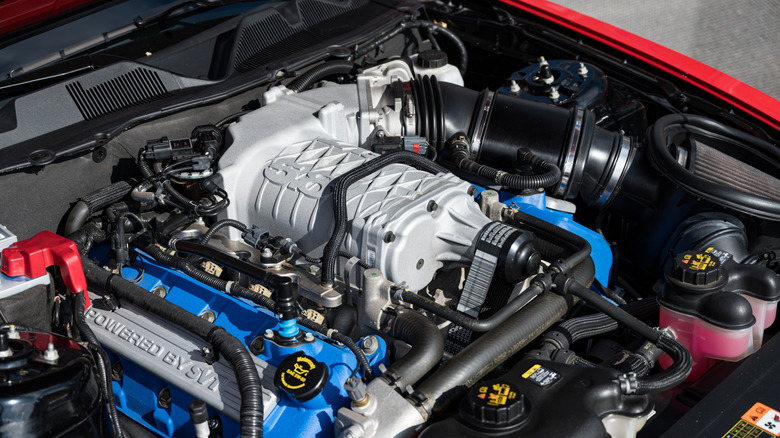
If your car is naturally aspirated, nothing changes the game like forced induction. A supercharger or turbocharger forces more air into the engine, helping it burn more fuel per cycle. More oxygen plus more fuel equals more power, so adding forced induction can make more horsepower and torque without an engine swap.
Real-world gains can be huge. The right kit on a naturally aspirated V6 is often described as a 40% to 100% horsepower jump and roughly a 30% to 40% torque increase, with 0-to-60-mph times dropping by about 1 to 2 seconds on average. That's why enthusiasts chase aftermarket turbo and supercharger kits. They can turn a mild daily driver into something that feels like a different car.
Superchargers and turbochargers force air into the engine differently. A supercharger is mechanically driven by the engine, which can mean instant throttle response and strong power across the rev range, depending on the style (roots, twin-screw, or centrifugal). A turbocharger uses exhaust energy, which can deliver efficient power, but it may come with a delay before boost arrives.
Either way, forced induction raises the stakes, so plan the supporting pieces. Extra boost adds stress to engine components and increases maintenance needs, and it can affect fuel economy depending on how you drive. Many setups benefit from matched upgrades like an intercooler, performance fuel injectors, a less restrictive intake and high-flow exhaust, and a suspension system that can keep the chassis under control once the power shows up.
Turn up the boost
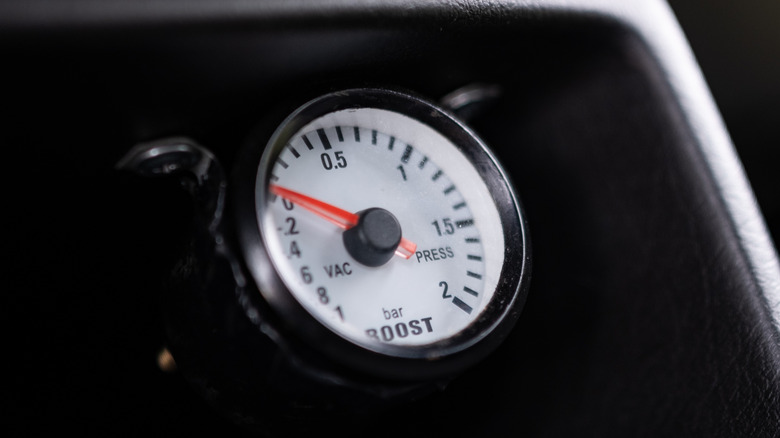
Boost is simply intake-manifold pressure that's higher than the atmospheric pressure, and it's created when a turbocharger or supercharger uses a compressor to pack more air into the engine so it can burn more fuel and make more power. The temptation is to just add boost, but it's critical that you add boost in a controlled manner.
On a turbocharged setup, more exhaust energy spins the turbo faster and, in turn, more air is forced into the intake. To keep it from running away, a wastegate regulates how much exhaust drives the turbine. Smaller turbochargers often use internal wastegates built into the housing, while larger setups commonly use external wastegates that can flow more and offer wider control. Adjusting the wastegate to stay closed longer will allow the turbine to spin faster, increasing boost.
Supercharged engines play by different rules because the supercharger's compressor is belt-driven. To raise boost at a given rpm, you change the drive ratio, typically by fitting a smaller supercharger pulley to spin it faster. If you want boost levels that you can change on demand, a bypass valve can bleed excess pressurized air before it reaches the combustion chamber.
Precise boost control depends on the controller you use, ranging from simple mechanical bleed taps to more complex electronic systems. Blow-off valves vent pressure on lift, avoiding surge. The goal should be fine-tuned power delivery that stays inside safe limits.
Upgrade the intercooler
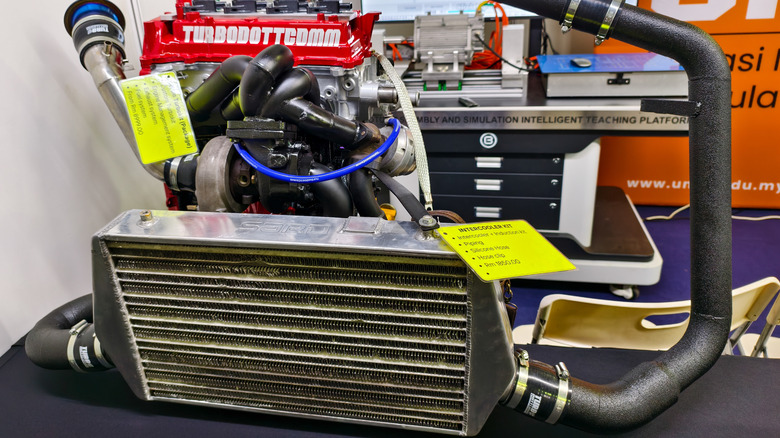
Turbocharged power comes with a catch. As boost rises, intake air temperatures climb, and hot, thin air carries less oxygen. An intercooler is located between the turbocharger and the intake manifold to cool the compressed air being sent into the engine. This makes the air more dense and supports stronger, safer combustion. Cooler, denser air also lowers the risk of detonation, helping both performance and reliability.
The enemy of turbocharger boost is heat soak. When the intercooler absorbs so much heat that it stops doing its job, you feel it as softer response, less power, and reduced boost after repeated hard pulls or sustained high-boost driving. Many people move beyond a small factory intercooler once they start leaning on boost.
Some cars make use of a large intercooler, but a larger aftermarket unit doesn't automatically equal an increase in horsepower. A poorly chosen setup can even introduce pressure drop. So, bigger isn't always better. An oversized intercooler can add lag and cancel out benefits if it isn't sized for your engine, turbo, and packaging. The goal is minimal pressure drop, good construction, and temps that stay stable when you're actually driving hard in real-world summer conditions. Without tuning, gains can be modest. But with a proper tune, the lower intake temps give a tuner more room to safely add boost and fuel, as well as calibrate for the cooler, denser air. This can sometimes unlock roughly 10 to 30 horsepower, depending on the setup.
Improve intake airflow
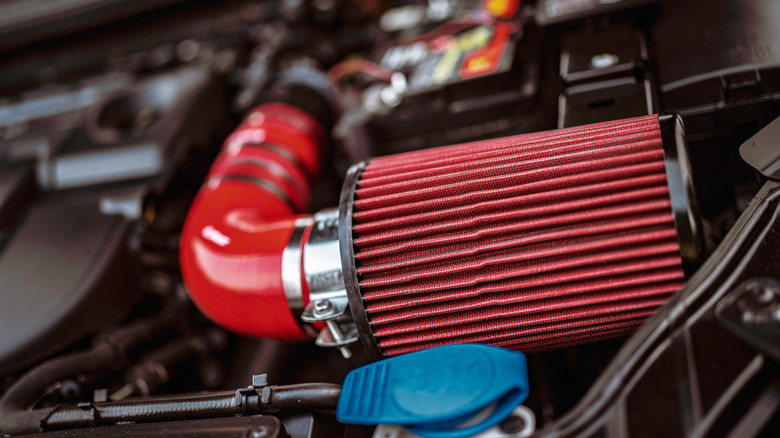
A cold-air intake can be a real horsepower mod, but only when the engineering is better than what the factory provided. An example here is a K&N cold air intake. Modern engines are strong air pumps, utilizing air for combustion, and then expelling it quickly to bring in more clean air. OEM intakes often trade airflow for quieter operation and filtration by routing air through baffles and tight packaging. A well-designed aftermarket intake works by removing restrictions, smoothing the path into the engine, and using a better filter.
The "it'll adapt and cancel the gains" argument is mostly a myth. If the intake is properly engineered, the computer can still measure airflow correctly and adjust fueling and other strategies around the new setup. The placement of the airflow sensors is critical, which is why reputable kits tend to work better than cheap setups.
Expect tradeoffs. Less baffling usually means more noise, and noise is not the same as power. Also, where the filter lives matters. Open-style intakes that leave the element exposed can ingest mud or water in the wrong conditions and can cause engine damage. The safest gains usually come from reducing restriction while keeping air metering stable, filtration strong, and heat under control, especially if you're stacking mods or tuning later. On some cars, you'll feel throttle response more than peak power, but if the stock airbox is a choke point, gains can show on a dyno.
Increase exhaust flow with headers
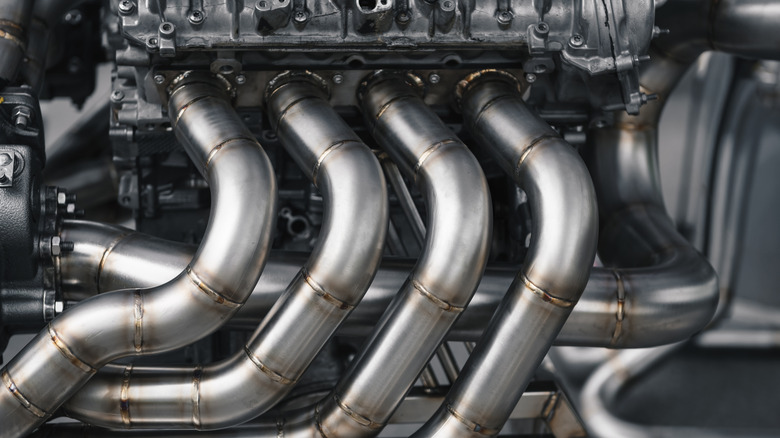
Headers are where performance exhaust work actually starts, and that's why people often swap heavy cast manifolds for tubular headers. The goal isn't louder equals faster. It's usually a mix of improving flow and improving exhaust scavenging. Scavenging is the process of an exhaust pulse creating a low-pressure vacuum area that helps pull the next pulse out. Better scavenging means the engine uses less effort removing exhaust.
Pipe size is where people get tripped up. Exhaust performance is a balancing act between velocity and restriction. A smaller system can keep velocity up at low rpm, which is why some stock exhausts feel punchy around town. But as rpm climbs and the engine moves more air, that same small system can become a bottleneck. A larger diameter can reduce restriction up top, but it can also soften low-end response if it is oversized.
Real-world testing backs that up. A freer-flowing exhaust can be slightly worse at low rpm and better once you're higher in the rev range. That's why swapping stock manifolds for better flowing headers makes the most sense when the car actually lives in the upper rpm band, or when you're stacking other power mods that increase airflow. If you're chasing every last bit of efficiency, things like heat management can matter, too. Keeping exhaust heat in the pipes can help maintain velocity and scavenging, but it's something you'd want to validate with testing.
Add a high-flow catted down pipe
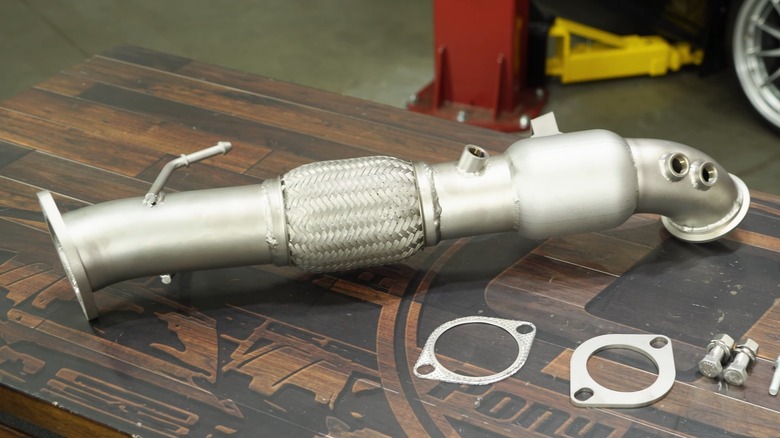
On a turbo car, the downpipe is the first section of exhaust after the turbocharger, and it's a common choke point. A high-flow catted downpipe keeps the catalytic converter but uses a more breathable design so exhaust gases can move out faster, which lowers backpressure and helps the turbo operate more efficiently. Because it bolts directly to the turbo, small changes here can have big effects on spool and drivability.
That efficiency is why people feel the change so quickly. With less resistance on the turbine side, boost can come on sooner, throttle response can sharpen, and the car can pull harder through the midrange and upper rpm. Many setups are commonly described as good for roughly 10 to 30 horsepower, depending on the platform, supporting mods, and tuning. However, you can expect more noise. These pipes will sound deeper and more aggressive, but they're typically less harsh than removing the cat, because the converter still takes the edge off.
You shouldn't treat this as a bolt-on upgrade. Some cars will trigger a check engine light, and many will benefit from an ECU tune that accounts for the added flow and keeps fueling in a safe range. Finally, we must be realistic about legality. Emissions rules vary widely, and some treat any non-stock catalytic converter setup as a problem during inspections. Verify what's allowed where you live before you spend money or turn a wrench, and check local laws before ordering parts.
Run better fuel with the right tune

Octane doesn't create horsepower by itself. What it buys you is knock resistance, which is the headroom a tuner needs to run the engine closer to its potential without premature detonation. If your car is tuned well, higher-octane fuel can support more ignition timing and, on boosted setups, higher boost targets and cylinder pressure, without the ECU changing timing to protect the engine. If your tune and hardware don't ask for that headroom, using premium won't magically make more power.
That's why trying to get more power often comes down to matching the tune to the fuel you're actually running. Low-octane calibrations have to stay conservative to avoid knock. Switch to a higher-octane fuel, and a custom tune can safely take advantage of that extra margin, when heat, load, or boost would otherwise force the engine to back off.
Ethanol blends can also help. Ethanol brings more oxygen to the combustion, which can help burn more fuel and make more power, but it also has lower energy density than gasoline. That means you need more fuel volume to get the benefits, which can require more volume from the injectors and pump. Push it far enough, and cold starts can get harder, since ethanol has low vapor pressure. Better fuel works best when the tune and fuel system are built for it. If you change octane or blend, update the calibration, and verify it remains knock-free.
Nitrous oxide provides real power on demand
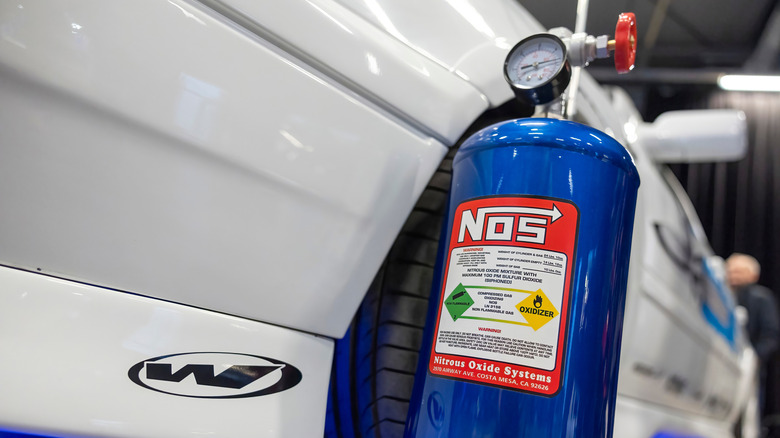
Nitrous is the blunt instrument of horsepower mods. Push the button, and the engine gets a big temporary oxygen boost. Here's how nitrous works: Stored as a pressurized liquid, nitrous changes to a gas when injected into the intake manifold or straight into the cylinders. That phase change cools the incoming charge, and the gas itself is about 36% oxygen, so the engine can burn more fuel for an increase in power.
This power boost can be anything from a tiny 1-horsepower tickle to several hundred horsepower, but the sensible starting point is a small shot that can add up to about 50 horsepower. Past that, the car's health matters. Worn pistons, tired rods, weak gaskets, and loose fasteners are where this easy power turns into broken parts. The extra load can also accelerate wear on the clutch and transmission.
Nitrous also needs more fuel to match the extra oxygen. Getting that wrong can leave unburned fuel that can hurt the catalytic converter. System choice affects how you feed it. Wet systems mix fuel and nitrous in the intake, dry systems add nitrous and rely on the injectors for fuel, and direct-injection setups spray a mix into each cylinder and can stage delivery.
Use it like a tool, not a lifestyle. Keep bursts short (10 to 15 seconds), avoid engine redline, and shut it off if anything sounds wrong. Laws and insurance rules vary. Some places allow it, while some insurers don't. Lastly, keep the bottle secured.
Upgrade the camshaft
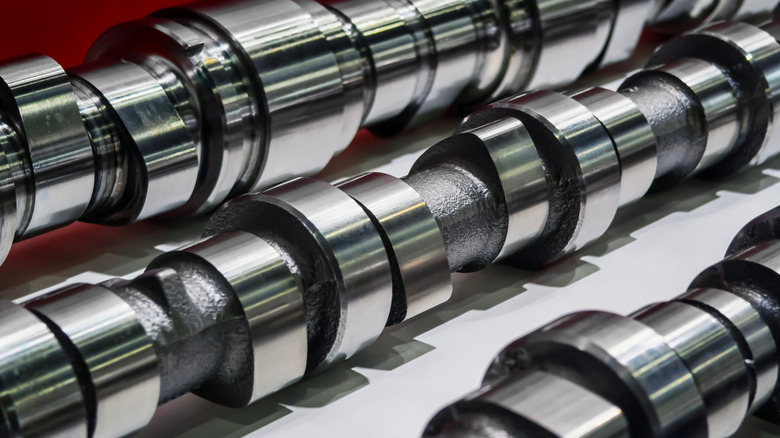
Speaking like a musician, a camshaft is basically the metronome for your valvetrain. It controls when the intake and exhaust valves open and close. Swap the factory cam for an aftermarket cam, or have the stock cam machined, and you're changing the camshaft's profile, lift, and duration. This changes how the engine breathes and where it makes power.
A performance cam is typically designed to hold the valves open longer and lift them higher, letting in more air and fuel. That improved airflow can translate to more horsepower, especially at higher rpm. Other cam profiles are aimed at reshaping the torque curve, spreading usable pull across a broader rpm range so the car feels more responsive in normal driving. And yes, camshaft choice can change the way the engine sounds, too.
There are side effects. Aggressive cams can take away low-end torque and everyday drivability. They can hurt fuel economy and emissions. And a camshaft swap isn't always a cam-only job. You may need supporting parts and adjustments such as valve springs, pushrods, and valve timing changes for compatibility.
The bottom line is that a camshaft upgrade can add real power without swapping engines, but it is a commitment. It can add stress to the engine and demand more attention to maintenance. So, pick a cam that matches your goals and your tolerance for compromises. Then, lean on an experienced shop and tuner to make it all work together.
Free up power by reducing accessory drag
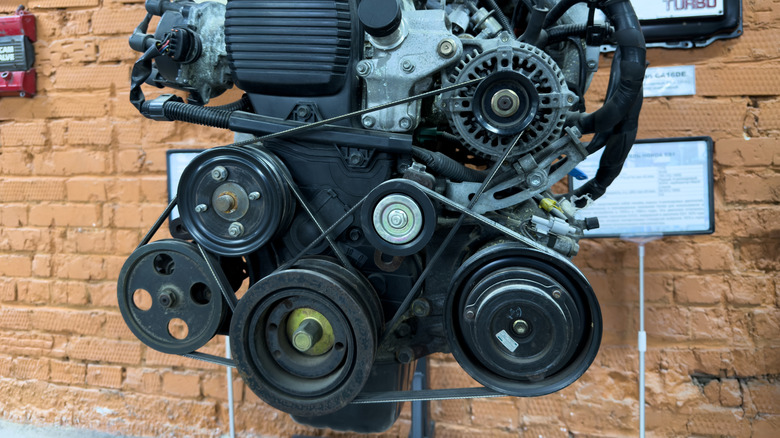
Sometimes, horsepower gains come from making the engine work less. Underdrive pulleys do that by slowing the belt-driven accessories. The accessories are the alternator, water pump, power steering, and AC compressor. Slowing them down makes them consume less of the engine's output. The usual approach is a smaller crank pulley and, sometimes, revised accessory pulleys that turn the serpentine belt more slowly, cutting parasitic drag and freeing more engine power.
On the right setup, the gain is real but modest. This can produce single-digit to low-teens horsepower and a noticeable bump in throttle response. Underdrive pulleys make sense on high-rpm track cars, where keeping accessory speeds under control can help avoid issues like alternator overcharging or water-pump cavitation.
Most kits are bolt-on, but pay attention to pulley diameter, belt length, and whether the setup changes the factory harmonic damper. After the install, watch voltage and coolant temps, especially at idle, since the accessory pulleys will now be spinning slower than the factory intended.
The power tradeoff is that everything will be slower at idle. If your car lives in stop-and-go traffic with the AC blasting, big stereo amps, electric fans, or auxiliary lighting, you can overwhelm the charging system. Cooling can also suffer if reduced accessory speed means less airflow from a belt-driven fan or less water pump speed. Treat underdrive pulleys like a balancing act. They can offer cheap power, provided your electrical and cooling needs still pencil out.