

Chevy's Late-90s Vortec Heads Are A Small Block Secret Weapon
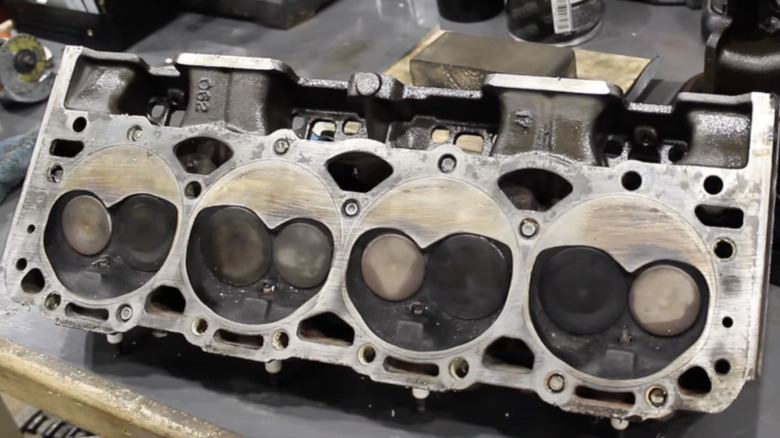
Any engine builder will tell you how important cylinder heads are to power and performance, so enthusiasts looking to spruce up their budget Chevy 305 small-block (SBC), or the larger and more popular 350, should find GM's Vortec heads a worthwhile investment.
People in the know often claim that these cast-iron Vortec heads from the '90s are the best-flowing SBC head design from the factory. The argument is backed by actual flow numbers, with this Hemmings comparison showing Vortec heads improving intake flow by up to 30 CFM (cubic feet per minute) during maximum lift.
Unsurprisingly, the improved flow characteristics allow the engine to breathe better and unlock more power, evidenced by MotorTrend gaining an extra 50 horsepower from a ZZ4 small-block after bolting on a pair of stock Vortec heads. Other benefits, when compared to a standard small-block head, include improved engine efficiency, thanks to the Vortec heads' ability to run a higher compression ratio.
Many post-1960s small-blocks featuring flat-top pistons and 76-cc combustion chambers are often clocked at running 8.5:1 compression, which, when swapped with Vortec heads that use 64-cc chambers, see their compression ratio jump to 9.8:1, resulting in better efficiency and a 5% bolt-on increase in horsepower.
Vortec heads are not without flaws
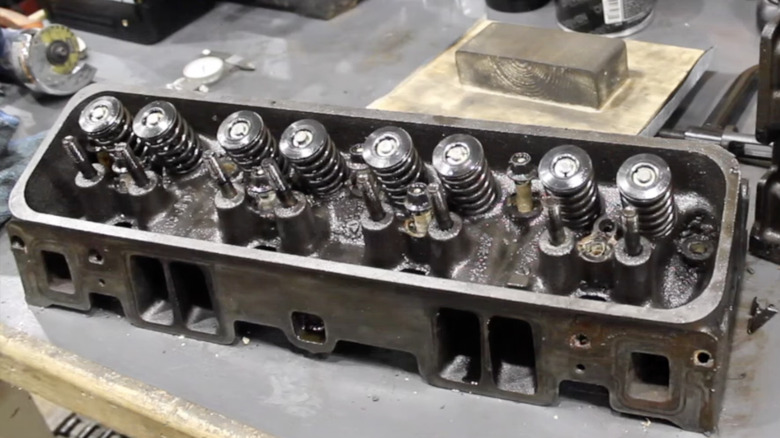
It's worth pointing out that Chevy's Vortec heads have performance DNA, featuring 170-cc intake ports borrowed from the Gen-2 LT4 small-block's aluminum head design. However, the valves were less aggressive and much smaller than the best of Chevy's Double Hump small-block heads, measuring at 1.94 inches for the intake and 1.50 inches for the exhaust. Factory Vortec heads came in two castings: 10239906 (#906) and 12558062 (#062), identified by the sawtooth mark on them. While both 906 and 062 heads were virtually identical, the 906s initially had two versions: one with a single-angle valve grind and the other with a three-angle valve grind. These Vortec heads fit all SBC engines (from 1955-2002), excluding LT1, LT4, and LS-style engines.
Before you decide on these budget Vortecs, there are a few things to keep in mind, starting with the intake manifold. GM decided to change the Vortec's bolt pattern from the traditional small-block's six-bolt pattern to four per side, meaning the intake manifold is now an eight-bolt arrangement. The bolt size and layout are also different. Something else to note is that running Vortec heads will require using center-bolt-style valve covers and Vortec-specific gaskets, which, depending on who you ask, may or may not be annoying.
Cracks are also not uncommon with these, especially since they're from the late '90s, a time when Chevy had a few unique pickup trucks in its lineup. You can, of course, buy these heads refurbished or brand-new, as the aftermarket support is pretty comprehensive. In today's sea of performance aluminum heads, these modest cast-iron Vortecs seem underappreciated and arguably deserve a closer look.