

BMW's Quad-Turbo Diesel Was Too Complicated (And Expensive) To Survive
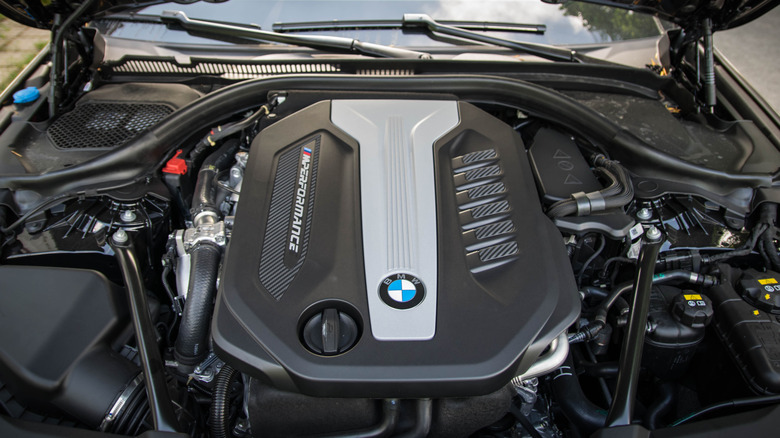
In 2016, BMW unveiled its 3.0-liter inline-six quad-turbo diesel engine. The story behind it isn't quite as important as where BMW got its brand name from, but the B57S (or B57D30S0, as it was internally known,) was highly ambitious for its time. Being able to give large sedans and SUVs performance akin to sports cars while also returning 40 mpg in some applications is commendable, to say the least. This was thanks to a complex multi stage setup, which employed two sets of turbochargers: low-pressure versions for immediate response at low rpm, and high-pressure offerings to deliver sustained pull at high speeds. The result was an engine that could put out 400 horsepower and 560 pound-feet of torque.
From a technical standpoint, the engine did exactly what BMW intended. In some cases, these heavy executive cars reached 0–62 mph times under five seconds. For a brief period, the quad-turbo diesel even helped power the fastest diesel sedan in the world.
Complexity, cost, and diminishing returns

It might've had some impressive technical feats to brag about, but the quad-turbo had some inherent drawbacks that killed it. For one, it was expensive, even by BMW's standards. Models with the engine definitely weren't among the most affordable BMWs out there. Four turbochargers, state of the art injection systems, and a myriad of emissions hardware all made it costly to design and manufacture. Inevitably, buyers had to put up with complex maintenance, and this also brought down the resale value of cars using it.
From BMW's perspective, the business case grew weaker over time. The sales numbers weren't so bad, but then COVID hit, and material and manufacturing costs went through the roof. Going forward with the engine simply wasn't justifiable from a financial standpoint. At the same time, the quad-turbo setup proved relatively unrewarding for aftermarket tuning. Despite its hardware, gains beyond the factory output were modest, largely because emissions controls constrained the motor at every turn.
Emissions rules ultimately closed the door
The final blow came from regulations. Euro 6d emissions standards imposed strict limits on carbon dioxide output that the quad-turbo diesel struggled to meet. Even though early versions of the engine garnered praise for being more efficient compared to its triple-turbo cousins, real-world emissions struggled to keep up with the new rules. While there have been growing sentiments of emissions standards not meaning anything for the environment, compliance is mandatory nonetheless. Getting emissions below compliant thresholds would have reduced performance and increased cost, putting a big question mark over the engines' very existence.
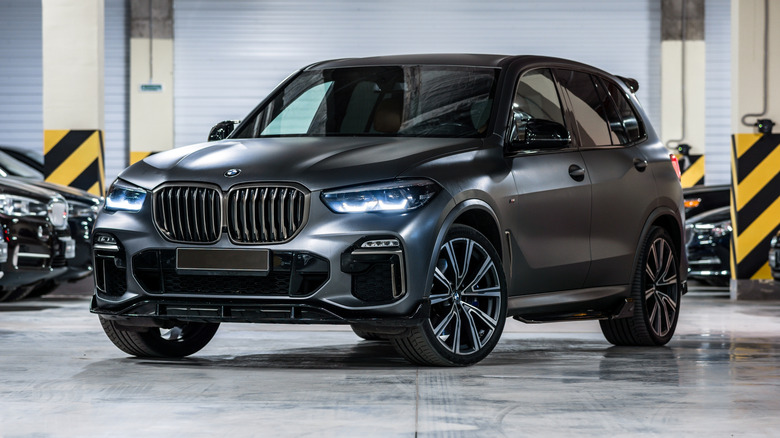
By 2019 and 2020, BMW began phasing the quad-turbo diesel out of its lineup. Production ended after just a few years, with Final Edition versions of the X5 M50d and X7 M50d serving as a quiet send-off to the engine in select European markets. BMW proved that a diesel engine could deliver sports car performance and impressive efficiency at the same time. What it could not prove was that such complexity could survive in a world increasingly shaped by emissions limits, rising costs, and shifting market priorities.