

What Does Jared Isaacman, NASA's New Administrator, Have Planned For The Beleaguered Agency?
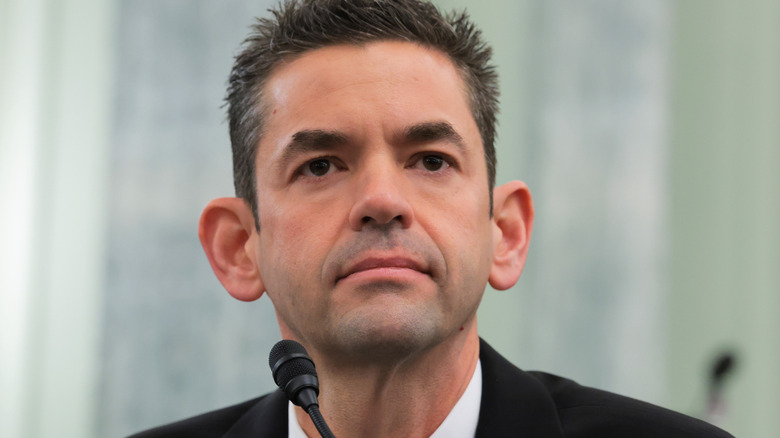
After an initial failure to launch, billionaire Jared Isaacman has finally been confirmed as the new administrator for NASA, taking charge of the agency at a time of immense change and budget uncertainty. Isaacman was nominated back in the beginning of the year and was originally set for a confirmation vote in May. At the last second, President Donald Trump pulled his nomination, ostensibly because the administration unearthed troubling "prior associations," such as donating money to Democrats, per Ars Technica. Of course, that just so happened to be the exact same week that Elon Musk ended his stint in Washington on bad terms with the President; Musk is one of Isaacman's main supporters.
The loss of Isaacman's nomination was a huge morale blow to the space agency. Without a permanent leader, NASA suffered from huge budget cuts that lead to the shuttering of the home of the Goddard Institute for Space Studies (GISS), employee buyouts, and defunded research. In July, Trump gave Transportation Secretary Sean Duffy a second job as the interim administrator, but pulling double duty meant that Duffy could not be fully focused on the struggling agency.
That didn't seem to bother Duffy, who purportedly didn't want to give up control of NASA after Isaacman was suddenly renominated in November. As Ars and Astronomy.com report, either he or someone in his camp then leaked a 62-page draft plan for NASA that Isaacman had written, called Athena. Duffy also tried to scare traditional space companies by playing up Isaacman's connections to Musk and, by extension, SpaceX. If true, the play didn't work, and now Isaacman is the NASA administrator. But who is Jared Isaacman, and what does his Athena plan indicate about what trajectory he's plotted for the star voyagers?
Jared Isaacman, outsider
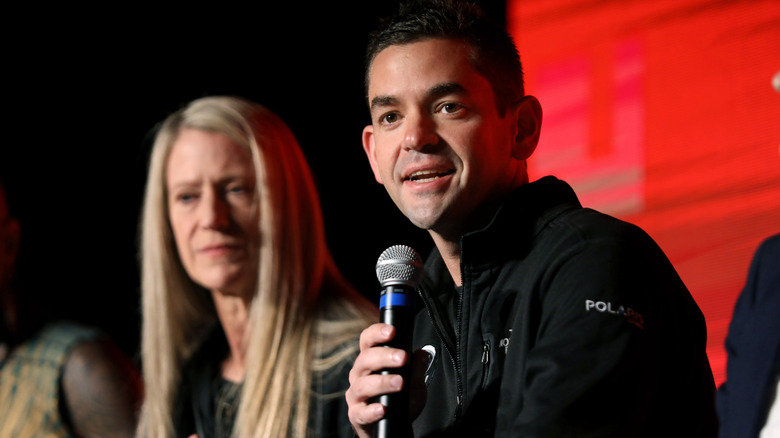
Isaacman is not a NASA insider and has never worked for the federal government. Instead, he started a payment processing company as a teenager in his parents' basement, per NPR. Yes, really. The '90s were a strange time, so this was sufficient to make him filthy rich: the company, Shift4 Payments, now processes transactions for over 30% of restaurants and 40% of hotels in America. With that money, Isaacman went on to found Draken International, which bought a bunch of old military fighter jets. Draken offers its services to Western militaries, flying as an "enemy" they can train against.
Tired of Earth, he then started the Polaris program, which leads all-civilian private missions to space. Isaacman was commander on its first mission in 2021, and he was one of the first civilians to perform a spacewalk in 2024. Polaris exclusively launched on SpaceX rockets, though as Isaacman himself explained, only because Musk's company was literally the only option.
Left or right (or Musk)
Is he just a shill for Musk, then? The fact that his original nomination was pulled the same week that Must left Washington seems to indicate that they two are closely aligned. During the second nomination, as Duffy was allegedly leaking the Athena plan, Musk referred to him as "Sean Dummy" and as trying to "kill NASA." That said, as Ars Technica reports, Isaacman's Athena plan doesn't appear to favor Musk's company particularly. "There are no pictures of us at dinner, at a bar, on an airplane, or on a yacht because they don't exist," he said at his Senate hearing. So, rest assured: the two billionaires have not done billionaire stuff together.
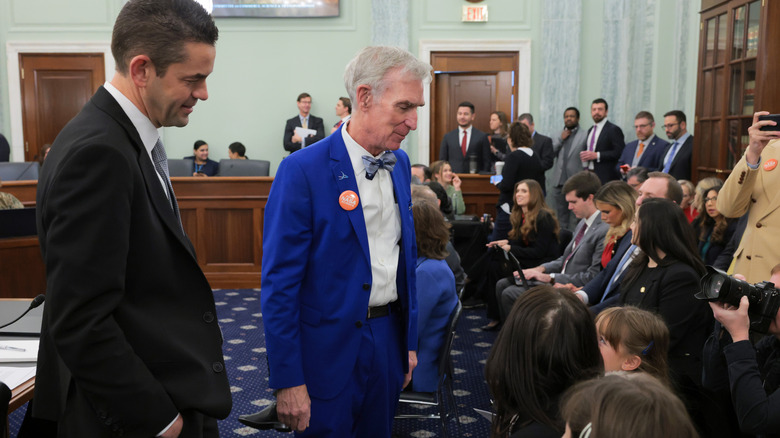
Is he a right-wing ideologue? At least on the surface, it doesn't appear so. Again, Trump didn't like all his donations to Democrats. For what it's worth, no less than Bill Nye the Science Guy attended his hearing in solidarity; Nye has protested against this administration's cuts to science funding. Isaacman's final confirmation vote on December 17 was 67-30; the Democratic caucus split more or less down the middle, and all Republicans supported.
What's in the Athena plan?
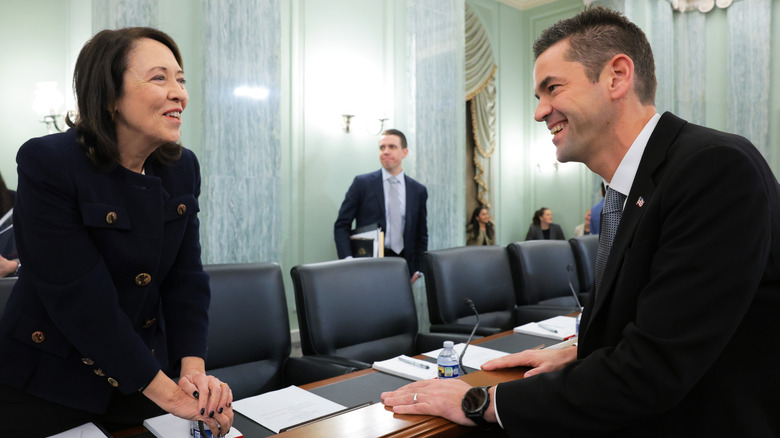
Isaacman's Athena plan was a draft that was never meant to be made public, but someone (allegedly Duffy) has leaked it. Isaacman defended the document (though not its release) and summarized it in a post on Musk's social media platform, X. It's a pretty long post and worth the read, but to summarize the summary: Isaacman wants to reorg the agency for cost-effectiveness, but he sees this as a way to increase NASA's total activity, including more human spaceflights. A major part of this, according to him, is recognizing that the economics of space have changed since NASA was first founded. With multiple commercial actors in the field now, he believes it's time to find ways to leverage those companies' capabilities to do more, cheaper.
As an example that got a lot of attention, including from Politico (which Isaacman's post was a response to), Athena talks about "science-as-a-service" for things like Earth observation satellites. He wants to simply purchase this data from commercial satellites that already do the same thing, rather than build and operate government-funded satellites. He's right that would be cheaper; the question is whether we as a nation want to cede all that capability to the private sector. However, that's exactly the stance the Trump administration wants to take with space. Isaacman's post goes a step further, explicitly calling out universities and saying they should start funding space research themselves.
Is this all good or bad for NASA?
So, as supporters of NASA, science, and space exploration, does this sound good or bad? It depends on how you view the changing shape of the space industry. SpaceX has brought the cost of launching mass into orbit way down; new competitors, like Blue Origin, are entering as well. NASA has used SpaceX to move astronauts and supplies to the ISS for years, so using private companies is nothing new. You could view Isaacman as someone who wants to reorient the agency towards the modern era, saving money in the process and enabling the agency to do more with the funding it has. As that funding in serious question right now, this could be the only way to keep the agency moving forward.
The New York Times has a whole article comparing Isaacman to Daniel Goldin, the tech executive who became NASA administrator in the '90s. Goldin, too, came in with big promises to make the agency more cost-effectiveness and do more with less. And, in that case, it actually worked: NASA was a mess when he entered but was in much better shape when he left. You could argue that a government agency needs an outsider every once in a while to get it out of its rut and bring in modern best-practices.
Then again, you could argue that handing over space to the billionaires is a betrayal of the public interest. Government-funded research is not done for profit, but the betterment of the country and all humanity. Anything else is just a question of return on investment. In fact, Isaacman uses this exact language in his post.
Isaacman himself may still be figuring this all out. In his first town hall with NASA, he sounded bullish on the agency, its employees, and its missions; his speech didn't sound like an axe was about to fall. But when pressed with specific questions about specific programs and institutions, he would just say that he had a lot to catch up on. In other words, he doesn't have a lot of "day one" plans; Athena is more about the big picture, not immediate needs. But if a struggling agency can't get its immediate needs addressed, especially in the face of budget cuts, that big picture may not happen, whether you like it or not.