

The Most Famous Inline-5 Engines (And The Cars They Powered)
To the uninitiated, inline-5 is just another engine configuration. To the faithful, however, it's religion. Its warbling, off-beat sound is as charismatic as anything in the automotive world. But it's also a smooth engine, almost on par with an inline-6, thanks to the rocking couple, which gives it its distinctive feel. Yet, it's smaller than an inline-6, so it has been used to great extent in compact machines, with turbocharging pushing it to massive horsepower figures.
Still, the inline-5's beginnings weren't about performance. Mercedes-Benz launched the first inline-5 engine in 1974 out of necessity — not to draw enthusiasts in its showrooms. Adding a cylinder to its four-cylinder diesel meant reusing most of the same parts to save costs while offering customers more power. Famously, Henry Ford also experimented with the configuration for a compact car, though vibration and high manufacturing costs proved problematic.
Once fuel injection entered the scene, though, many other automakers joined the inline-5 game with gas engines. Initially, these were mundane, naturally aspirated units, but quickly, turbocharged inline-5s powered performance cars that punched well above their weight. At the diesel end of the spectrum, inline-5s also appeared in trucks and vans, showcasing strength and durability. In this piece, we'll have a closer look at the most famous inline-5 engines — diesel or gas. We'll also tell you more about the cars they powered, from Group B rally monsters to brick-like performance wagons. Let's have a closer look!
Mercedes-Benz OM617 (Mercedes-Benz W115 / W123 / W116 / W126 / G-Class)
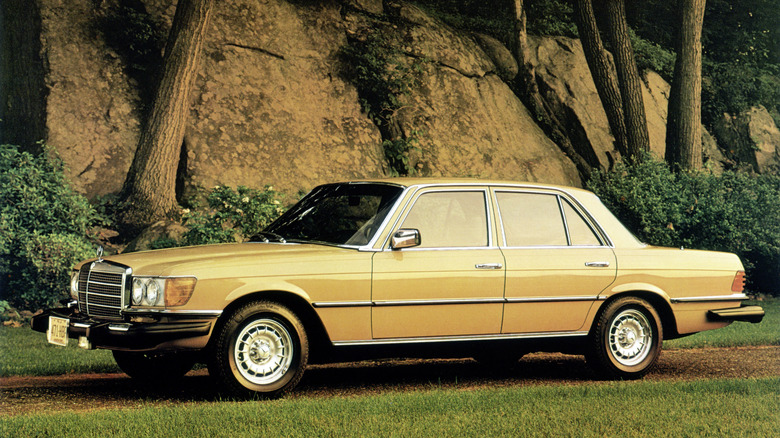
What better way to start this list than with the first production five-cylinder passenger-car engine — the OM617. Developed to satisfy the needs for a more powerful diesel, but one that's also economical, the naturally aspirated OM617 quickly gained ground, even in North America. The reason? It's a reliable diesel engine that just won't quit. A 3.0-liter naturally aspirated unit, many OM617 examples have surpassed 500,000 miles before a rebuild is necessary. Hardly surprising, as it consists of a stout cast-iron block and head and a reliable Bosch M injection pump. Yes, the OM617 initially had only 80 hp, but it was still one of the fastest diesel cars in the world. 0-62 mph (0-100 km/h): 19.9 seconds. Top speed: 92 mph (148 km/h). Fuel economy: around 22 mpg.
In 1977, three years after the engine's introduction, Mercedes-Benz equipped it with a Garrett TB03 turbocharger. Fittingly, the 110-hp engine was installed in the W116 S-Class 300 SD destined for North America, bringing speed and efficiency in the high-class category. In 1979, Mercedes-Benz introduced a new cylinder head, which increased the output to 87 hp in the naturally aspirated unit (W123) and 121 hp (W116 and W126 S-Class). The naturally aspirated OM617 was also used in the G-Class from 1979 to 1990, and the T1-Series van.
Audi 2.1L Turbo (Audi Ur-Quattro / Sport Quattro / 100 / 200)
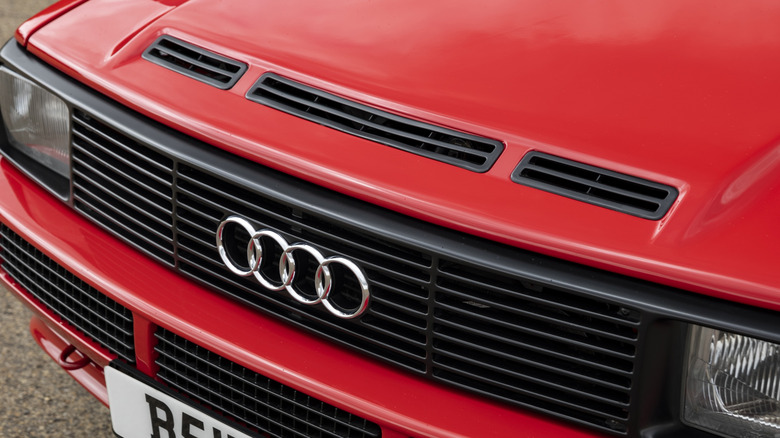
While Mercedes-Benz was pushing the diesel game forward with the OM617, Audi was brewing a more sinister take on the inline-5 engine. The Ingolstadt-based automaker launched a 2.1-liter naturally aspirated gas engine in the 1976 Audi 100 C2, where it produced healthy 136 hp, followed by a 70-hp diesel version in 1978. However, it's the 2.1-liter turbo, launched that same year in the 200 5T, that brought enthusiasts into Audi showrooms. With 170 hp and 195 lb-ft of torque, the world's first inline-5 turbo gas engine offered a healthy amount of performance in the mid-size category and was later also implemented in the smaller 100 C3.
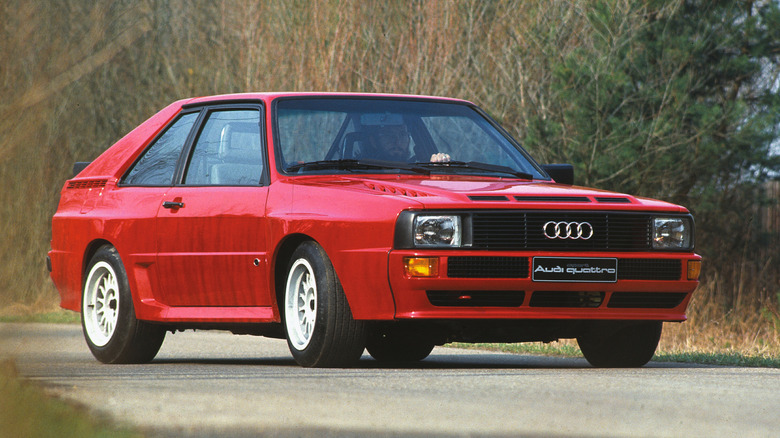
But of course, everyone remembers the 2.1-liter for motivating the Quattro to the 1983 World Rally Championship driver's title with Hannu Mikkola behind the wheel. Of course, Audi built a homologation special. The road-going Ur-Quattro had about 200 hp, thanks to turbocharging and intercooling, and was also equipped with standard AWD. 0-60: 6.3 seconds. Top speed: about 137 mph (220 km/h).
Then, in 1984, Audi improved on the Quattro formula with the manic Sport Quattro homologation special. This monster was 200 pounds lighter than the Ur-Quattro and featured a 12.6-inch shorter wheelbase. Crucially, it was equipped with a new 20-valve version of the engine, good for an astonishing 302 hp and 258 lb-ft of torque. As a result, the Sport Quattro catapulted to 62 mph (100 km/h) in just 4.8 seconds, putting many supercars to shame. Not impressed? A highly tuned 2.2-liter turbocharged inline-5 produced 720 hp in Audi's 1989 IMSA GTO racecar. Sheesh.
Audi 2.5 TFSI (Audi RS3 / TT RS / RS Q3, Cupra Formentor VZ5)
Audi wasn't going to throw away its inline-5 dominance anytime soon and followed the 2.1-liter inline-5 with a slightly larger 2.2-liter turbocharged unit in the S2 Quattro. In Porsche-tuned form, the engine reached its zenith in the RS2 Avant, producing 315 PS (311 hp) and roughly 301 lb-ft of torque.
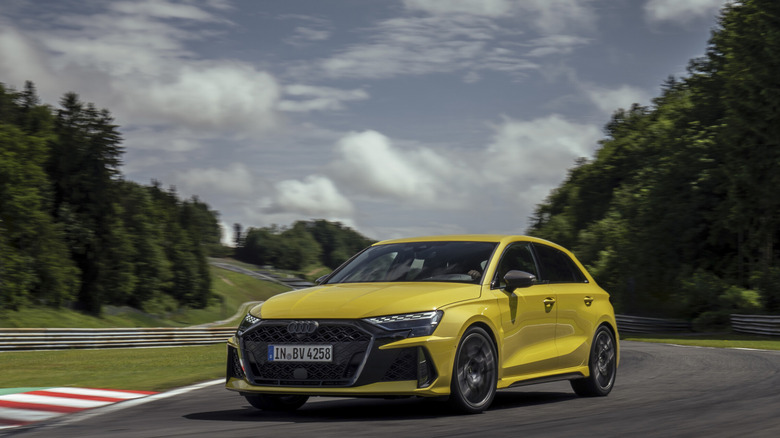
But it's the modern 2.5-liter TFSI, launched in 2009, that established Audi as the world-leading manufacturer of inline-5 engines. A technological tour de force, the brand-new turbocharged monster won nine consecutive 'Engine of the Year' awards and special performance awards from 2010 to 2018. This should surprise nobody, as it produced 335 hp from such a small capacity, but Audi was just warming up. Soon, an improved variant with a compacted-graphite iron cylinder block debuted in the 2012 TT-RS, good for 360 hp and 343 lb-ft of torque.
Still, it's the brand-new 2.5 TFSI, launched in 2015, that truly changed the game. Audi moved to an aluminum block this time around, saving 57 pounds. The lighter unit initially produced 362 hp, but in the 2018 TT RS, it delivered about 400 hp. With Quattro onboard, the Audi TT RS could make anyone a hero on track and propelled the sports car to 60 mph in just 3.6 seconds. The 2019 RS Q3 performance crossover received a 395-hp variant, while the RS3 hot hatch got the same version as the TT RS. Today, the RS3 is equipped with the latest 2.5 TFSI engine (Dynamic plus package), good for 394 hp and 369 lb-ft of torque. 0-60: 3.6 seconds. Top speed: 180 mph. It sounds marvelous, too.
Volvo 2.3L Turbo (Volvo 850 T5 / T5-R / 850 R / S70/V70 T5 / S70/V70 R)
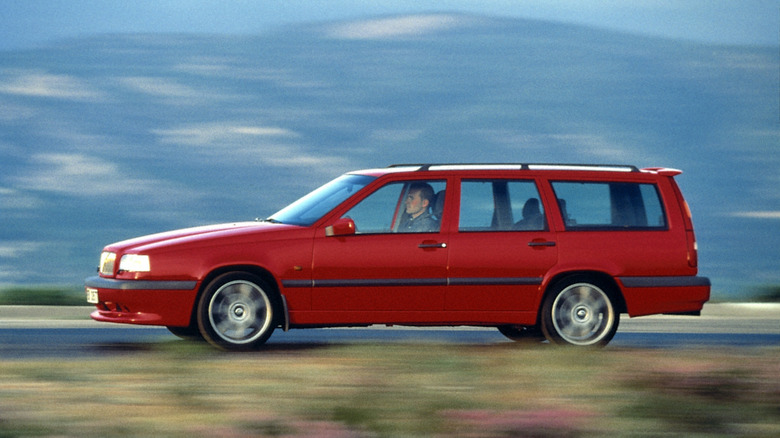
Five-cylinder turbocharged engine. Wagon body. Many would associate these hints with the Audi RS2, but Volvo has also been offering practical and fast machines during the 1990s. The 1995 850 T5 and T-5R are the perfect examples. Available in sedan and wagon body styles, this low-key Swedish family car torched German performance cars with a 2.3-liter, turbocharged inline-5, producing 240 hp and 243 lb-ft of torque in the more potent T-5R. These were some serious numbers back then, propelling Volvo's bricks to 62 mph (100 km/h) in around 6 seconds with the five-speed manual. Top speed: 155 mph (250 km/h).
Even so, the Volvo 850 T-5R is still underappreciated. Maybe this is because it's front-wheel drive. Or maybe because North America only got the slower and less engaging four-speed automatic. The fact is, the 850 T-5R handles well for an FWD vehicle, without too much understeer. Volvo followed the legendary 850 T-5R with the 1996 850 R. The improved model saw an increase to about 250 hp and 258 lb-ft of torque, but it was otherwise similar. In 1997, Volvo utilized its high-performance inline-5 engine in the 750's successors, the S70 R and V70 R twins, where it produced the same approximately 250 hp. It was also available with a five-speed manual or four-speed automatic.
Volvo / Ford 2.5L Turbo JZDA (Ford Focus RS MK2)

Volvo's affection for five-cylinder engines continued well into the 2000s with the new 2.5-liter B5254T modular engine family. This turbocharged engine powered everything from the Volvo C30 hatchback to the Ford Kuga 2.5T and Focus ST. However, here we'll focus on the Ford JZDA variant, which was based on Volvo's engine, but with enough upgrades to warrant a different engine code.
Enter the JZDA — the engine that powered the second-gen Focus RS. 300 hp at 6,500 rpm. 325 lb-ft of torque, available from 2,300 rpm to 4,500 rpm. Oh, and Ford didn't achieve these numbers just by meddling with the ECU. The Focus RS engine received a larger Borg Warner K16 turbo, which was integrated into the exhaust manifold for higher responsiveness. Ford also sprayed the cylinder bores with ultra-durable metal for strength. Bespoke camshafts, connecting rods, and revised head gasket were also installed.
There was a catch, though — the Focus RS was front-wheel drive. Hold onto your snarky comments, though, because Ford developed a special Revo-Knuckle suspension to battle torque steer. Anyone who has driven a second-gen Focus RS will know it worked as advertised, turning it into a well-mannered, surgical machine on twisty roads. It was quick, too, dispatching the 0-60 mark in 5.6 seconds. Top speed: 163 mph (263 km/h). Ford even produced a limited-production variant, the Focus RS500, which pushed 345 hp and 339 lb-ft of torque through the front wheels, thanks to a larger intercooler, larger exhaust downpipe, and new fuel pump.
Fiat 2.0 20V Turbo (Fiat Coupe Turbo, Lancia Kappa)
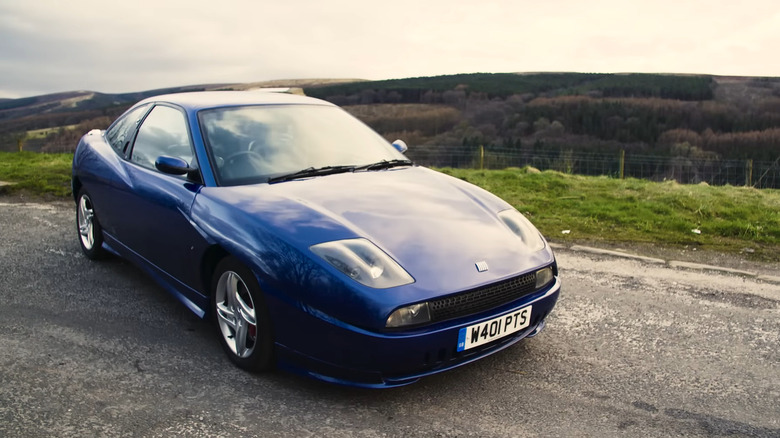
Like what you are looking at? The Fiat Coupe Turbo is divisive, that's for sure. This shouldn't come as a surprise, as it was penned by Chris Bangle — yup, that quirky, infamous Chris Bangle who 'ruined' BMW. Then again, the off-beat styling matches the turbocharged inline-5 under the sculptured hood quite perfectly. 2.0-liter. Four valves per cylinder. 217 hp and 229 lb-ft of torque.
In 1996 Europe, these figures gave you the bragging rights. Straight-line speed, too. The eccentric coupe sprinted to 60 mph in brisk 6.3 seconds. Top speed: 140 mph (225 km/h). Unmoved? A V8-powered 1996 Mustang GT had only 215 hp and sprinted to 60 in 6.8 seconds. But the Coupe Turbo got even better in 1998, when Fiat replaced the five-speed manual with a six-speed unit, raising the top speed to about 155 mph (250 km/h). Okay, sure, the Fiat Coupe Turbo is front-wheel drive. But the fact is — it was one of the fastest front-wheel-drive production cars in the mid-to-late 1990s. Oh, and Fiat also made sure you didn't feel underwhelmed behind the wheel. The Coupe Turbo had a special Viscodrive limited-slip differential to battle torque steer, alongside a stiffer chassis and anti-roll bars.
Still not your jam? How about an executive sedan with a turbocharged inline-5 flavor? The Lancia Kappa borrowed the 20-valve engine from the Coupe Turbo and provided customers with hints of the brand's illustrious past. With a top speed of about 140 mph (225 km/h), Lancia's elegant sedan chased Porsches, BMWs and Mercs on the Autobahn.
Volkswagen 2.5L 07K (VW Jetta MK5 / Jetta MK6 / Golf MK6 / Beetle)
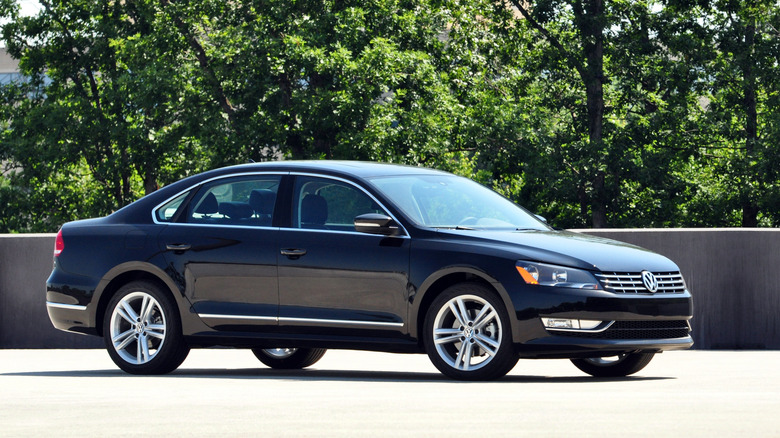
After telling you about the Turin-built tornado, we are moving to much calmer waters with VW's 2.5-liter 07K. A naturally aspirated engine, this inline-5 produced 150 hp and 170 lb-ft of torque. That would be period correct in 2005, when VW introduced this engine in the Jetta. The 07K propelled the sedan to 60 in leisurely 9.1 seconds. Not great, not terrible is surely on your mind. But sleeping on the 07K is a rookie mistake. This seemingly docile engine had a similar cylinder head and piston design as Lambo's 5.0-liter V10 in the Gallardo. Oh, and it's also one of VW's most reliable engines, period. Durable. Tough. Hard to kill. Thanks to this, the 07K is a darling of the tuning scene, with turbocharged kits available that can massively boost the power output. Some owners even pushed it to 400 hp without major issues, stock internals and all.
Now we're playing with power! The best part — it was not just the Mk5 Jetta that came with the 07K engine. The 2.5-liter inline-5 also appeared in the Mk5 Golf and Rabbit, Mk6 Jetta, Mk7 Passat (until 2015), and even the modern Beetle's first two generations. Depending on the model, the 07K was available with a six-speed auto or five-speed manual, making it all the more interesting for tuners.
GM Atlas 3.7L Vortec 3700 (Chevy Colorado, GMC Canyon, Hummer H3)

After Henry Ford's flirtation with the inline-5, it took the American auto industry several decades to again coin the idea of such an engine. And it arrived in the unlikeliest of places — GM's mid-size trucks. The brand-new Chevy Colorado and GMC Canyon were introduced in 2004 to compete with the Toyota Tacoma. They were initially offered with a 3.5-liter inline-5 (the first successful American inline-5).
With 220 hp and 225 lb-ft of torque, the new inline-5 option was intended as a substitute for a V6. It was developed from one of America's last inline-6s, the Vortec 4200. The purpose was to save costs, as a V6 would've been a new design. V6s also require two heads and are more complex. GM also equipped it with the customary tech at the time, like VVT on the exhaust valves and electronic throttle control. As a result, the Vortec 3500 was an economical engine, though some units suffered from a cylinder head failure.
GM fixed those reliability woes with the Vortec 3700. The improved 3.7-liter inline-5 was more potent, producing 242 hp and 242 lb-ft of torque. Crucially, it proved a reliable workhorse — just the type of engine customers wanted in a pickup truck. Or a military-like SUV. Namely, both engines also appeared in the Hummer H3, giving the smallest Humvee enough oomph to hustle around town. The inline-5 Vortec engines were available with either a five-speed manual or four-speed automatic in each.
Land Rover TD5 (Land Rover Defender / Land Rover Discovery 2)
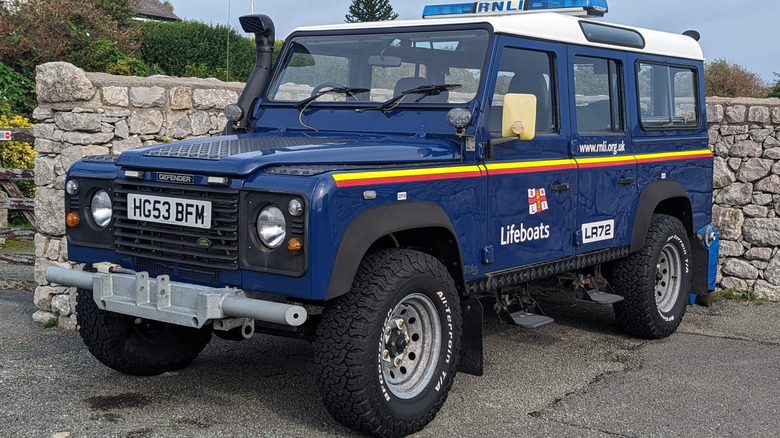
Land Rover engines usually end up on 'most unreliable' lists. But the TD5 inline-5 turbodiesel isn't cut from the same cloth. After all, the British automaker used this engine in the 1998-2007 Defender — its original rugged, no-nonsense off-roader. Though they were owned by BMW at the time, Land Rover decided to develop its own five-cylinder diesel. The TD5 was a fairly modern engine for its time. It featured electronic fuel injection with rocker-operated plungers on each injector. Land Rover also opted for a cast iron block and aluminum cylinder head and even equipped the TD5 with both centrifugal and flow oil filters.
The Discovery Mk2 also featured the 2.5-liter TD5, where the diesel was the only other engine option next to a 4.0-liter V8. There, it produced 135 hp and around 220 lb-ft of torque, enough to propel the 4,795-pound Discovery to 62 mph (100 km/h) in 15.3 seconds and a top speed of 98 mph (157 km/h). So, yes, the TD5 was slow. But also, it's one of Land Rover's most reliable engines, especially if maintained properly. Owners cover a few hundred thousand miles without major repairs, which isn't all too common with Land Rover engines. Because it's a sturdy unit, it responds well to tuning; ECU remaps bump the TD5 to 180 hp, with a new turbocharger/intercooler getting it past 200 hp.