

The Most Problematic Mazda Models, Ranked By Owner Complaints
Mazda gets a good amount of (deserved) praise these days for what it gets right. Over the last decade or so, its cars have demonstrated wonderful design, solid reliability, fantastic driving dynamics, and of course, that famously gorgeous red Mazda paint. But let's not forget: Mazda has been a mass-market manufacturer of automobiles for decades, and with that comes mistakes, oversights, and customer complaints.
Speaking of that last one, we've fired up the ol' National Highway Traffic Safety Administration (NHTSA) database to see which of Mazda's products have received the most grievances from owners over the years. Before diving in, there are a few matters of import to clarify. Firstly, some models are more popular than others, and they may receive more complaints due to the sheer fact that there are so many of them on the road. And secondly, a good portion of the glaring reports from these NHTSA customer entries stem from parts or systems that were eventually recalled. As for this list (in the name of brevity), we're highlighting only the twelve most complained-about Mazdas. Of those, we'll go from the fewest complaints to the most.
2014 Mazda CX-5 (FWD/AWD) - 376 Complaints
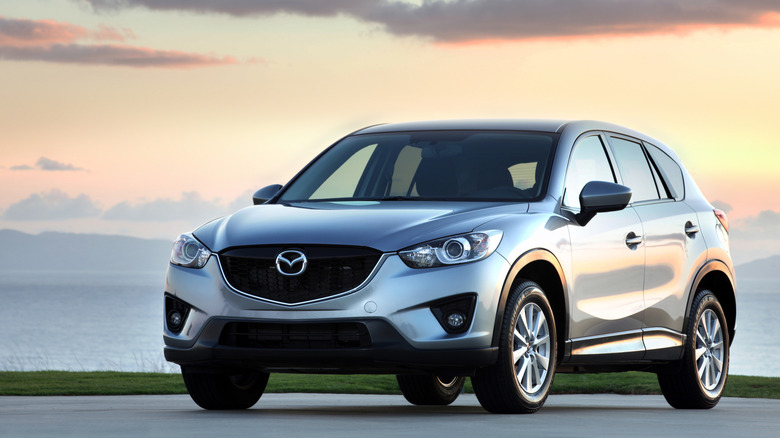
By now, you're surely familiar with the CX-5. It is Mazda's best-selling vehicle of all time, and a perfect representation of what the modern car buyer wants. Sophisticated design, an interior and cargo space that's not too big nor too small, easy controls, and all-wheel drive as an option, combined, make this a desirable daily driver. The 2014 model is also a great example of the "more popularity equals more complaints" idea we mentioned in the introduction. At 376 of them, the '14 model is our 12th most problematic Mazda.
From the factory, the CX-5 came with two engines and two drivetrains to choose from. Your power options were a 155-horsepower 2.0-liter inline-four or a bigger 184-horsepower 2.5-liter inline four, and either could be had in front or all-wheel drive configurations. Also, we bet you didn't know that (with the smaller engine) you could have a six-speed manual in this compact SUV. We've lost so many good things, haven't we? Anyway, about those complaints. In our independent research, we found that about a third of those 376 had something to do with the SUV's electrical system. Reports cited several different parts of the electrical system, but none more than the start/stop push-button ignition, which owners claimed would not turn off the engine when pressed. Interestingly, there were four recalls for this particular model, but none addressed the ignition issue. We guess there were more pressing matters to attend to. Not funny? Moving on.
1997 Mazda 626 Sedan - 379 Complaints
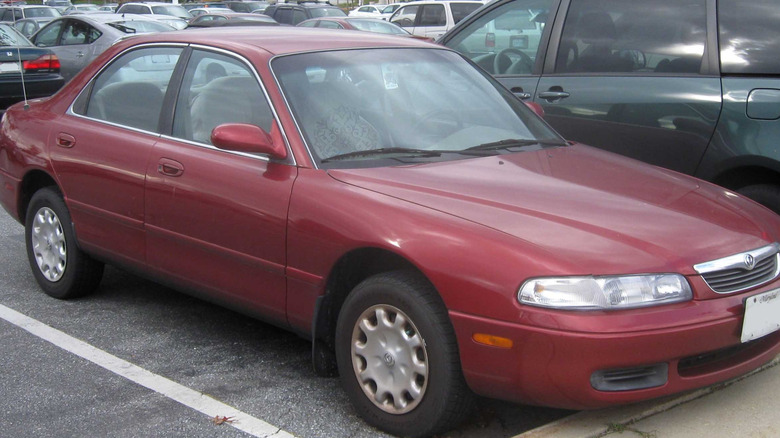
Our number 11 entry takes us back nearly three decades to the late 1990s, with Mazda's ever-popular, yet somewhat yawn-inducing 626 sedan. Though our featured model year is 1997, the 626's origins were far earlier. Debuting in 1978, the original was actually rear-wheel drive and featured that signature boxy '70s Japan design language we all know and love. There was even a hot turbocharged model (626 Turbo) in the 1980s that was one of the fastest Japanese sedans available in the US at the time.
But that's beside the point. The 1997 model was the last of the fifth-generation 626 that had now grown from its funky '70s roots into a more grown-up, soft-shaped '90s mid-size offering. Under the hood was one of two optional engines — a 2.0-liter inline four (118 hp) or a 2.5-liter V6 (164 hp). Connected to those engines was either a five-speed manual or four-speed automatic transmission. The most glaring issue wasn't either of the engines, though. It wasn't even the five-speed stick. It was that pesky automatic transmission. A convincing majority of the nearly 380 reported complaints cited the automatic transmission as the source of their woes. Like the CX-5, the '97 626 had four recalls, none of which addressed this issue. Interestingly, this wasn't one of those issues that predictably show up after extended mileage. In fact, the earliest NHTSA transmission complaint for this car was on February 1, 1998, about one year into its life.
2005 Mazda Tribute - 383 Complaints
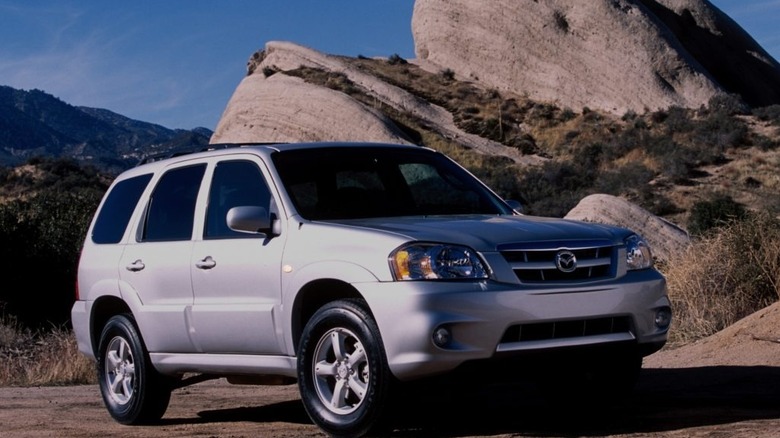
Geez. How long has it been since you heard the name Mazda Tribute? That is, if you even knew this car existed. What you will know is the car with which the Tribute shared a platform — the Ford Escape. Yep, no joke. The Tribute was part of the decades-long partnership between Ford and Mazda that began in the mid-1970s, though this crossover came towards the tail end of it, being built in the years between 2001 and 2011.
Over the years, the most common type of complaint we found was under the "Structure and Suspension" categories. Disconcerting, no? Well, here's the story. In earlier reports, customers cited loud knocking and thumping noises coming from the rear underside of the car, particularly the rear left. As time went on, these customers started to take their vehicles for inspections and were informed that the wheel well, which is part of the shock's support, had severely corroded, and in some cases, rusted completely through. As if it were fate, the 2005 Tribute also had four recalls that didn't address this common issue. Otherwise, the Tribute was a neat little crossover. It came with a 153-horsepower 2.3-liter inline four, and even a mighty 200-horsepower 3.0-liter V6 (also known as the Ford Duratec unit). Plus, 2005 was the first year that Mazda introduced its new Active Torque Control Coupling all-wheel drive system, which could electronically control the torque split sent to the rear wheels. And yes, a manual transmission was also available, sans AWD and V6.
2009 Mazda 6 Sedan - 384 Complaints
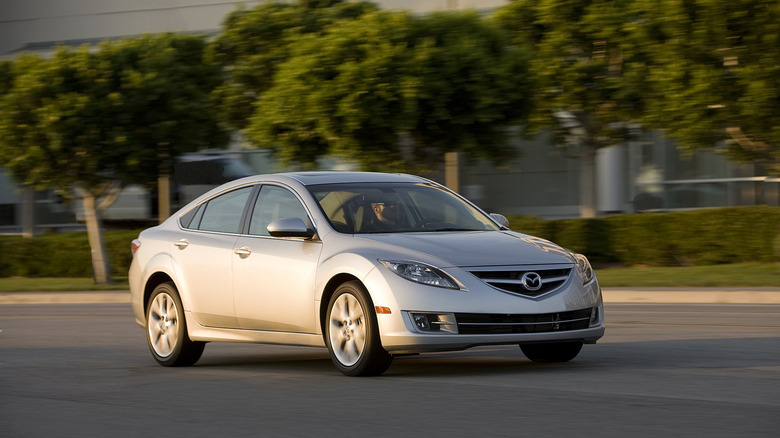
The rumors about affordable Japanese cars and rust aren't strictly myth, and owners of the 2009 Mazda 6 will concur. This mid-size sedan replaced the 626 in the early 2000s, and became part of the new one-two punch Mazda was setting up with the compact Mazda 3. It was successful, but longevity, particularly in the structural department, wasn't its strong suit.
Around a third of complaints detail some kind of structural issue, whether it be melting dashes, airbag crash pads falling apart, or the big one — rusted rear subframes. Notably, the '09 Mazda 6 has had a whopping 10 recalls, four of which were for airbag issues. The corroded subframe issue came years after the airbag problems, which is why we may never see one for that specific matter. In general, manufacturers are less likely to issue recalls for vehicles over around 15 to 25 years old, and the 2009 Mazda 6 is reaching that age. As far as specifications go, the base Mazda 6, trimmed as the "Mazda 6 i," was offered with only a 2.5-liter inline-four, producing 170 horsepower. However, there was also an "Mazda 6 s" trim that tapped into its Mazdaspeed ancestry with a spicy 272-horsepower 3.7-liter V6. It wasn't quite as special as the Mazdaspeed 6 (built for 2006 and 2007 only), which came with all-wheel drive instead of the 6 S's front-wheel drive setup. Yet still, we can't bash the concept of an affordable sleeper sedan.
2002 Mazda Tribute - 389 Complaints

You surely won't be forgetting the Mazda Tribute any longer, because our eighth most problematic Mazda is this little crossover once again. It's 3 years older and has six more complaints than our first Tribute from earlier, but while that one was plagued with shock mounting corrosion, the 2002 model for this entry had a much wider range of issues.
The standout issue that had the most complaints was the braking system. Whether it was the ABS module malfunctioning, a defective fluid reservoir, or warping rotors, the Tribute's brakes took up a noticeable percentage of the reports we read. But of course, there's more. Another main issue stemmed from the powertrain, including both the engine and transmission. Reports indicate stalling at low speeds, and even sudden engine acceleration and throttle sticking, among others.
The Tribute from 2002 had nine recalls, which this time actually addressed the most common issues. Multiple recalls were performed for the ABS module, the speed cable for the throttle, and one was done for the engine management system to prevent stalling. Oh, and if you were curious, the 2002 Tribute used a different base engine than the 2005 model, sporting a 130-horsepower 2.0-liter inline-four instead of the later 2.3-liter unit (though the same 3.0-liter V6 was used for higher trim levels).
1998 Mazda 626 Sedan - 438 Complaints
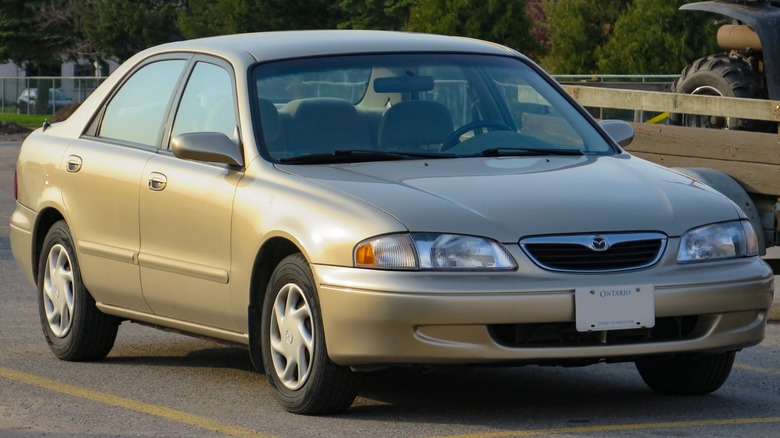
The 1998 626 sedan is just one year younger than the first 626 we featured, and unsurprisingly, it shares the same fatal flaw — its automatic transmission. Unfortunately, though, the '98 626 is even worse: it accrued more than 50 additional complaints (bringing the total to 438). We truly believe that level of failure deserves recognition.
To convey just how dominant this problem was in the later 626 sedan, there are 110 total pages of complaints (encompassing all the NHTSA reports), and 79 of those pages are taken up largely by powertrain gripes. The automatic transmission has been known to break its torque converter or shred itself to the point where it needs a full replacement. Fun fact: The 1998 model beats out the 1997 for the earliest NHTSA report relative to its release date. Whereas the 1997 626 had its earliest transmission issue report about one year after coming off the assembly line, the 1998 model shows a complete transmission failure in April of the same year. Also, a little spoiler — there may be another 626 later on in this list, too.
2016 Mazda CX-5 (FWD/AWD) - 488 Complaints
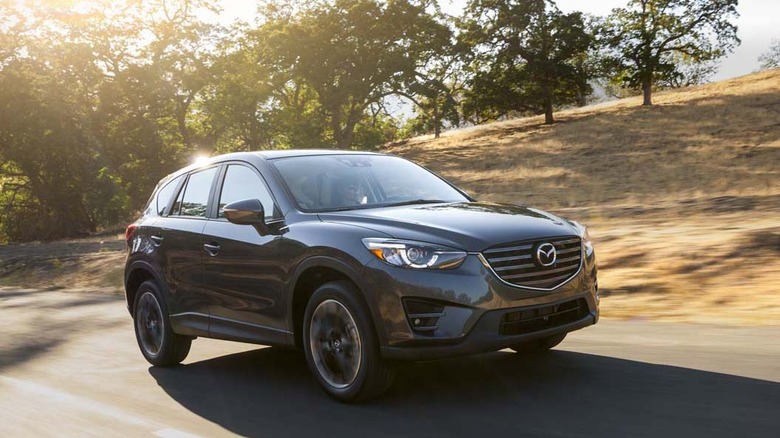
The 2016 Mazda CX-5 had a mid-cycle refresh just before the first generation was retired, though it shares most of the same hardware that we detailed in our entry of the 2014 CX-5. The 2.0 and 2.5-liter inline-four engines remained (with the same advertised output as the 2014 model), and they even kept the six-speed manual option for examples with the smaller engine and "Sport" trim package.
The source of the '16 CX-5's complaints came from the same place — the electrical system. However, the symptoms were not centered solely around the push-button start, but rather a variety of matters. Some owners reported airbag error codes being shown on the display when nothing was wrong. Others cited various problems with the infotainment touchscreen, including continuously rebooting itself and eventually failing to operate properly. And many reported a common issue with the daytime running lights failing.
But the most eye-catching of them all was the seat issues. There were more benign problems like the electric seat adjuster making annoying noises, but it escalated to more serious situations like seat and belt bolts coming loose, and even the seat heating mechanism catching fire. There was a recall for the daytime running light issue, but nothing official was done about the seat fires or infotainment system predicaments.
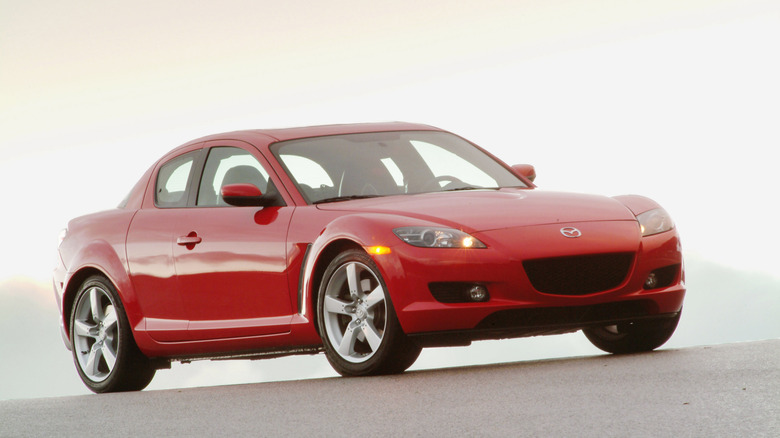
2004 Mazda RX-8 - 513 Complaints

We were genuinely unsure if the RX-8 would show up in Mazda's most complaint-ridden models, considering it was produced in smaller numbers compared to the other family/economy vehicles on this list. But who are we kidding? Of course it is. At 513 complaints (for the 2004 year alone, mind you), the RX-8 is our fifth most problematic Mazda.
There is a lot to say about this car, including its clear gravitas in Mazda's RX lineage of sports cars. But most will remember it as the car that helped kill off the mass-produced rotary engine. In a literal sense, the RX-8 did, in fact, blow up many 1.3-liter Renesis two-rotor engines, technically killing them off. But it was rather the fear of that infamous and often catastrophic unreliability that scared the manufacturers enough to ever mess with triangles again.
That story deserves its own article, but for now, let's take a brief look at the 2004 RX-8's NHTSA complaints. The most common complaint was a frontal airbag issue, which was the cause of four separate recalls, due to the risk of premature explosion or punctures that would render them unsafe in the event of a crash. The next most obvious complaint was the little 1.3-liter engine, which, for many customers, lost compression or had heat-related failures. If you're a fan of rotary engines, don't be too depressed, though. Earlier in 2025, we got some hints that the Mazda rotary might come back.
1995 Mazda 626 Sedan - 518 Complaints
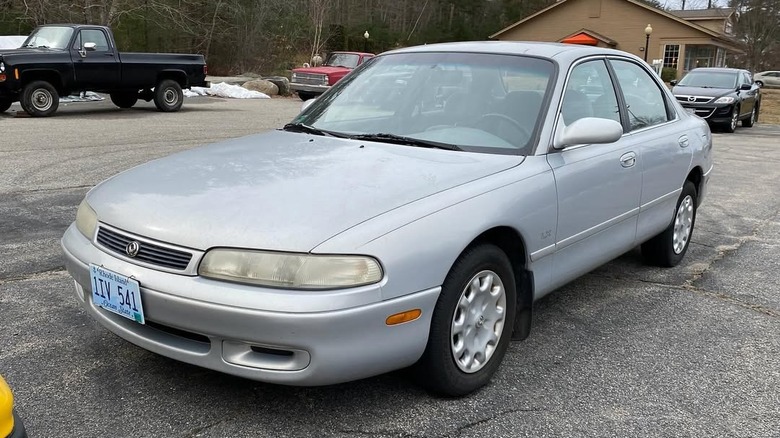
Okay, we promise we'll keep this one short because, well, you probably know what's coming. The addition of the 1995 626 makes it the third appearance for this model on our list. At 518 complaints, it is our fourth most problematic Mazda.
Around 86 of the 130 pages of complaints for this vehicle were powertrain-related, and within those were countless horror stories of automatic transmissions stalling, shifting roughly, and just plain failing. Also of note was the number of airbag issues, with some owners recounting airbag deployments at low speeds even when no collision occurred. Though the transmission issues were never the subject of a recall, the airbags did prompt one in 1998.
To be fair, the 1995 626 is our oldest car on this list, giving it more time for reports to be submitted. Not to mention, the 626 was a very popular car at the time. But regardless, the three 626s we've covered have a combined number of 1,335 complaints, making it the most problematic model overall (spanning all featured model years). Though, of course, keep reading to see the singular model with the most complaints.
2007 Mazda CX-7 (FWD/AWD) - 527 Complaints
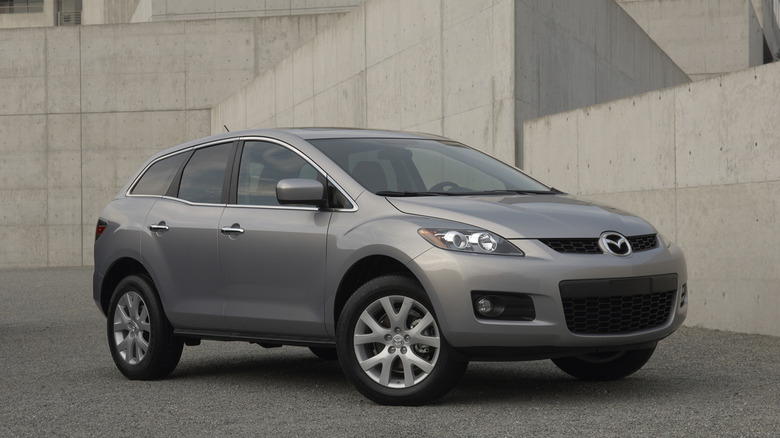
Here's some fresh unfamiliarity for you — the first Mazda crossover, the CX-7. Despite your immediate thoughts, no, it has no relation to the new CX-70. It does, however, represent a neat little nugget of history in Mazda's SUV segment that would become so profitable over the years.
The mid-size CX-7 crossover debuted in 2007 alongside the larger CX-9. The 2007 model also happens to be our featured "problematic" example, which came from the factory with just one engine and transmission — a turbocharged 2.3-liter inline-four that produced (a surprisingly peppy) 244 horsepower, paired with a six-speed automatic transmission. While the CX-9 would stay in the brand's lineup until 2023, the CX-7's lifespan was around five years long, being discontinued in 2012 to set the stage for...can you guess? The CX-5.
For Mazda's accountants, this decision has caused no regrets (the CX-5 is mega-popular), and in truth, it was probably a smart choice to bench the finicky CX-7. Common complaints included items like faulty suspension joints that caused a loss of steering control (a recall was issued for this problem), airbag sensors that didn't correctly identify passengers, and airbag inflators that could rupture at random (there were multiple recalls for this). To top it all off, engine issues were rampant, from timing issues to sensors and everything in between. So, after 527 complaints, five recalls, and five years, the CX-7 met its fate.
2001 Mazda Tribute - 581 Complaints

If receiving recalls were an Olympic sport, the 2001 Mazda Tribute would be one of Japan's most decorated athletes. At 15 total recalls, it doesn't just have the highest number on this list; it also holds the record as the most recalled Mazda in the NHTSA database. The 2001-2004 Mazda Tribute, with its twin, the Ford Escape, are in fact widely accepted as the most-recalled cars of all time.
As for specs, it has the same 130 horsepower 2.0-liter inline-four and 200-horse 3.0-liter V6 that we've mentioned on previous Tributes in this piece, but it tops them all with over 580 complaints to the NHTSA, which range from door latch and hatch linkage failures to more serious matters like ABS failures, crossmember corrosion, and dangerous engine surging that accelerated the engine without throttle inputs. Its level of failure is pretty impressive, but also a case of missed opportunity. When new, the 2001 Tribute was praised by journalists for its chassis, with Car and Driver citing its handling characteristics as sports sedan-esque. But alas, the Tribute and its many issues may still be best left to the harsh winds of time.
2010 Mazda 3 Sedan and Hatchback (Tie) - 683 Complaints
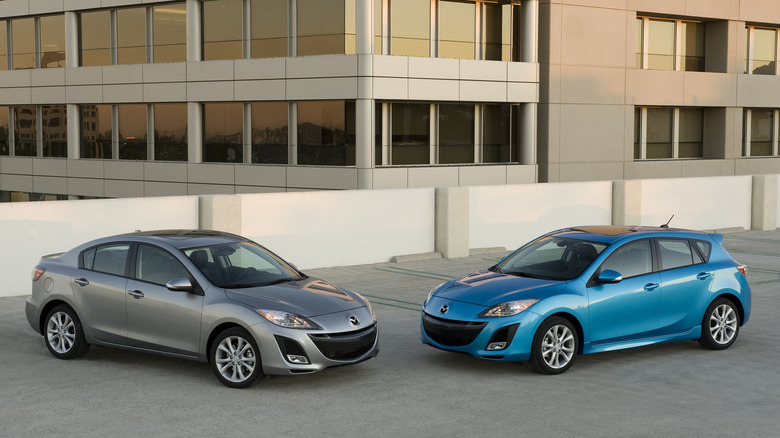
As of 2025, no other Mazda with sufficient data from the NHTSA has received more complaints than the 2010 Mazda 3 (both the hatch and sedan variants). Again, the Mazda 3 was, and still is, a popular choice in the compact segment, which certainly contributes to the proportional number of complaints it's received. However, that's not the only caveat to consider.
There were many issues that owners voiced in their reports, from ABS failures to major electrical problems to airbags that wouldn't deploy in high-speed crashes. But by far the most cited annoyance was dashboard melting and cracking. Categorized under the "Structure" section by the NHTSA, these complaints made up about 49 of the 171 pages of complaints regarding the Mazda 3. A poor-quality dash is nothing new, and most probably wouldn't usually warrant reporting to a federal agency. But in many of the dashboard reports, owners explain how the melted plastic became extremely shiny over time and would reflect onto the inside of the windshield, obstructing visibility. So while the drivetrain (2.0 or 2.5-liter inline-four) was fairly unproblematic, maybe think about a dash cover if you're in the market for a 2010 Mazda 3.