

Want To Get Better Fuel Economy From Your Diesel? Follow These Tips
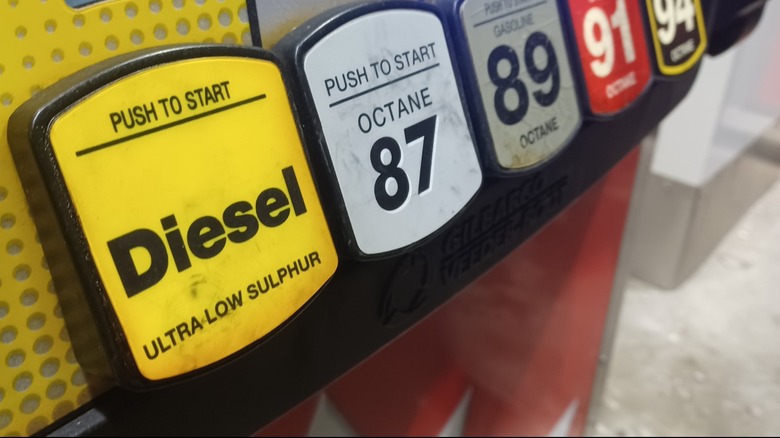
If you chose a diesel pickup over a gas-driven one, then you're already ahead of the game when it comes to fuel economy. According to the Department of Energy, diesel vehicles can be 30-35% more fuel-efficient than their gas counterparts. But maybe that's not good enough for you. No, you won't be satisfied until you've squeezed every last bit of fuel efficiency out of your vehicle. We don't blame you, given the high price of diesel fuel (averaging over $3.60 per gallon as of this writing). Well, the good news is that there are several things you can do to make your diesel-powered vehicle even more fuel-efficient.
The simplest way to improve a diesel vehicle's fuel efficiency has to do with driving habits. Being careful not to have a lead foot is good practice, since trying to set 0-60 and land speed records can be pretty hard on fuel economy. But slamming on the brakes isn't good for fuel efficiency, either. So, give yourself plenty of time to come to a stop. And try to avoid idling when you don't need to. These are all things that anyone can do.
But there are lots of other things that can help, too. For example, products like vortex generators and tonneau covers can make a difference by making your vehicle more aerodynamic and reducing wind resistance. Using high-quality fuel and oil is better for fuel economy than lower-quality fluids. Changing your filters when needed is important, as well as other regular maintenance. Shedding extra weight is a good practice, as is keeping on top of the air pressure in your tires.
Watch how you drive
Who doesn't love to hear the beastly growl of a diesel engine? Well, some people don't, but we don't associate with those folks. We don't need that kind of negativity in our lives. Unfortunately, pushing down on the accelerator just to hear that melodic rumble can be killing your fuel economy. One important way to save fuel is to avoid speeding and accelerating too quickly. In fact, your fuel economy drops by 0.1 miles per gallon for every mile per hour you drive over 50 mph. It's best to keep your speed consistent, as well, so set your cruise control while you're on the highway, except for hilly terrain.
While you want to be light on the accelerator, you also need to avoid touching the brake as much as you safely can. It takes more fuel to brake than it does to coast to a stop. So, give yourself plenty of space between you and the car in front of you. Anticipate stops and let your foot off the accelerator in time for your car to slow down most of the way on its own without braking. If you're going down a steep hill or mountain road, utilize engine braking by shifting down so that your engine runs at lower speeds.
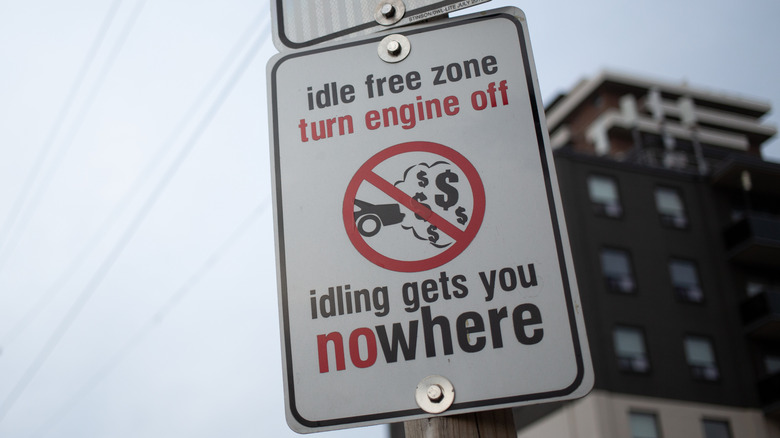
Idling isn't good for your fuel economy, either. Contrary to popular belief, it is not more fuel-efficient than stopping the engine and starting it again. What about those cold days when you need to warm the engine up? Consider getting a block heater so that your engine doesn't have to take so long to warm up.
Think aerodynamically
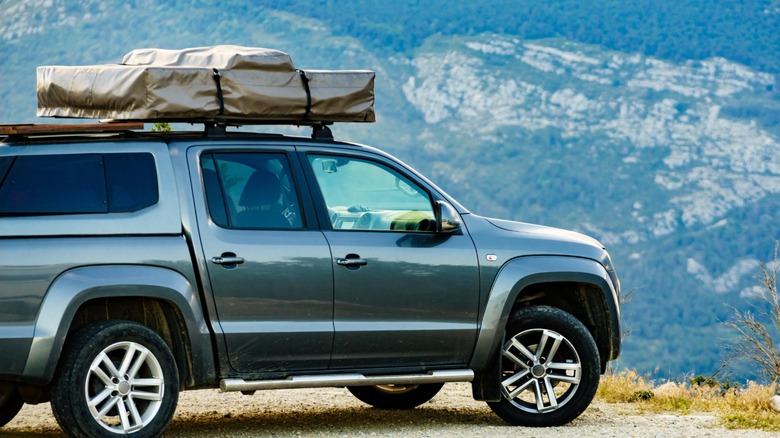
Some of us have more gear than we have room for, whether it's for camping, kayaking, another outdoorsy sport, or for work. If you've got a camper shell on your truck, all of that roof space looks pretty tempting. Why not just throw some racks or a cargo box up there? You could do that, but there is a trade-off for everything. The more things you have sticking out on the top or the sides of your vehicle, the worse your fuel efficiency. A cargo box, for example, can create 39% more drag. Even an empty roof rack can add 17% more wind resistance (even the performance of EVs is impacted by roof racks). So, take all that stuff off when you're not using it.
Wind resistance is something you need to think about whether you're adding bug shields, hood scoops, or extra-wide mirrors. If you have grille shutters on your vehicle, make sure they're closed. Some vehicles have active grille shutters that close at a certain speed, so you don't have to worry about it. If you have a truck without a camper shell, air goes down into the bed and has to push up and over the tailgate. That produces drag, too. So, put a tonneau cover over the bed. Wheel covers over exposed wheels can be a good way to improve airflow around your wheels.
What if you're driving a semi? Stick some vortex generators on the roof to improve airflow. A roof fairing can smoothly deflect air right over the trailer. Side fairings and side skirts can make a big difference, too. You might want to use cab extenders to shorten the gap between the cab and your trailer.
Don't skimp on the fuel and oil
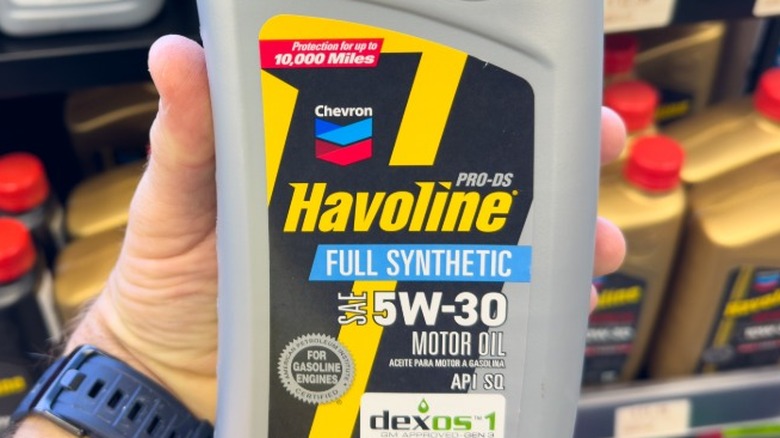
If you're like us, it takes a great deal of self-control to keep from rolling your eyes when the guy at the quick-lube place tries to upsell you on anything. But don't cheap out and get the conventional oil — if the shop even uses it anymore. Believe it or not, synthetic oil can be very beneficial for your fuel economy, increasing it by up to 11% in some cases. More than that, synthetic oil provides the best lubrication, which reduces wear on your engine, extending its life. We'll still pass on their overpriced offers to replace the air filter and the windshield wipers, though.
You don't want to skimp on the fuel either. Cheap, low-quality fuel can contain all kinds of contaminants that can damage your diesel engine and clog up things like your fuel injectors. A clogged fuel injector can really mess with your fuel efficiency, at the very least. High-quality fuel, on the other hand, is usually cleaner and won't clog the engine. Should you use fuel additives to increase your fuel efficiency? It's not necessary on newer engines, and some say any effect is barely noticeable on older engines. It doesn't seem like it's worth the hassle or expense. The best thing you can do is make sure you're using the right fuel.
Keep up with your vehicle maintenance
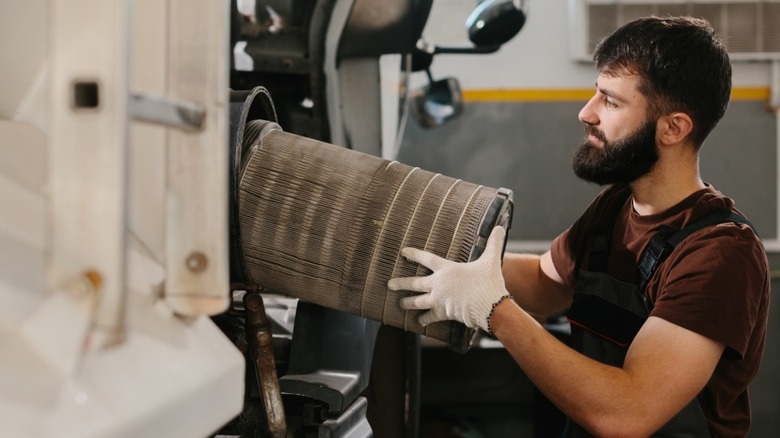
Keeping up on your vehicle's maintenance can go a long way toward getting the best fuel economy out of it. How long has it been since you changed your air filter? What about your fuel filter? Have you checked if your fuel injectors are clogged? For fuel to be used efficiently, both fuel and air need to flow through the engine unimpeded. That means you'll also want to check your fuel lines, since they can get clogged, too. They can also develop leaks, which are bad for fuel flow, obviously.
You'll also want to check your exhaust emissions, whether your state requires emissions testing or not. How are your exhaust pipes looking? Do they have lots of black soot? Does too much black smoke come out when your engine is running? A little bit of smoke is normal, especially when accelerating hard, but thick black smoke is not. It's a good indication that you have a clogged fuel filter, your fuel injectors are leaking, your turbocharger isn't working like it should, the EGR valve is stuck open, or you've got some worn piston rings. Whatever the cause is, you can bet it's impacting your fuel economy. In fact, all that smoke could indicate that some of your fuel is being wasted. Your engine could be getting too much fuel, but not enough air. That means it's getting more fuel than it can burn, and some of the fuel has to be pushed out as soot. Not great.
Check your tires and weight
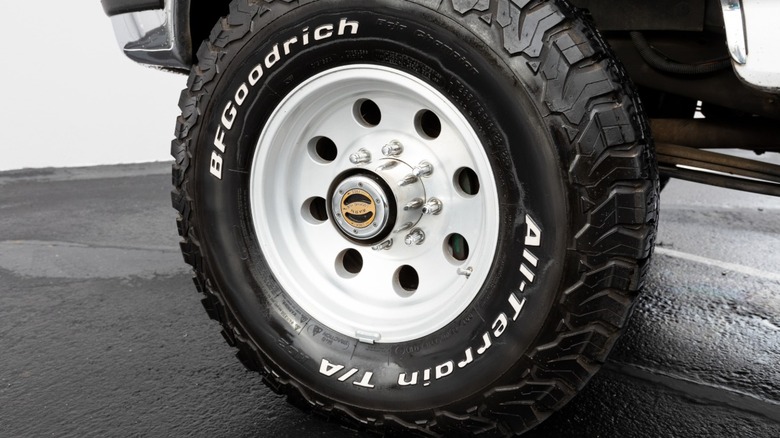
How's your tire pressure? A lot of us don't give it more thought than to give our tires the occasional glance to make sure they aren't getting low or going flat. Fortunately, a lot of modern vehicles have an onboard Tire Pressure Monitoring System that notifies you if your pressure is low. But really, getting out your pressure gauge and checking the pressure should be a habit. This should especially be true when the weather changes, because ups and downs in temperature can change the air pressure in your tires. There are lots of reasons to keep on top of your tire pressure, but one of them is that over-inflated and under-inflated tires can impact your fuel economy. Plus, under-inflated tires can also cause your engine to work harder than it needs to — the same is true for wheels that are misaligned.
Speaking of things that make your engine work harder than it should, try not to load down your vehicle with too much weight. The more weight your vehicle has to carry, the harder the engine has to work, and the more fuel it uses. So, take some time to inventory what you keep in your vehicle. It might be time to take out things like duplicate tools, camping gear you only use part of the time, and spare anvils. What? You don't keep anvils in your truck? Then where do you keep your anvils? There are lots of things you can do to optimize the fuel economy in your diesel vehicle. It just takes a little effort and keeping up on simple maintenance.