

These 10 Luxury Vehicles Have Terrible Resale Value
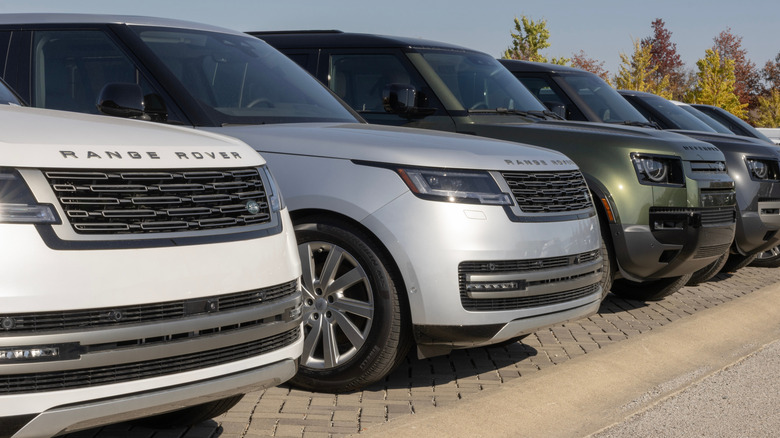
In rare instances, luxury cars appreciate. However, those headline-grabbing cars that sell at auction for millions are unicorns in the auto world, and serve to remind us that some vehicles hold special places in our hearts and minds. For most of us, those cars are unattainable, museum-worthy pieces destined for Jay Leno's garage rather than our own.
Most of the time, luxury cars and SUVs depreciate like any other vehicle. Unfortunately, those with the worst depreciation are still expensive, and it's impossible to know which cars are destined to be sought-after classics.
If you're eyeing a luxury auto purchase, but are worried about which cars or SUVs might have diminishing returns, we've got you covered. We analyzed resale values for luxury cars and SUVs at three, five, and seven years utilizing CarEdge data as well as studies by Cox Automotive and The Zebra to help you know which autos will leave you in mountains of debt. Here are the top 10 luxury vehicles with the worst resale value.
Audi S8
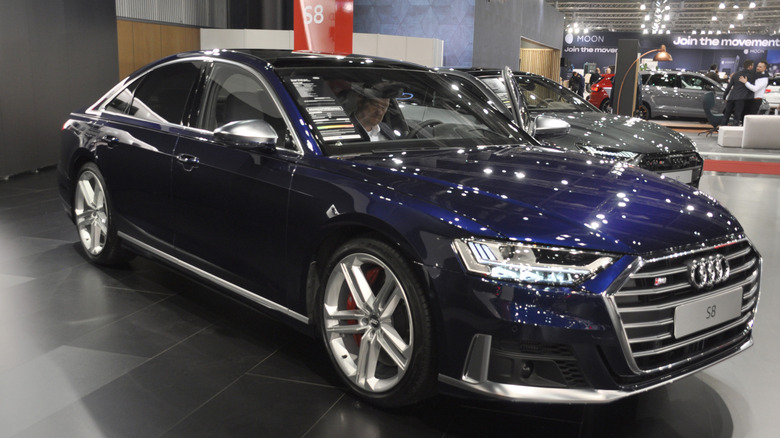
The Audi S8 is as smooth a sedan as you'll see on the road. Starting at nearly $125,000, it's also one of the more expensive cars you can readily buy. Packed full of performance and prestige, there are plenty of reasons to like the S8. Inside, 22-way power adjustable seats up front wrapped in Valcona leather welcome you. Under the hood, a 4.0-liter twin-turbo V8 is paired with an 8-speed Tiptronic transmission to propel you. The Audi S8 is meant to look like an executive's sedan that quietly overdelivers on performance, and delivers on that initiative.
Resale value may be another reason, too. While reselling a vehicle like the Audi S8 isn't particularly lucrative, the car holds its value reasonably well compared to the rest of our list. After one year, you'll have 70% of its value left — about $87,500 — which is average for the luxury vehicle segment. At two years, it's just over 60%, around $75,000, which remains steady through year three. By year four, you'll have just shy of 40% or $50,000 of the vehicle's original value available as a trade-in or via sale.
From there, the Audi S8's value diminishes slightly and incrementally each year. Save for two precipitous drops in value at the first and third years of ownership, the Audi S8 retains its value reasonably well year over year.
Mercedes-Benz EQE 500
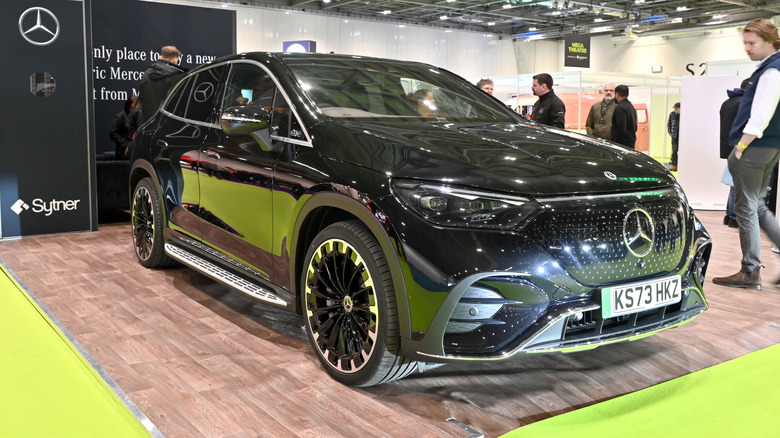
Mercedes-Benz hit the mark with its EQE electric sedan. It has great range (about 300 miles, depending on your specific build) and respectable acceleration, going 0-60 in 4 seconds flat. Its design is pure Mercedes-Benz, inside and out, pleasing both legacy buyers and those new to the brand. It's familiar but refined, a true modern MB classic.
Unfortunately, like other EVs on our list, the divisively styled Mercedes-Benz EQE 500's resale value is not great. In its first year, the EQE loses 45% of its value ($38,655), and 60% ($51,540) by its third year. When it's five years old, the Mercedes-Benz EQE 500 retains about 35% ($30,065) of its initial $85,900 price.
Because the EV segment is relatively new, and the EQE is one of the first EVs Mercedes-Benz has introduced, its long-term value isn't known, but it's projected to lose about 70% of its value by year seven, which is average.
Land Rover Discovery
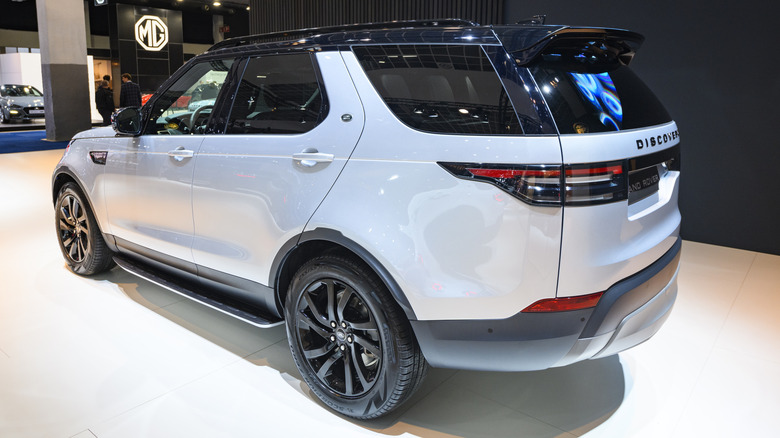
The Land Rover Discovery is an iconic, legendary vehicle that pulls the attention of onlookers when you drive by. You can see the design heritage in the newest Discovery from Land Rover, which has become so much more than a go-anywhere safari-ready SUV. Decades on, it's a beloved family hauler.
Given the resale values of luxury vehicles, that heritage earns the Land Rover Discovery brownie points. After purchasing one at CarEdge's assumed selling price of about $73,000, the Discovery loses about 28% ($20,440) of its value in the first year of ownership, which is slightly better than that of many of the other luxury SUVs we will look at here. At three years, the Discovery is worth 50% ($36,500) of its original MSRP. A significant drop-off, but many other luxury autos see even bigger drops in value between years one and three.
By year five, the Land Rover Discovery has reached a familiar point for luxury cars and SUVs, as it's worth 35% of its original value, which leaves it with a resale value of about $25,550. However, this does give it a slight advantage over others on this list. At seven years, the Discovery retains just 30% — about $21,900 — of its original value.
Alfa Romeo Stelvio
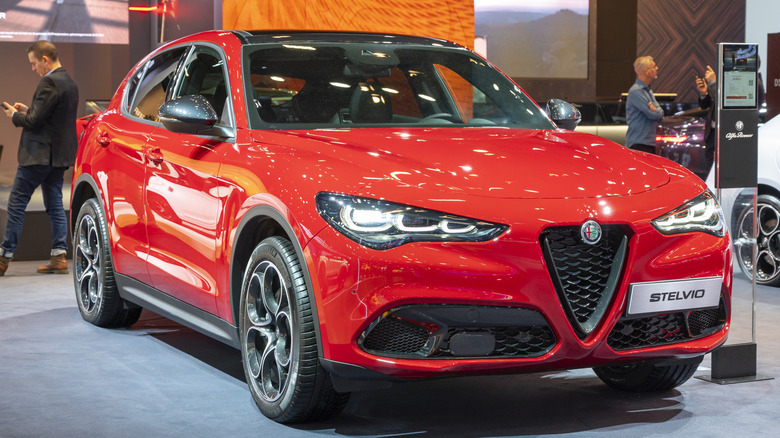
If you test drive an Alfa Romeo Stelvio and think, "Wow, this is incredible SUV, I gotta have one," we can totally relate. It's fun to drive, with plenty of pep and snappy driving dynamics. Alfa Romeo brags it has best-in-class torque, horsepower, 0-60 acceleration, and top-end speed at 144 mph. As crossover luxury SUVs go, the Stelvio packs quite a punch.
If you are interested in buying with the intent of selling it in a few years, think again. First launched in 2017, the Stelvio has a history of transmission, steering, and electrical issues that can put it in the shop. This might be part of the reason why the Alfa Romeo Stelvio loses 55% ($27,500) of its original $50,000 MSRP in the first year of ownership. It's tied with one other vehicle on our list — which is also from an Italian automaker — for the worst year-one decline in value.
On the bright side, resale value in year two of ownership is about the same as year one, losing only about 0.50%, or $2,500, more between months 12 and 24. After five years, the Alfa Romeo Stelvio holds about 35% ($17,500) of its overall value, and has lost 70% ($35,000) by year seven.
Tesla Model X
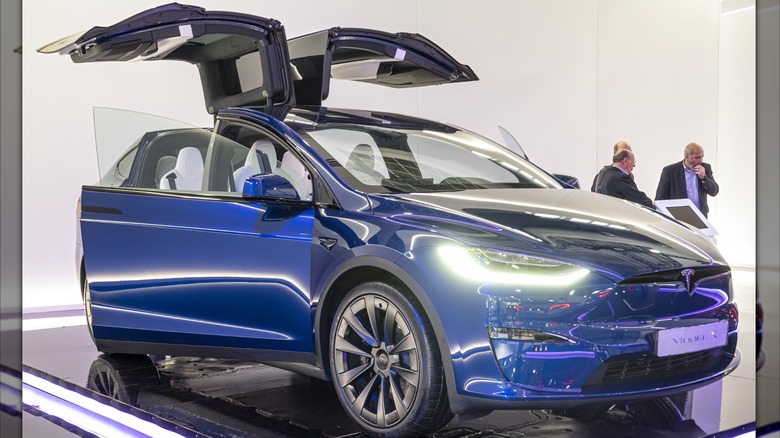
The Tesla Model X made a huge splash when it launched, thanks to its Falcon wing rear doors that slide up and out like a bird extending its wings. It's a likable EV SUV with a lot of bells and whistles. It also carries a high price tag, with CarEdge assuming a selling price of $95,775.
After its first year, the Model X is only worth about $61,000, a 36% decline in overall value on the resale market. Year two is kind to the Model X — its value is roughly the same as a one-year-old Model X — but year three is a doozy. After 36 months of ownership, that $100,000 EV SUV is only worth about $35,000. That's right — the Model X loses 62% of its value in the first three years of ownership.
By year seven, the Model X is worth about 24% ($23,000) of its original MSRP. As luxury EV SUVs go, the Model X is about as good as it gets. Unfortunately, the resale market for luxury cars and EVs isn't great, and the Tesla Model X checks both of those boxes.
Tesla Model S
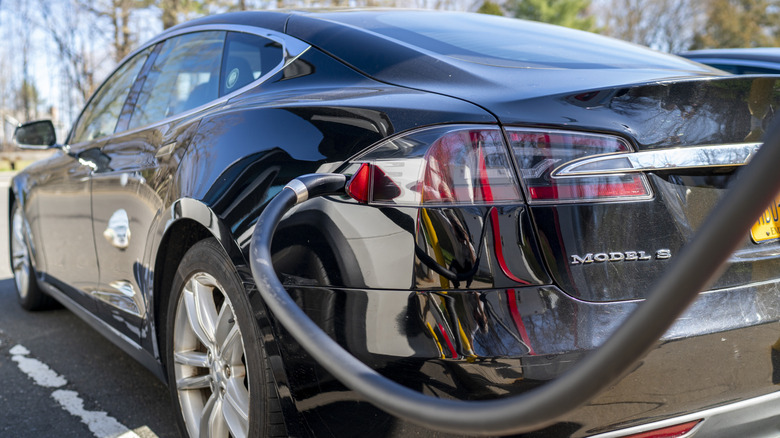
Nobody buys a Tesla Model S to resell it, and that's a good thing. It's an innovative, classy vehicle, and easily one of the best in Tesla's lineup. It's just not a vehicle that does well in the used-car market. This isn't unusual for electrified vehicles, which evolve so rapidly that used EVs often aren't attractive to buyers even though they're just as efficient.
In the first year, the Tesla Model S lost 30% ($27,700) of its $90,755 assumed selling price, which is standard for luxury vehicles. It loses another 10% in year two to brings its resale value down to $54,200, and then sees a sharp decline. By year three, the Tesla Model S is worth only 35% ($31,200) of its original value, having dropped 65% of its MSRP in 36 months. Among luxury cars, the Tesla Model S has one of the quickest depreciation values after three years of ownership.
From there, the Model S loses a few percentage points each year and is worth about 18%, or $16,000, of what you initially paid for it after a decade. The value after five or 10 years isn't the issue, here — it's that the Tesla Model S's value drops so sharply in the first few years of ownership that you'll want to hang onto it basically forever.
Infiniti QX80
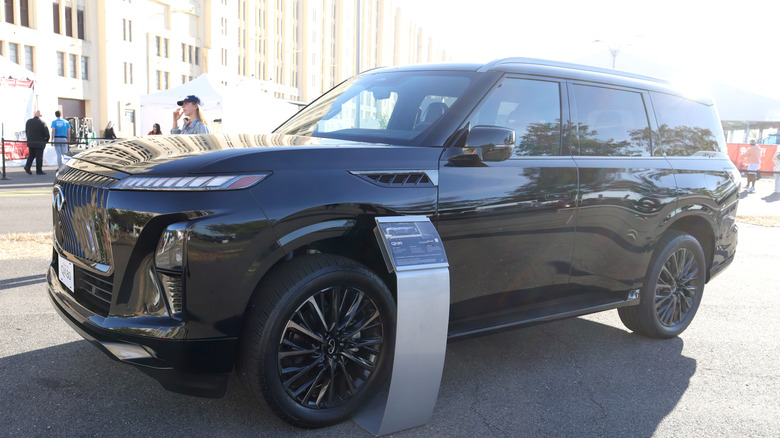
The QX80, like most vehicles on this list, is worth roughly 30% of its original $83,750 MSRP after five years of ownership, leaving it with a value of about $25,125. That's about the only thing Infiniti has in common with others on this list, though. The Infiniti QX80 loses almost half its value after just one year of ownership, making it one of the fastest-depreciating vehicles on this list.
In the first year of ownership, the QX80 loses 45% of its value, or $37,690, which is nearly unheard of — except by one other car on this list, that is. Interestingly, the resale value of the Infiniti QX80 stabilizes after year one, declining incrementally for a few years. In its second year, the QX80 loses another 1% of its overall value, and a few more percentage points in year three, where it's worth 50% — about $41,875 — of its original MSRP.
By year five, the Infiniti QX80 is worth about 30% of its original selling price, and holds that figure until it's seven years old. From there, the decline starts to amplify. If you are eyeing a QX80, be sure you really like it; its immediate, steep decline makes reselling it or trading it in unattractive.
Jaguar I-PACE
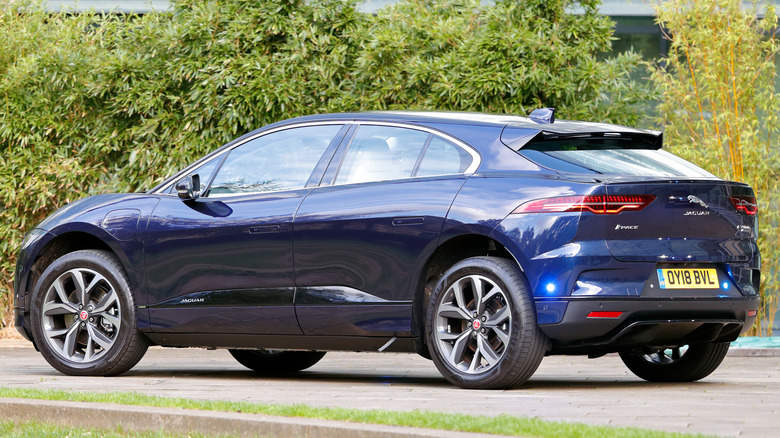
The Jaguar I-PACE may not be the first vehicle you consider if you're in the market for an all-electric SUV, but its resale value is surprisingly decent in the first few years of ownership — at least when compared to some of the other cars on our list. With an MSRP starting at $72,500 excluding destination, it loses about 30% ($21,750) of its value in the first year and declines steadily each subsequent year.
In years two and three, the I-PACE loses about 10% ($7,250) of its overall value each year, and is worth about 50% ($36,250) of its original value after three years. In year four, the Jaguar I-PACE dips only about 4%, leaving its residual value at roughly 45% ($32,6250) of its original value. That's not great, but its steady decline in value makes it easier to resell at almost any point in the first four years.
By year five, the I-PACE is worth 30% ($21,750) of its MSRP. Data suggests the I-PACE is on pace to lose about 4% of its value each year after that. We'll caution that the I-PACE is too new to assess its long-term value. If anything, it is likely to be worse than the data suggests. EVs evolve rapidly, and in seven years, today's EVs will be full of old technology.
Land Rover Range Rover
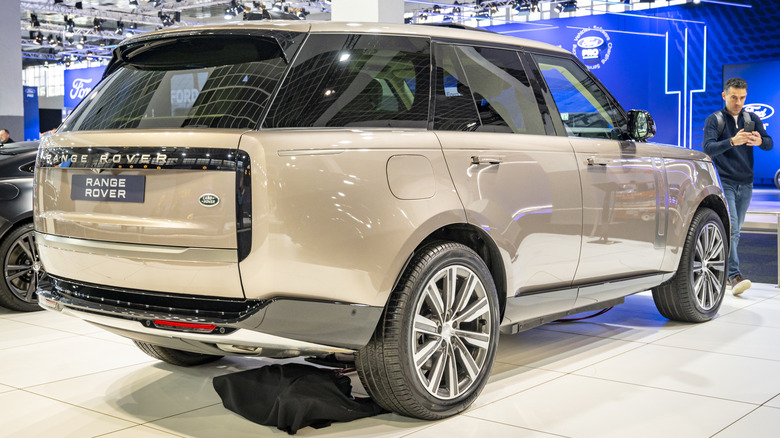
There's never a bad time to buy a Land Rover or a Range Rover. They're sleek, modern, and iconic. Even if you're not into SUVs, there's a good chance you've got an affinity for the Land Rover Range Rover brand. The Range Rover is less rugged than its Land Rover siblings, but is a svelte pavement pounder that holds its own in the lineup.
As SUVs go, the Range Rover's depreciation isn't all that bad at first. From its starting MSRP of $113,300, the Land Rover Range Rover loses about 30% ($33,900) of its overall value in the first year. Cars, trucks, and SUVs rarely appreciate, and retaining 70% of its value after 12 months is actually pretty good for the Range Rover. From there, though? Look out.
Year two isn't bad; the Range Rover only dips another 7% or so in value in its second year off the lot. That's where the good news ends, though. By year three, the Land Rover Range Rover has dropped a full 70% ($79,100) in value. It's a significant drop-off at an odd time in the ownership cycle. After year three, the Range Rover's value steadily declines. By year 10, it's worth about 15% of its original MSRP, or roughly $16,995.
Maserati Grecale
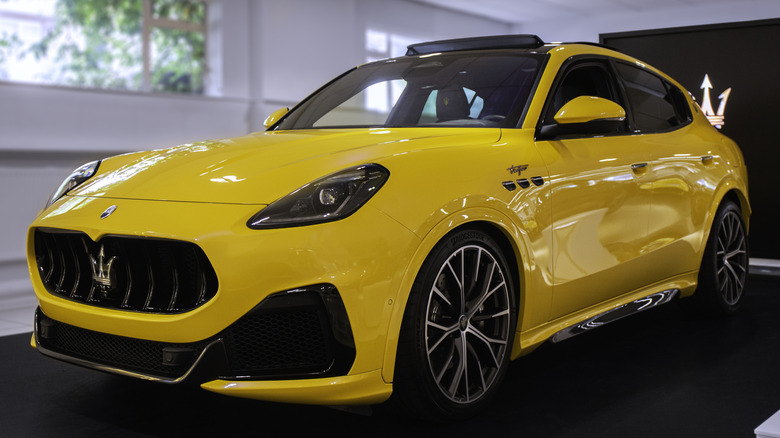
If you're looking for an investment that appreciates, the Maserati Grecale isn't it. In the first year, the Grecale is predicted to lose 60% ($46,740) of its starting MSRP of $77,900, making it one of the fastest-depreciating cars on this list. Its saving grace is that, in its second year of ownership, the Grecale's resale value remains almost the same, depreciating only about 2% in months 12 to 24.
In year three, depreciation starts to slide again, dropping by over 10% to a total residual value of 30%, or $23,370. That's right, in 36 months, the Maserati Grecale loses 70% ($54,530) of its total value. Interestingly, in year four, depreciation is again almost even year over year, just like the trend in the first two years of ownership.
The Grecale continues its slow decline in value after year five, where it dips 6% from year four. After half a decade of ownership, you'll have a car worth about 20% ($15,580) of its original value, which depreciates about 2% every year thereafter. Luckily, the Grecale is a ton of fun to drive, so there's a good chance you won't be interested in selling it anyway.
Maserati Levante
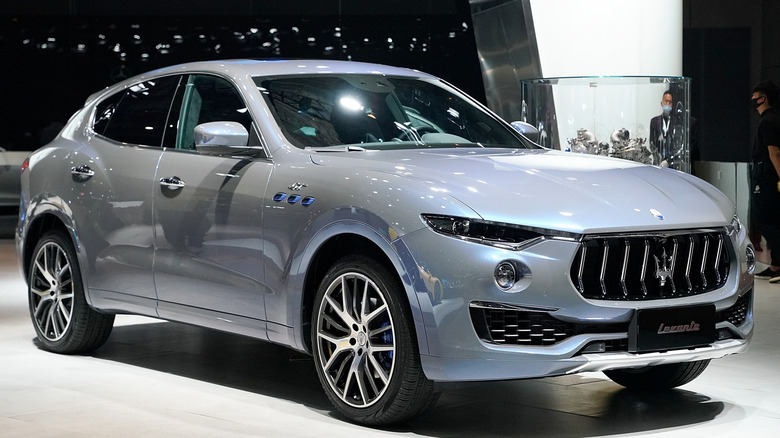
As you may have noticed, Maseratis and Alfa Romeos — both of which are part of the Stellantis portfolio – have terrible resale values. The Levante, unfortunately, is the worst in Maserati's lineup when it comes to resale value. After you purchase one for $102,000, the resale value of a Maserati Levante falls off a cliff in the first year, depreciating roughly 55% ($56,100) in 12 months. Yikes.
As with all autos, the depreciation on a Maserati Levante crossover becomes less volatile over time, but data shows its decline is consistent. There's just no good time to resell a Levante. If you're interested in buying one new, plan to keep it until your mechanic tells you it's time to send it to the scrapyard. Losing 55% of its value in the first year, the Levante drops another 15% ($15,300) in year two and has lost 80% of its value in five years when it's worth only $20,600.
On the bright side, the Levante's resale value may be less terrible starting around the sixth year of ownership, depending on its model year and market at the time. Don't get too excited, though — resale for the Levante never gets good. If you're going to drop over $100,000 for a vehicle like the Levante, be sure it's the one for you.
Methodology
We examined luxury car resale values and focused on how well the vehicles retain value at various points through the ownership cycle. Anticipating average product lifecycles for automakers and the average time of ownership for automobiles, we pinpointed periods when vehicle values dropped significantly and when they remained steady, focusing on years one, three, five, and seven. Our methodology accounts for an average of 13,500 miles driven per year and utilizes CarEdge statistics on depreciation.
Where we noticed anomalies in vehicle depreciation, we left the vehicle off the list. Further, we excluded vehicles with average depreciation and those that were too similar to those on the list or weren't as popular. Overall, we focused on the average value for each vehicle on the list at around five years of ownership, as most people have owned their car for five years or less, suggesting this is about the time they begin shopping for new cars, trucks, and SUVs.