

10 Car Maintenance Tips That Could Save You A Trip To The Mechanic

We may receive a commission on purchases made from links.
Have you become reliant on service technicians and automotive mechanics to handle basic maintenance items for your vehicle? Do you feel like you need to call for help when you have something as simple as a flat tire? Are you waiting for your car to tell you when to change the oil? In all of these cases, you could be spending money that you can keep if you simply know a few things about your car and how to take care of it.
Cars today are filled with computers, warning lights, and mitigating technology meant to keep you safe on the road. Most of this tech is great and helps you keep your vehicle running right. Modern cars can tell you when the tires need air, when the oil needs to be changed, and when you're drifting toward the edge of the lane. The only problem with this tech is that many drivers have become ultra-reliant on the ECU (that's the car's computer system) telling them what to do and when. Who is really in charge here, you or the car?
If you want to save a little money and avoid some unnecessary trips to the service station, these 10 car maintenance tips and tricks can help.
Replacing the fuel cap is a simple way to avoid visiting your mechanic
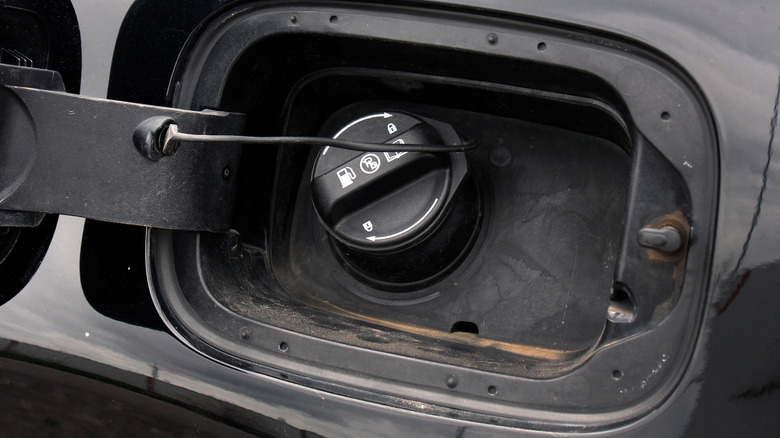
One of the most frustrating visits to a service station ends with the simplest diagnosis. Your gas cap failed to do its job because the rubber gasket that seals the cap to the filler tube failed. This can happen over time because the rubber seal gets worn, cracked, and sometimes falls off, and you might not notice it. You could end up spending more than $100 for a diagnostic visit to a service station just to find out you could have spent $10 on a new gas cap.
The broken gas cap can cause that horrible check engine light to illuminate and basically thumb its nose at you. The gas cap is an important part of your vehicle, and one that is used often — or at least every time you add fuel to your vehicle. A failing gas cap can also trigger an evaporative emission control system (EVAP) code when the real problem is much more serious, such as an EVAP leak.
You have to put fuel in your car regularly. When you do, check the cap and its gasket. That rubber gasket is what seals the cap onto the filler tube, and if it's deteriorated, broken, or missing altogether, then it's time to replace the gas cap. This inexpensive replacement can help you avoid the high cost of diagnostic fees at your mechanic to find out you need such a cheap item.
Use an OBD-II scanner before paying diagnostic fees
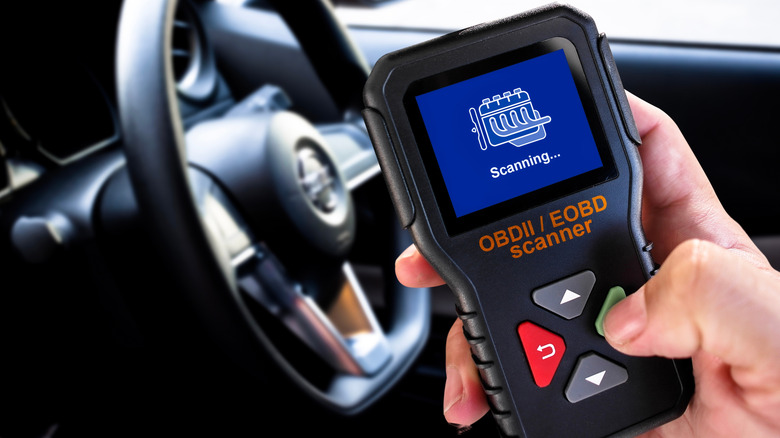
Rather than pay the diagnostic fees at the service station — which can range from $100 to $200 – buy a scanner and plug it into the OBD-II port under your dashboard. Why should you hook up a scanner and check the code? Because this is exactly what the mechanics you take your car to are going to do.
While their equipment is a bit more advanced than an OBDII Scanner, you can be informed of what's going on with your vehicle before you get to the shop. Some scanners like this MotoPower model cost as little as $26.99 on Amazon, which means you could learn that your gas cap is loose or that you need to make a small adjustment while spending much less than a diagnostic fee.
In some cases, you'll be able to fix the problem without going to the repair shop. Even if you can't, you'll know what the problem is when you take your car to the shop. This gives you a leg up on most drivers who don't have these scanners, helping you ensure the repair shop doesn't attempt to charge you for unnecessary parts and labor.
Reset the maintenance required light after performing your own maintenance

Routine maintenance, such as an oil change, tire rotation, or air filter replacement, doesn't always need a trip to the repair shop. However, if you have a newer vehicle that notifies you of maintenance requirements, you'll need to reset the warning after performing any of these tasks. This tells the computer to know to restart the clock and warn you again when you reach the next mileage marker.
Some drivers might simply ignore this warning and reset their trip meter to monitor the time between oil changes or other maintenance functions, but if you want to reset the warning, there are often methods for doing this. It's generally pretty easy to do and only requires a few steps. This YouTube video from Torque & Twisted shows how to reset the Maintenance Required light on a Toyota, and you should be able to find similar videos for other vehicle brands.
Resetting this warning tells the computer that maintenance has been performed. While you might think you're getting one over on the computer by skipping maintenance and simply resetting the light, that is not a good idea. Only reset this light when you've consulted the owner's manual and performed all of the required maintenance for the specified mileage interval.
Check the date before replacing your car battery
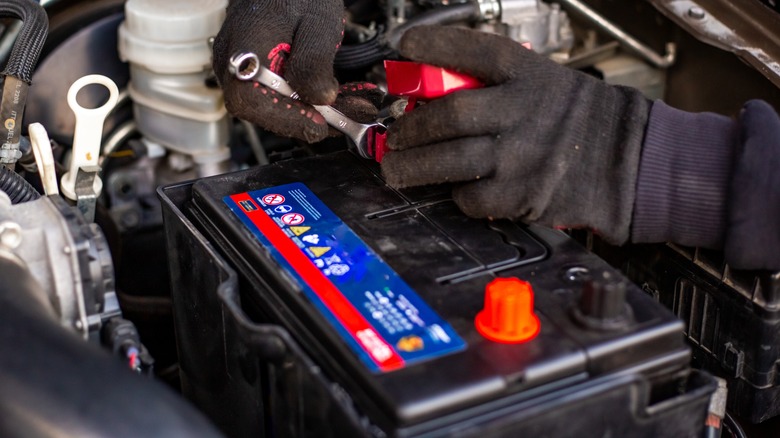
When you buy a new car battery, it's important to get the newest one available. Batteries begin to lose their ability to hold a charge immediately, which means you should look for a car battery with the most recent date of manufacture. Car batteries typically last between three and five years, and that clock begins to tick as soon as the battery leaves the manufacturer. Don't buy a used car battery unless you absolutely have to.
Once you have a new battery, you'll want to avoid the expense of buying another soon. This means doing things that extend the life of your battery or protect the charge. If you don't drive your car often, a battery maintainer can help ensure it stays fully charged during non-driving intervals. The maintainer hooks up to your battery and plugs into a regular wall outlet, helping to maintain the battery's charge between driving intervals.
By keeping your battery in good health, you can avoid the unnecessary cost of a service vehicle visit when stranded because your car won't start due to a dead battery.
Stop topping up your gas tank

Have you ever tried to squeeze out the last few drops of fuel when filling up? It's okay to fill the filler neck that leads down to the gas tank, right? Wrong. Fuel pumps have automatic shutoff systems for a reason. When the pump shuts off after filling your gas tank, you need to stop filling and avoid the temptation to add a few more drops of gas to your tank.
Two vehicle systems can be damaged by adding extra fuel to your tank, which means more costly service visits to the mechanic. The onboard refueling vapor recovery (ORVR) and evaporative emission control (EVAP) systems can become damaged by overfilling your gas tank. These systems depend on a charcoal-lined canister to collect fuel vapors and absorb them using activated carbon. Overfilling your tank can cause this to become saturated in gasoline, resulting in costly damage to the ORVR and EVAP systems.
In addition to causing damage to your vehicle, regularly topping up your gas tank leads to spilled fuel, which is harmful to the environment. All in all, it's best to just let the gas pump's automatic shut off do its job.
Check your air filters regularly
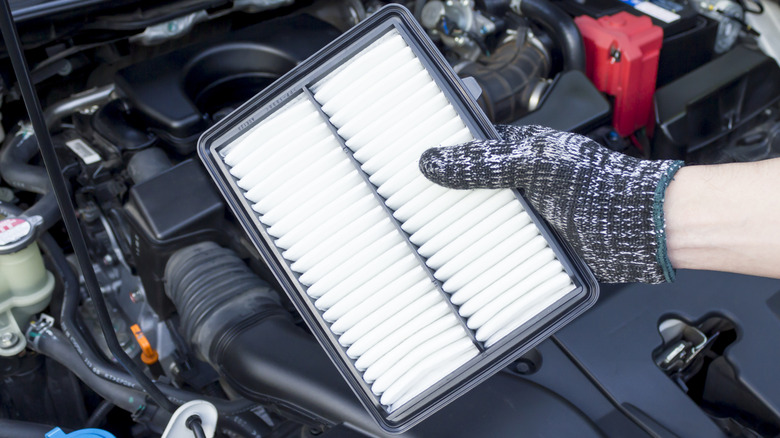
It can be easy to forget that air is a huge part of making a vehicle work. Air mixes in the cylinder with gasoline, and that mixture is ignited, which causes the mini explosion that turns into horsepower and torque, making your vehicle go. While that's an extremely simplified version of what goes on in an internal combustion engine, air is an important part of your vehicle's performance and efficiency.
Your engine air filter should last at least 12,000 miles, but that doesn't mean you shouldn't check it periodically. If you're in the habit of checking various parts of your car at least once a month, go ahead and check the engine air filter. It's usually right on top or to the side of the engine in a plastic box and hopefully easy to check, although there is plenty of variance from vehicle to vehicle. If it still looks clean, you won't need to do anything.
There is also your cabin air filter, which generally resides behind the glove box and should also be replaced regularly. Its job is to keep the air clean in your cabin, and that means you should check it when you clean out your car, or more often if you don't clean your car regularly. Both air filters should be easy to replace, and doing so can save quite a bit of money as opposed to paying a mechanic to replace them for you.
Check all the fluids of your car
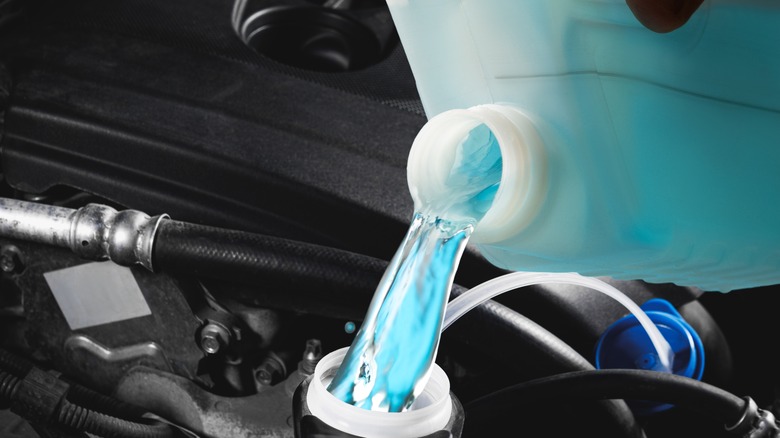
Your tires, brake pads, and fluids are all items that are depleted while driving and must be replaced regularly. Your car's fluids must be replaced most often, and replacement intervals depend on your driving habits, usage, and quality. Synthetic oil lasts much longer than non-synthetic oil, but the good stuff costs a lot more. Windshield washer fluid depends entirely on how often you use it to clean off your windshield.
If you want to avoid visits to the mechanic just to have your fluids checked and topped off, you will need to understand how to do it yourself. This means knowing when to check your car's fluids, and how long each fluid should last. You might not be inclined to replace some fluids, such as your transmission fluid, but if you know how to change your oil, rotate your tires, top off your car's fluids, and replace the air filter, you could save quite a bit of money on service visits over your vehicle's lifespan.
Six fluids worth keeping in mind are engine oil, coolant, power steering fluid, brake fluid, transmission fluid, and windshield washer fluid. Your owner's manual has a maintenance schedule that you should follow for these fluids. You won't likely need to replace the transmission fluid, brake fluid, or power steering fluid often, but you can check them periodically based on guidance in your owner's manual.
Tire pressure and alignment are essential for vehicle health
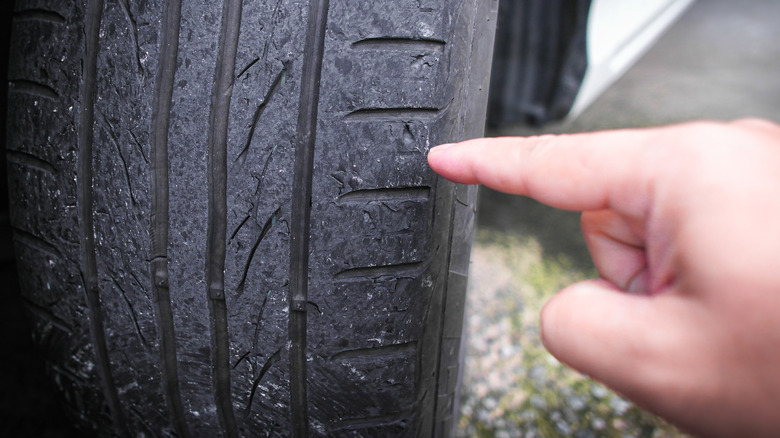
How do you manage your vehicle's tire health? If the answer is that you don't or that you wait for the tire pressure system to tell you that you need to add air to the tires, you're not alone. Many drivers who own newer vehicles with a warning system will wait for the vehicle to warn them about an issue with their tires. Unfortunately, that could mean trouble.
Your tires are the only part of your car that actually touches the road. This makes them very important. You should regularly check the tread depth and tire pressure, regardless of the warnings — or lack thereof — on the dashboard. This gives you an opportunity to get acquainted with the part of your car that actually keeps you safe on the road.
There's an easy trick to keeping an eye on your treads. Take a penny turned upside down and place it in a tread groove. If the tread doesn't cover Lincoln's head, you need to replace your tires. Then look at the tread across the tire and note whether it looks even. If not, you might need an alignment. Finally, check each tire for proper air pressure. A little preventative maintenance can help you avoid the high costs of towing and having to use the closest repair shop instead of choosing the shop that fits your budget best.
Stop ignoring your belts and hoses

If that cabin air filter feels ignored, the belts and hoses under the hood are downright neglected. Instead of waiting for the dashboard to light up like a Christmas tree, when you check those fluids of your car, check the accessory belt and hoses for the coolant and heater systems.
Perform a simple and quick check of these belts and hoses by searching for cracks, fraying, or shiny glazed spots on the belt. These are signs of deterioration and mean you need to replace the belt soon. Squeeze your hoses looking for bulges, soft spots, or cracks, which are signs it's time to replace those hoses. Also look for places where hoses might have loose connections with engine parts. If you find issues, you can either replace these items yourself or visit a mechanic.
A little preventative maintenance now can save an extremely expensive trip to the repair shop down the road. By checking your belts and hoses as a regular part of your car's maintenance routine, you can avoid a much bigger problem down the road.
The oil change sticker isn't always right
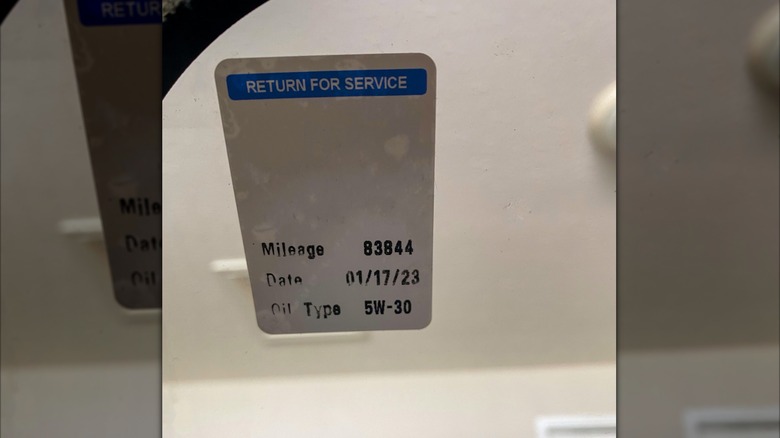
The old adage of 3,000 miles between oil changes is out the window. Oil and vehicles can do much better in today's world, and many automakers suggest as much as 7,500 miles between oil changes. If the shop you visit posts a sticker in your window showing a 3,000-mile interval, check your owner's manual. If the interval shown there is greater than 3,000 miles, take the sticker down and follow the guidance in the manual.
Many drivers use their vehicles every day, but not all. If you don't drive your vehicle often, you might need to change your oil based on time, rather than mileage. Oil loses its viscosity over time, which doesn't lubricate your internal engine parts as well as it should. The increased number of work-from-home professionals has caused many vehicles to sit for longer. Even if you've only driven your vehicle 2,000 miles during the past six months, you could be due for an oil change.
It's important that you consult your owner's manual for the mileage and time between oil changes. A third factor in the duration between, or mileage between, oil changes is the type of oil used. If synthetic oil is used, you could be able to drive up to 15,000 miles between oil changes, depending on the quality of the oil and guidance from the owner's manual. Forget the old 3,000-mile/three-month rule and check your owner's manual and the oil for the proper interval for your vehicle. This should allow you to avoid unnecessary trips to the mechanic, which saves money over the life of your vehicle.