

Salvage These 11 Valuable Parts Before Scrapping Your Old Car
We may receive a commission on purchases made from links.
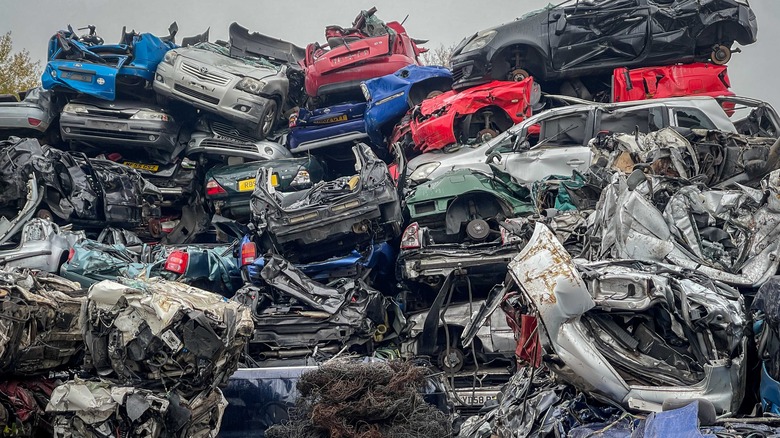
Cars get crashed or deemed illegal or simply rot away all the time. And when people are selling parts off an old or broken car, you can assume there's some grief involved in that decision. But there's still a light at the end of that tunnel. Unless the car you're considering scrapping literally burned to the ground, odds are, there's still some meat left on the bone.
By meat, we mean valuable parts, and the light at the end of the tunnel — money. If you're lazy, the scrapyard will take your spare parts for chump change. But to maximize profits, we're going through the ones you'll surely want to salvage and sell to lucky online customers.
Individual parts can be extremely desirable, especially for vehicles of a certain age that have lost manufacturer or aftermarket backing for reproduction products. But even if your car isn't stock and is full of aftermarket additions, if they fall under any of these categories, saving them is, in our opinion, the best practice.
Wheels and Tires
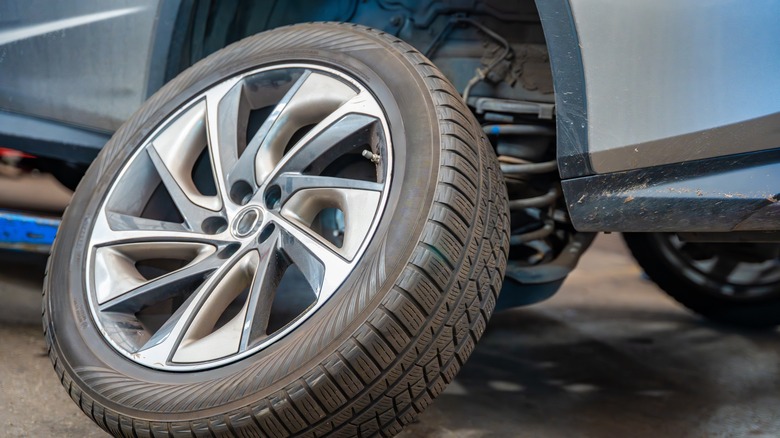
The best part about wheels is that reliability or age doesn't matter. As long as they haven't been curbed to hell and back or bent on a pothole, wheels are just pieces of metal you need to maintain. As such, they tend to retain value well when you take proper care of them. Then again, cars that are scrapped for parts are often involved in crashes, and wheels tend to be part of the casualties. But if yours are still good to go, don't let them die at the junkyard.
So, how much can you get for your wheels? The answer can be many different things. But at the very least, a few hundred bucks is in the cards. For example, we found this Bring a Trailer listing for a set of 13-inch wheels from an FB Mazda RX-7 that sold for $420. Mazda made a ton of FBs, so big money isn't common. But say you own something more desirable, like this set of Fuchs wheels from a 1985 Porsche 944. They sold for over $2,200 (and that's without tires).
Speaking of tires, should you sell them along with the wheels they're mounted on? Good question, but it ultimately depends on your situation. If they're fairly new and you have another car that uses the same size, just remount and get your money's worth. Conversely, if you don't have any use for them, it might be a good idea to sell them separately and squeeze another couple of hundred bucks out of the whole deal.
Engine
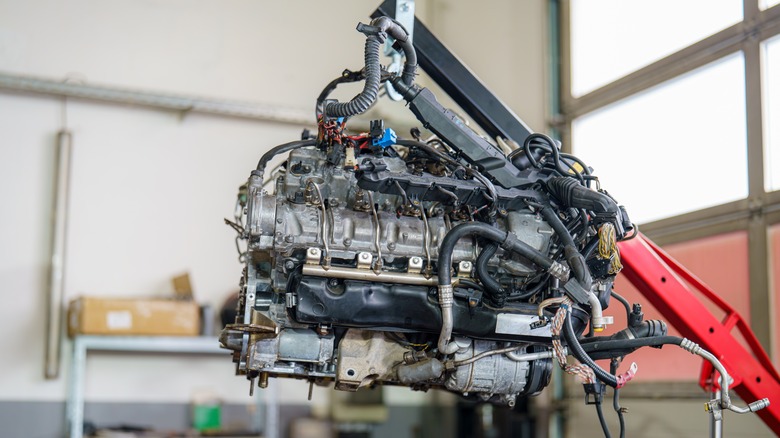
If intact, your engine houses hundreds of parts that other folks might be willing to pay top dollar for. Big-ticket items like cylinder heads, intake manifolds, pulley assemblies, and internals are major selling points, though don't count out those smaller, more delicate items that people always need. They can all make you some money.
Selling individual parts could possibly get you more total cash in the long run, but offering up a complete engine might hook buyers looking for convenience. Either way, well-kept engine components are one of your biggest gold mines. Even mass-produced motors like this 2.2-liter Honda Accord engine, with 138,000 miles on it, sold for a decent $562.50 on eBay. Predictably, performance engines are always going to demand a premium, as seen in this BMW S54B32 and six-speed combo that sold for a substantial $9,000.
But don't forget ... that engine has to physically come out of the car before it's sold. Local mechanics could certainly help you out, but labor fees for that job are sure to cut deep into whatever profits you make from the sale. If possible, get a friend and safely remove the lump yourself, or even better, take a few hundred bucks off the engine's list price and let the buyer hoist it themselves. And maybe throw in a six-pack, they'll need it.
Transmission
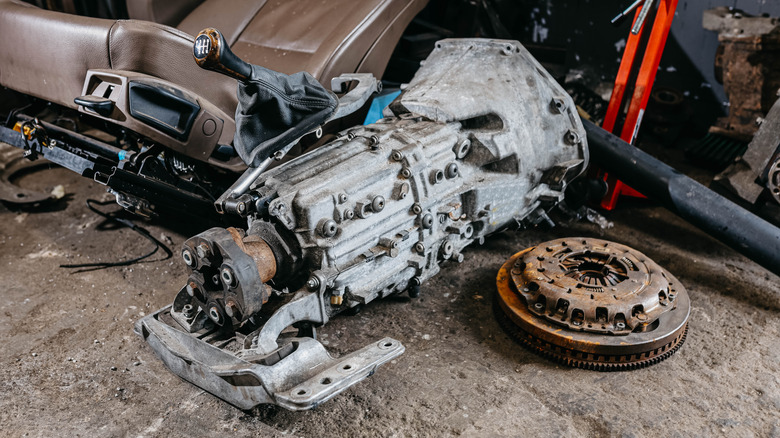
Once again, a car's running gear is among the most crucial elements to save if possible, and transmissions are a major part of that. For older cars in particular, OEM transmissions in working order are becoming a true scarcity nowadays, so think before you blindly discard your mass-produced transmission from the 1980s — you might not believe it, but someone is probably looking for one just like it.
We searched for mid-1980s Ford truck transmissions on eBay, which proved our point. This four-speed Ford box was listed for around $800, and dozens more just like it are on sale for within a few hundred dollars of that price point. Go to the complete opposite side of that spectrum, and you'll find the same thing. For example, we found two Mazda 3 transmissions (one manual, the other automatic) that are poised to sell around the $600 mark.
You also have some unseen advantages when selling a complete, fully operational part like this. Transmission repair is pricey with a capital P (ranging from about $3,000 to $7,000 on average), meaning it can be far more attractive for someone to purchase a complete replacement from you for a fraction of the cost. Also, transmission removal is quicker than pulling an engine, saving you some labor in the process.
Headlights
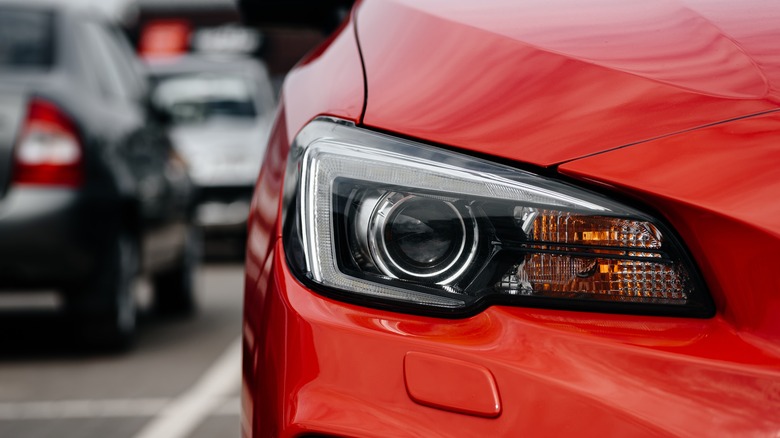
Engines and transmissions are usually built to serve multiple models, sometimes even across multiple brands, in order to save costs and build recognition. Headlights and brake lights that can be swapped between models seamlessly — that's far rarer. Typically, sports cars are the ones borrowing from mass-production models, but in general, lights of any kind are fairly specialized to their specific model.
This is good news for you, the salvager. The harder a part is to find, the more desirable it becomes, and the price only goes up with time. Did you know that headlights for a first-gen Dodge Viper can cost nearly $10,000 for a set? And that's a domestic example. Lights from rarer performance cars go way up from there. Unfortunately, your car will almost certainly not fetch those kinds of prices, but there is still cold, hard cash to be made in salvaging them.
This passenger-side headlight for a Subaru BRZ (yes, just one) is listed for $270, and many more like it are within that $200 to $300 range. For both, you could be looking at $400 on the low end, and possibly close to $600 for a great condition pair. Older cars aren't out of the mix either — this singular passenger-side headlight for a ninth-gen Ford F-250 is listed for about $130. The simple fact is that nothing fits as well as an OEM part, and unless someone is dying for aftermarket LEDs (said no one ever), you are their best option for simple and easy headlight replacements.
Seats
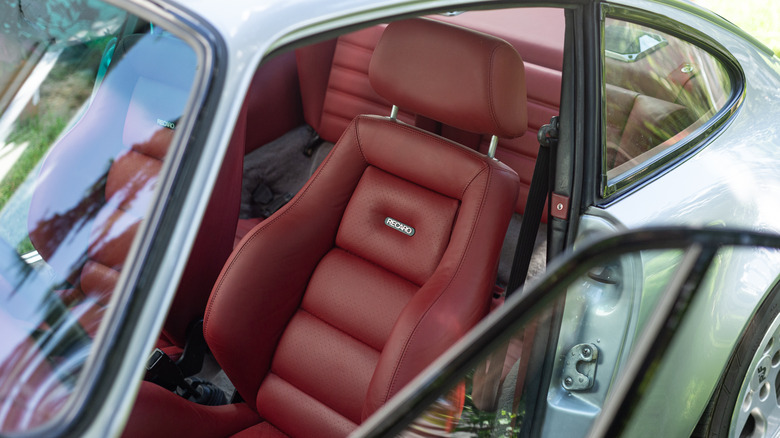
Is it weird to buy something that another person's butt has marinated in for thousands of hours? Come to think of it, yes. But in this case, they are your buyers, and you must not judge them. Those soft combinations of leather, metal, and fabric are not always easy to find in good OEM condition, and services like repair or upholstery can be ridiculously expensive, so it's up to you to take advantage of those facts.
Interiors, in general, are great places to find salvageable parts in cars set for the scrap heap. Typically, the inside of a vehicle is going to survive crashes or other damage far better than the exterior, leaving electronics, steering wheels, and of course, seats fresh for the picking. Though, as per usual, the amount of money you'll get for your seats depends on condition and overall demand.
These particularly nice BMW E36 M3 seats sold for $2,700 because the owner wanted to turn the M3 into a track car. Racing ain't cheap, you know. But it's not just pristine German performance interior pieces that demand money. How about General Motors bench seats? Yep, we found this front bench seat for mid-to-late-1990s Chevy trucks that's listed for $650, and a similar bench that's going for $700. Mind you, neither is in perfect condition, and they aren't rare. Lesson? Don't throw away money that's sitting right in front of you (pun intended).
Sound System
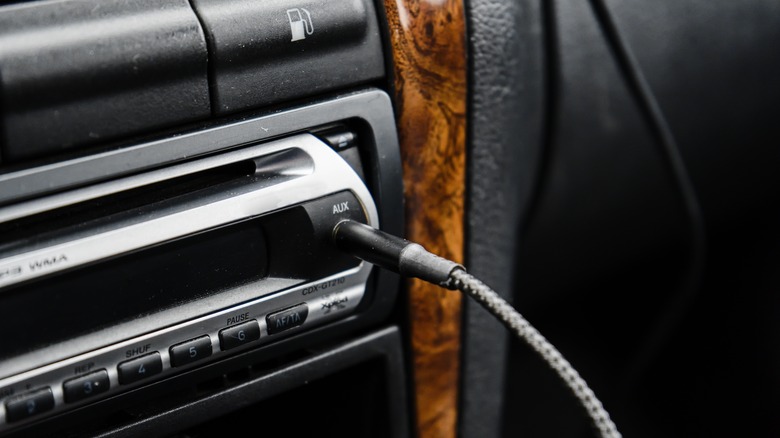
Aside from catalytic converters, which we'll get to later, radios and sound systems are among the oldest salvaged (and stolen) car parts. When digital car stereos became widespread in the 1990s and 2000s, stereo thefts numbered more than a million per year at their height, but as cars became more integrated with technology, pulling a few screws and cutting some connectors became a process all too simple for the modern infotainment system. Now, they're a normal commodity, and selling them on the internet is far more lucrative than on the street corner.
There are many components to a typical sound system that yield varying degrees of financial return. We targeted modern Kia vehicles, for no particular reason, and focused on what you could harvest from its spread of audio equipment. As for the amplifier, we found two decent examples, both of which are 2022 to 2024 Kia EV6 parts, one listed for $281, and the other for $324. For headunits, we tracked down a couple of Kia Sorento parts — this one from a 2011 to 2013 model, and another from the generation after it. Both are listed within the range of $45 to $75. To top it off, we also found a set of front-door Kia Forte speakers that sold for $35.
Though the list of Kia parts we've presented is mismatched, it provides a decent picture of the kind of dough you can expect to extract from even the most common parts. For cars made in the past 10 to 15 years, you can expect at least a few hundred dollars from the entire sound system.
Battery
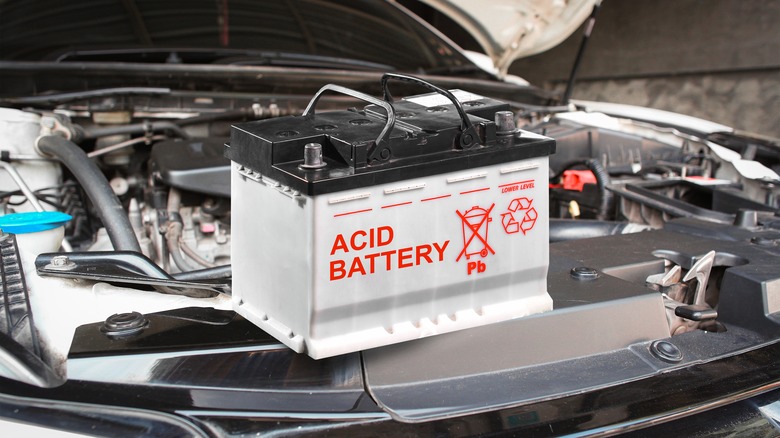
If you intend to remove the engine, transmission, sound system, or headlights, you'll probably need to disconnect the battery anyway. So why not make a few bucks in the process? Compared to every other item we've listed so far, battery removal is far and away the most elementary. Two terminals and a few screws or fasteners for the battery hold-down, and you're home free. It's a classic no-brainer.
But don't get your hopes too high. While new batteries can sell for anywhere between $45 and $250, depending on application, your used, run-of-the-mill, 12-volt battery probably won't. For something like this, it truly depends on the model and condition of the battery, as well as where you sell it. If you want to take the auto parts store, recycling center, or battery retailer route, it's likely only worth between $5 and $15 — maybe $20 if you're lucky. However, even pre-owned, higher-end batteries can sell for closer to brand-new retail prices. We're talking between $50 and $150.
If you want a surefire solution to earn more than just $10, consider selling the battery tray as well. Those are model-specific and far more difficult to source for someone who needs an OEM part. We found this battery tray for a 2013 Dodge Caravan that's listed for about $50, along with several other Mopar trays available for similar prices.
Exhaust System
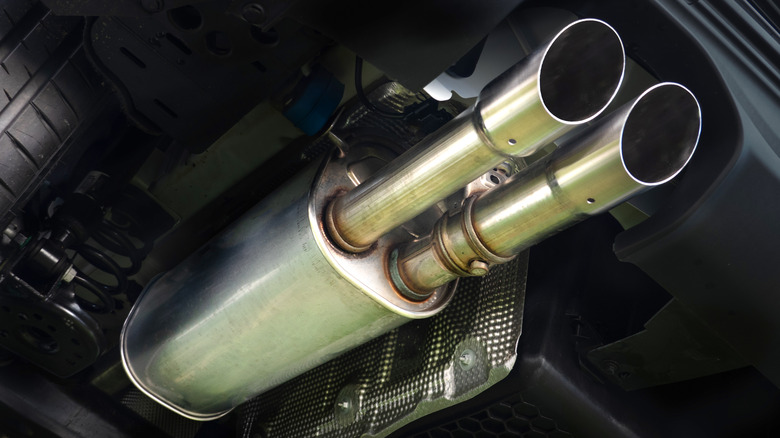
In a world where modified and aftermarket exhausts are so common, your OEM system will be a lifesaver for someone who prioritizes originality over anything else. Folks will pay more money for the guarantee that a part will fit their car, and the best part is that you don't always have to sell the whole system by itself.
A typical exhaust system is made up of several sections, including manifolds or headers, collectors, midpipes, resonators, mufflers, tips, and more. If you can, separating these components may just attract a larger pool of buyers (more individual listings) and put more money in your pocket. We took a look on eBay for OEM Miata exhaust parts and here's a glimpse of what we found: A midpipe assembly for an NA Miata priced at $200, a midpipe assembly for an early NB Miata priced at $99, and a nearly brand-new muffler and exit exhaust system for an ND Miata listed for $250.
That's some quality dough for an extremely common OEM exhaust. As usual, your factory performance exhausts for sports cars and classics will demand even better returns. If the car you're parting out doesn't have its original exhaust, don't be deterred. Aftermarket pieces still have the potential to sell for OEM prices, and possibly even more if they are lightly used and from a high-quality brand.
Catalytic Converter
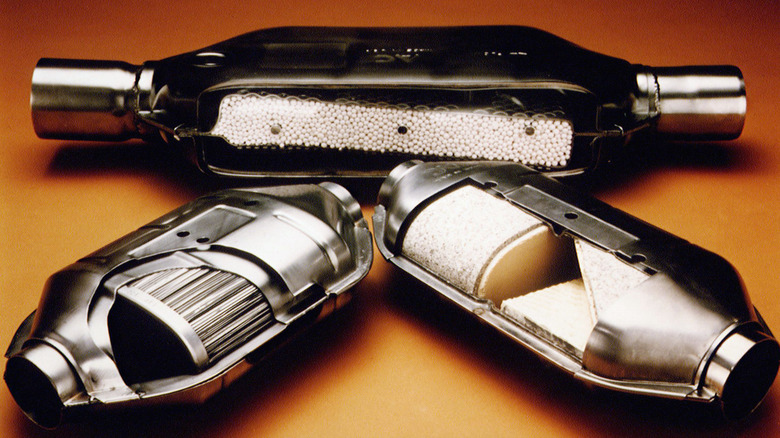
Catalytic converters have been around since they were mandated for new cars in the U.S. in 1975. But to this day, they are one of the best salvageable parts on your car. We mentioned earlier that these are a historically common stolen car part. Why? Simply, it comes down to how the catalytic converter actually works. They use rare materials like rhodium, platinum, and palladium, which convert the harsher carbon monoxide from your engine's exhaust ports into the less harmful carbon dioxide. Those materials, as you may guess, are worth a pretty penny.
The method through which you sell it can vary, though let's be real, you probably aren't going to extract those precious metals yourself and sell them to an exchange shop. Rather, most people sell the whole deal, pipes and all, on the internet to folks who need a new one for their car.
Prices for catalytic converters have shifted several times over the years due to a mix of economic factors, but it seems that the present is a better time than any to be in the catalytic converter business. Supply chain issues born from recent trade disputes have decreased availability for the rare metals, and subsequently, prices have been driven up, meaning you might get more for your cat now than you ever could have before. Prices are not fixed, but for reference, we found this 2010 Mercury catalytic converter listed for around $130, as well as this late-2010s Hyundai converter priced at $250.
Body Panels
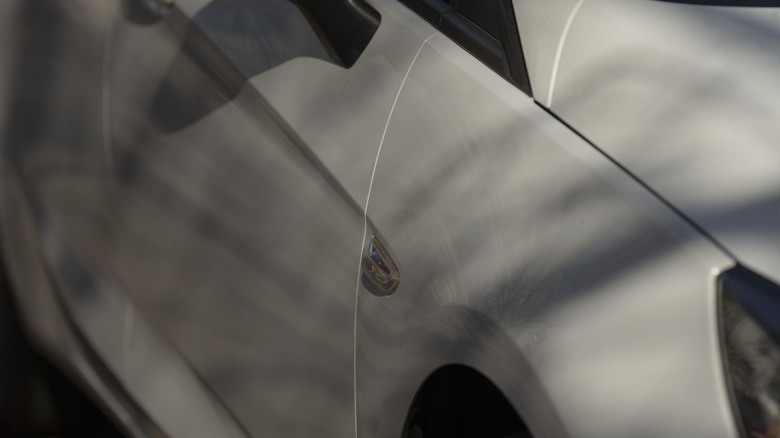
If you want to talk about model-specific parts, body panels are the paradigm. Even within a singular generation of a vehicle, manufacturers will make subtle adjustments to styling and hardware that can render slightly older panels completely useless. Once again, this is an advantage for sellers. When you physically can't mix and match body work between multiple model years, your specific sheet metal becomes that much more scarce and valuable. Supply and demand, people.
This goes without saying, but body panels for older cars are especially great sellers. Unless a manufacturer is cool and still produces classic replacement parts, the only option becomes folks like you who are willing to part with OEM body panels. We must note, however, that if the reason for your salvaging was an accident, the likelihood of having a good-condition body panel goes down significantly. But even if just one piece survived, it's worth selling.
To get a price check, we did some digging for a Lexus LS400 hood — something not too new, not too old, but popular enough that the rarity factor wouldn't hinder values. We found this white LS400 hood on eBay listed for about $300, though that was on the low to medium end. There were several others, like this early champagne LS400 hood going for about $400, that were valued much higher. Hardtops are another body-panel-related part to consider if your car came with one. Most people didn't order their convertibles with hardtops from the dealership, so good-condition examples (like this Honda S2000 hardtop that sold for $6,600) are like buried treasure.
Brakes
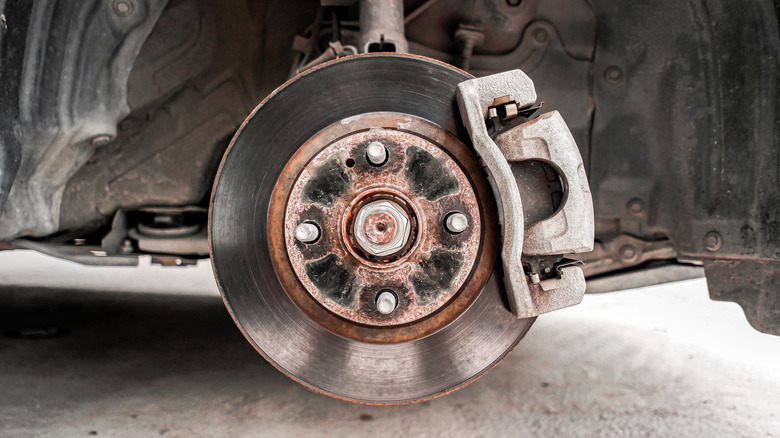
There are multiple ways one could go about salvaging their brakes for cash, and it depends on how much time that person is willing to invest. Taking apart every piece of the braking system (i.e., the ABS module, master cylinder, lines, calipers, rotors, etc.) might be too complicated for some, so we'd recommend removing just the calipers and master cylinder for this one.
For example, if you were salvaging parts from your sadly destroyed Toyota MR2 Spyder, you could likely sell the front and rear brake calipers for between $100 and $200 each. We found this used OEM rear set from a 2001 MR2 going for $180, and this front set of MR2 calipers for the same car listed for $120. That's $300 already. Throw in the master cylinder, like this unit we found for a 2001 MR2 listed for $68, and you've just saved almost $400 that would have otherwise met its end in the junkyard crusher.
If you do happen to have the time to remove all the other braking components (lines, ABS wiring, rotors, etc.), there's no harm done. However, brake rotors specifically might not be worth your time. They can be hard to remove without the proper tools, and many people don't trust used ones because rotor warping can be easy to hide. Your best bet might be getting a few bucks for the steel at a scrapyard.