

Pentagon Catches Up To Iran In Drone Arms Race By Just Copying It
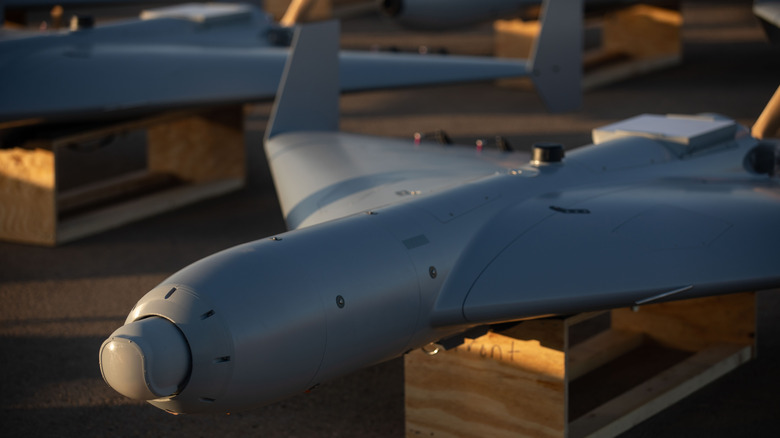
The United States military, the best funded armed force in the world, is in a desperate race to catch up to the technological powerhouse... Iran? The Pentagon recently unveiled a delta-wing drone called the Low-Cost Uncrewed Combat Attack System (LUCAS), made by SpektreWorks. If it looks a little familiar, it's because it was reverse engineered from captured Iranian Shahed-136 drones, which Russia is currently deploying in Ukraine. That is a tacit admission that America's adversaries have better adapted to the shape of modern warfare than the Pentagon has. If you can't ace the test yourself, just copy the other guy's answers.
While America invented drone warfare during the War on Terror, the focus was on relatively large and expensive platforms, like the original MQ-1 Predator from General Atomics and its successor, the MQ-9 Reaper. But recent developments in conflict zones like Ukraine have demonstrated the power of smaller and cheaper designs, many of which are "kamikaze" drones that are not intended to fly home again. The Shahed (which means "martyr") is a powerful example, capable of flying over 1,200 miles with an 88-pound warhead at a top speed of 115 mph, according to the War Zone. Though somewhat unreliable, they are cheap at $35,000 each, making them easy to mass-produce and launch in huge swarms. Russia blots out the Ukrainian sun with its own version.
LUCAS also costs $35,000, but might not be quite as good as the Iranian original. SpektreWorks also makes a dummy drone based on the Shahed-136 called the FLM 136, which can only fly for 450 miles with a 40-pound warhead. If LUCAS shares those stats, then it is only a fraction as capable as the Shahed, despite being made in the most technologically advanced country in the world. That may boil down to simple economics: it's expensive to make things in America, so to match the price, you have to sacrifice ability.
Already in operation, sort of
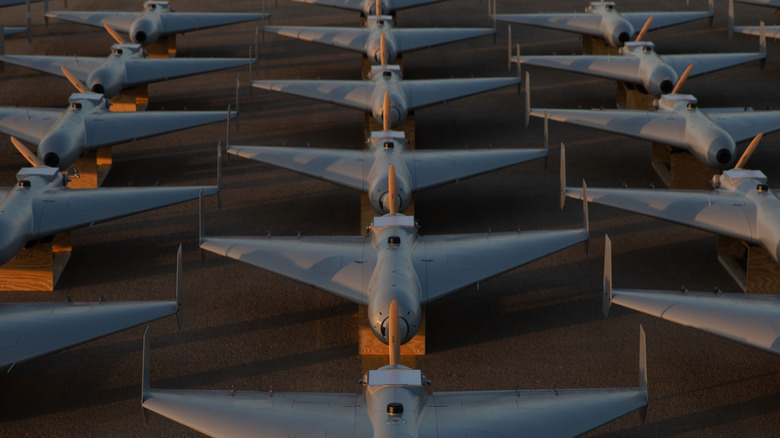
LUCAS has already been deployed to the Middle East with the brand new Task Force Scorpion Strike (TFSS). This is a new initiative under Special Operations Command to reorient towards drone warfare specifically. How many troops are in this task force, and how many LUCAS drones do they have? Unclear, but the answer to both is probably "not many." Their deployment is probably more for show than a genuine threat to adversaries. The Pentagon's hope would be that its simply the small start to a much larger shift to come.
The intent is that this design will not be made by SpektreWorks alone, but be manufactured by a large number of companies, per the War Zone. That's of a piece with the Defense Department's current push to bulk up the domestic supply of drones more generally. The big question is what the right mix of drones should be. Fighter jet-style "loyal wingman" drones are also in development, which cost millions of dollars each. Historically, the U.S. military likes its big expensive weapons projects, and the defense industry likes getting paid for them. How much that mentality should change is an ongoing debate.
Meanwhile, Ukraine is already innovating ways to counter the dreaded Shahed drone. With support from European manufacturers, the besieged country is deploying ramming drones to simply hammer wobbly Shaheds out of the air. And while $35,000 may sound cheap to the Pentagon, Ukraine is mass-deploying $500 FPV drones on the battlefield. It even used them to strike one-third of Russia's strategic bomber fleet, among the most expensive aircraft it has. So is America, the country that invented drone warfare, ready for the next drone war? The answer, for now, is not ready enough. But one way or another, change is brewing.