

14 SUVs With The Most Spacious Third Rows
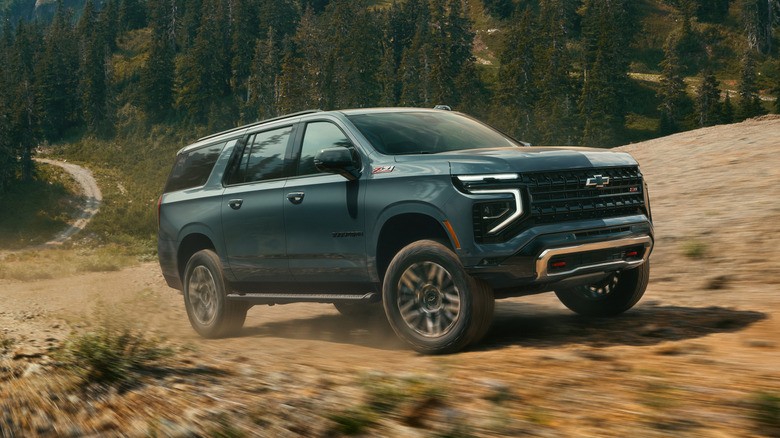
There's an episode of the 1980s TV show "That's Incredible" in which a yogi folded his six-foot frame into an absurdly tiny box. For the average adult, the third rows of some SUVs are reminiscent of that ancient reality show sensationalism. However, some manufacturers don't actually hate the third-row passengers, so they offer SUVs with usable legroom back there. We've rounded up some of the most spacious models below.
Given the differences in seat design, you might wonder just how they measure legroom. The Society of Automotive Engineers (SAE) provides a set of standards for measurements using an H-Point Machine, or HPM. The "H-point" is the location of a driver or passenger's hip joint in a car seat, and all measurements are based on that. There's an archived copy of the SAE's recommended practices for measuring vehicle dimensions using an HPM, and, well, it's complicated. Hyundai offers a less confusing explanation of legroom on its website.
Compliance with the standard is voluntary, so you'd ideally have your potential third-row passengers take a "test seating." Still, the measurements below make a good starting point for car shoppers who need room for six to eight passengers. The average third-row legroom in the industry is 32 inches, so we've set a lower limit of 33 inches, ensuring that all of the models in our list are above average. If two vehicles are tied, the tiebreaker goes to the SUV with more cargo room behind the third row.
BMW X7
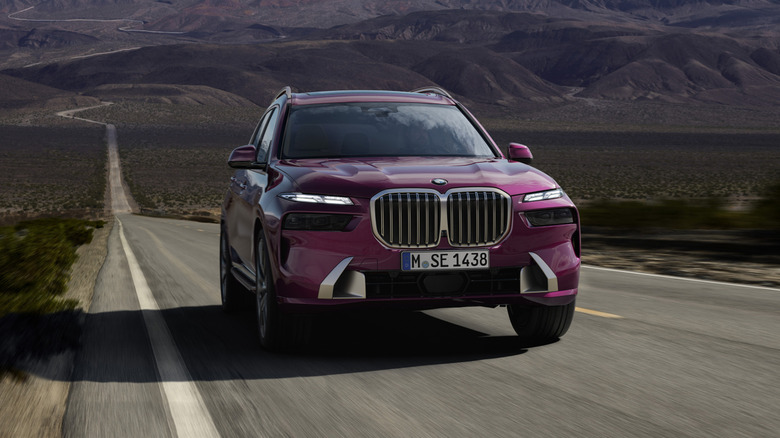
The BMW X7 is one of the sportiest models on our list, offering agility and speed befitting an SUV from the company that birthed the tagline, "The Ultimate Driving Machine." However, while the X7 is still technically a full-size SUV, you pay for its sporty nature with a third row that's the smallest in our rankings at 33.3 inches, just barely making the cut for this list. It doesn't offer much in the way of cargo room behind that seat to compensate, either, with only 12.8 cubic feet of space when the seat is upright. The 2026 X7's starting price is $86,700.
For that premium price, you get a luxurious SUV that's loaded with features like heated seats and a power-adjustable steering wheel. The interior also features plenty of clever storage cubbies. A power-operated second row of seats provides access to the third row, and with the third row folded flat, cargo capacity increases immensely. Power comes from a range of engines, including a turbocharged 375 horsepower inline-six, a 523 hp 4.4-liter V8 found in the M60i version, and a bonkers 631 hp Alpina-tuned V8 in the XB7.
Land Rover Discovery
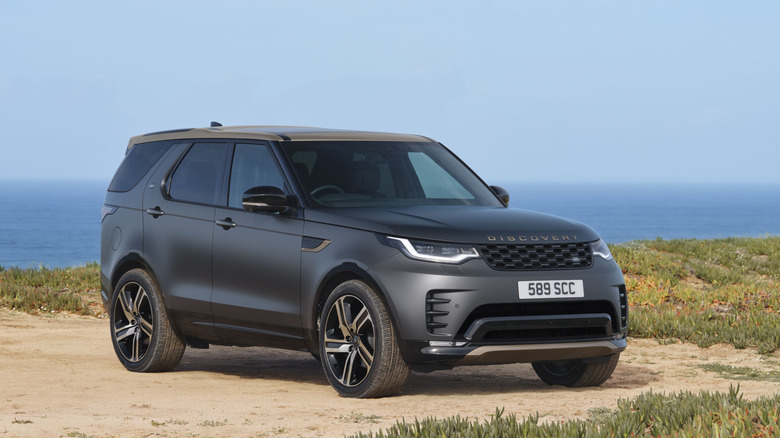
The Land Rover Discovery combines traditional British luxury with serious off-road chops. The third row offers 33.5 inches of legroom and 6.07 cubic feet of cargo volume in the very back. Hopefully, you and your six passengers aren't taking much more than a couple of duffel bags on your adventures in the Kalahari. On the plus side, a reviewer for J.D. Power described the third-row seats as "roomier than they seem," with adequate foot space but compromised knee room.
The Discover's tall cabin does offer plenty of headroom, though. This cabin is luxuriously appointed, with all the comforts you would expect from a premium British vehicle. Its ride and handling are definitely geared more toward driving on rugged trails rather than high performance on pavement. That said, it's no slouch, with a choice of a 296 hp 2.0-liter four-cylinder or a 355 hp 3.0-liter six-cylinder, both turbocharged. The base Discover S model checks in at just a hair over $60,000, rising to $83,500 for the top-of-the-line Tempest Edition.
Dodge Durango
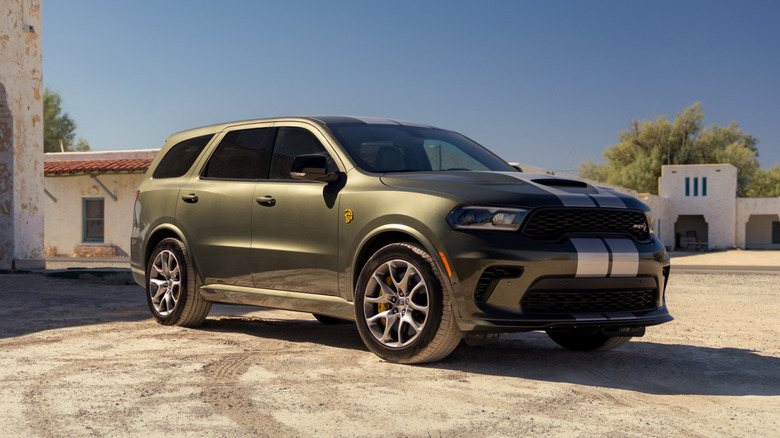
The Dodge Durango has soldiered on for many years, sporting the same basic design since 2011. In fact, the next-generation Durango may not debut until 2029. On the plus side, that means Dodge had plenty of time to refine the model. Its third row offers 33.5 inches of legroom, like the Discovery, but with 17.2 cubic feet of space behind that row, it edges out that Land Rover offering. The 2026 Durango lineup was originally intended to be entirely V8-powered, but Dodge backtracked and announced that the 295 hp 3.6-liter Pentastar V6 would be available for purchase.
The other engine options are a 360 hp 5.7-liter V8, a 475 hp 6.4-liter V8, and the supercharged 710 hp 6.2-liter V8 found in the Durango Hellcat. The latter engine brings this sizable beast of an SUV from zero to 60 mph in only 3.4 seconds. The Hellcat model also offers the Jailbreak customization program, allowing you to choose from a nearly infinite number of interior and exterior configurations — just in case a 3.4-second 0-60 time isn't unique enough for you. Still, we'll give Dodge tons of props for infusing so much excitement into such an old model.
Toyota Grand Highlander
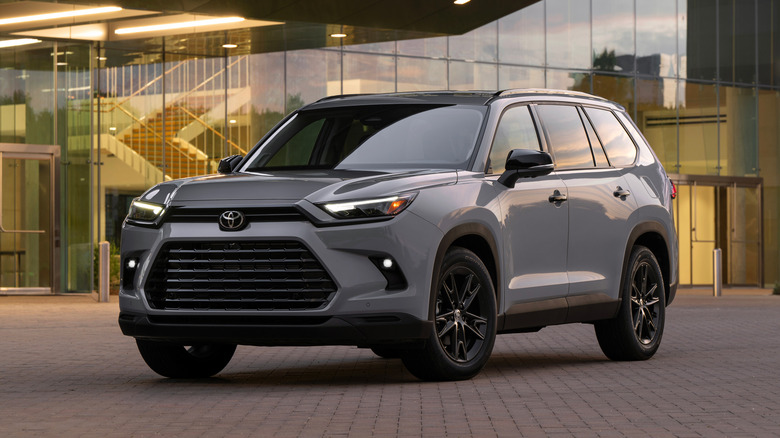
It can be hard to keep track of the wild profusion of SUVs offered by Toyota, and that isn't helped when two models have nearly similar names. The Grand Highlander is a newer model than the long-serving Highlander, with the former having first arrived in 2024. This "Grand" people-mover offers 33.5 inches of third-row legroom with a generous 20.6 cubic feet of cargo space behind it, with the latter number being among the best in its segment. Its cargo space puts it ahead of the Discovery and the Durango in their three-way tie of third-row legroom.
When the 2024 Toyota Grand Highlander was announced, we noted that Toyota boasted its ability to accommodate adult passengers in the third row along with seven pieces of luggage in the cargo area. That makes for one piece of luggage for each passenger. Not too shabby — at least, for a short trip. At a starting price of $41,360, the Grand Highlander is well-equipped with features like three-zone automatic climate control and an optional panoramic glass roof. Gas-only and hybrid power trains are available.
Toyota Sequoia
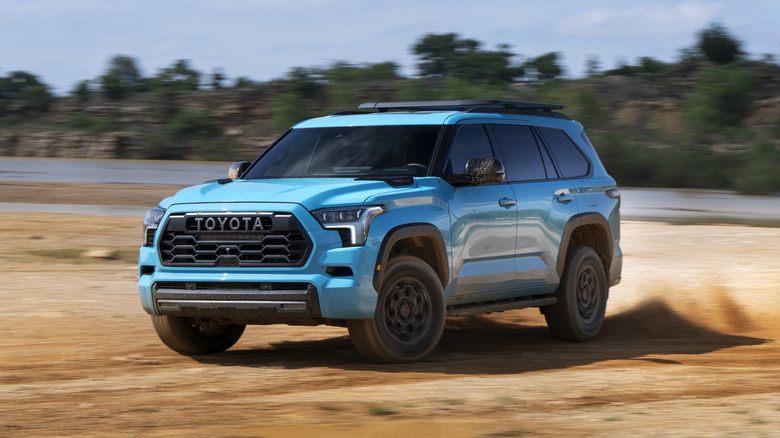
The Sequoia is easily overlooked, as it lurks among Toyota's more popular and better-known SUV models. As an example, Toyota sold just over 26,000 Sequoias in 2024, which isn't very impressive when compared to more than 475,000 RAV4s. Still, the stately Sequoia offers much more space than its smaller sibling, including third-row seating with 33.7 inches of legroom and 11.5 cubic feet of cargo volume behind that row. At a starting price of $64,025, it's among Toyota's more premium offerings. It's big, it's comfortable, and it can tow 9,500 pounds.
Every Sequoia is powered by Toyota's i-FORCE MAX Twin-Turbo V6 Hybrid drive train. This gutsy engine delivers 437 hp and a very substantial 583 pound-feet of torque, and it boasts a highway mileage rating of up to 24 mpg. Its Panoramic View Monitor makes maneuvering with a trailer easier, and optional power-extending running boards make it easier to get in and out. Technology includes a 10-inch head-up display, Qi wireless charging, and available 120V outlets. The Sequoia came in second in our list of cars most likely to rack up 250,000 miles.
Volkswagen Atlas
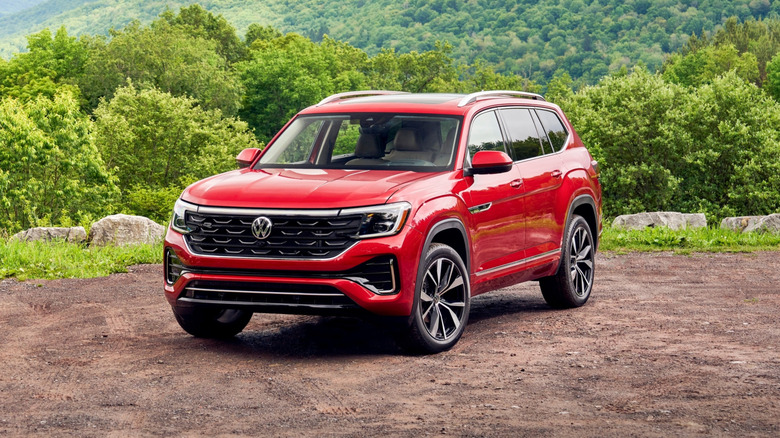
Volkswagen pitches the Atlas as a "family SUV." That might seem redundant, given that SUVs in general are pretty much definitionally family cars in 2025. But the Atlas offers families a little extra: 33.7 inches of third-row legroom and a decent 20.6 cubic feet of cargo space in back. At a relatively affordable starting price of $39,310, it offers some of the best value on this list. It's a versatile midsize seven-passenger SUV capable of towing 5,000 pounds. It's not the most exciting vehicle on our list, but it's a good workhorse for a big family.
The Atlas is powered by a turbocharged 269 hp 2.0-liter inline-four, so you won't beat a Durango Hellcat in a stoplight race. On the plus side, front-wheel drive models get 27 mpg on the highway, with AWD models only dropping by one mpg. Its passenger cabin offers numerous storage bins, and the SUV itself has a decent concentration of tech features. Those features include an optional new-for-2026 HomeLink mirror for connecting to smart devices.
Lucid Gravity
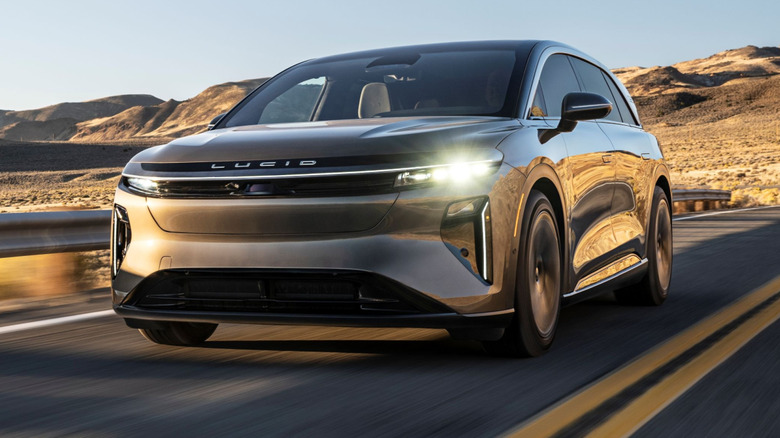
The Lucid Gravity could win over some buyers to the realm of all-electric SUVs, although they'd have to be fairly wealthy to stomach its starting price of $79,900. The Gravity offers 33.9 inches of third-row legroom with 21.3 cubic feet of cargo space behind it. If that's not enough for all your stuff, it also has a "frunk" (or front trunk) where the engine would be in an internal-combustion car, offering an additional 8.1 cubic feet of space. Between all that passenger and cargo space, the Gravity offers a lot of utility.
It's also fast. Like, really, really fast. Even in its base Touring edition, it offers 560 hp and a 4.0-second 0-60 time. Step up to the Grand Touring trim (with a base price of $94,900), and you get 828 hp and a 3.4-second 0-60 time — or a reality-warping 3.2 seconds according to a Motor Trend comparison test. The magazine's review of the Gravity noted some rough edges, which might be expected from a small company that sold its first models in 2021. Still, in our first drive of a 2025 Lucid Gravity, we personally found it to be brilliant.
Mercedes-Benz GLS
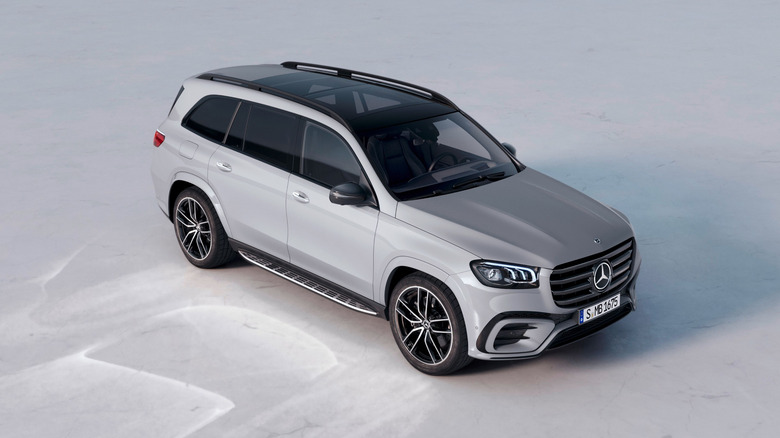
The Mercedes-Benz GLS swaddles three rows of occupants in the comfort that one would expect from a vehicle with the three-pointed star on its grille. The passengers in the very back row can enjoy 34.6 inches of legroom, while the space behind them holds 17.4 cubic feet of luggage or other cargo. At a starting price of $90,250, it's just as pricey as you'd expect a big Benz to be. Yet, despite its luxury focus, the GLS isn't too shabby of a performer.
Credit this performance to a range of smooth, powerful engines. The GLS 450 comes with a turbocharged 375 hp six-cylinder, while GLS 580 offers a twin-turbocharged 510 hp V8. Buyers with 150 Gs to shop with can get an AMG GLS 63, complete with a biturbo 603-hp V8 from Mercedes' AMG performance division. This engine can scoot the 6,118-pound GLS from 0-60 mph in 4.1 seconds. There's a GLS 600 from the Mercedes-Maybach ultra-luxury sub-brand, too, but that model eliminates the third-row seat entirely.
Chevy Tahoe/GMC Yukon
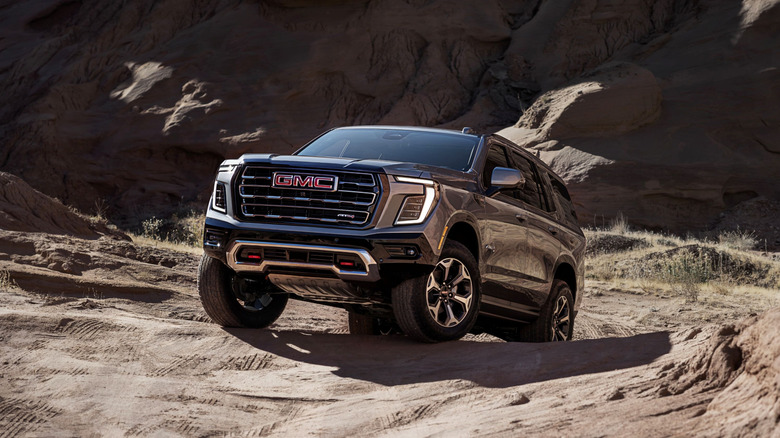
We're giving the Chevy Tahoe and the GMC Yukon a shared listing, since they're essentially the same vehicle. GMC's version is more upmarket, with additional standard features at the base trim level, but it has identical dimensions. (Note that the extended-length Yukon XL is likewise a clone of the larger Chevy Suburban, which we've listed further down our list.) Both the Tahoe and the Yukon offer 34.9 inches of third-row legroom and 25.5 cubic feet of space behind the third seat. Which one you prefer largely comes down to aesthetic and feature preferences.
The Tahoe starts at $65,995 while the Yukon starts at $69,200. At higher pricing tiers, the difference grows. The Tahoe's top High Country trim raises that cost up to $85,995, and the ritziest Yukon — the Denali Ultimate — hits a minimum of $103,300. The extra money gets a Yukon Denali Ultimate buyer additional high-end features that aren't standard on the Tahoe, such as 24-inch "selective machined" wheels compared to the Tahoe's High Country's standard 22-inch wheels. The Denali Ultimate also includes technology like Night Vision, which displays a thermal image to help you see pedestrians or animals in the road.
Cadillac Escalade
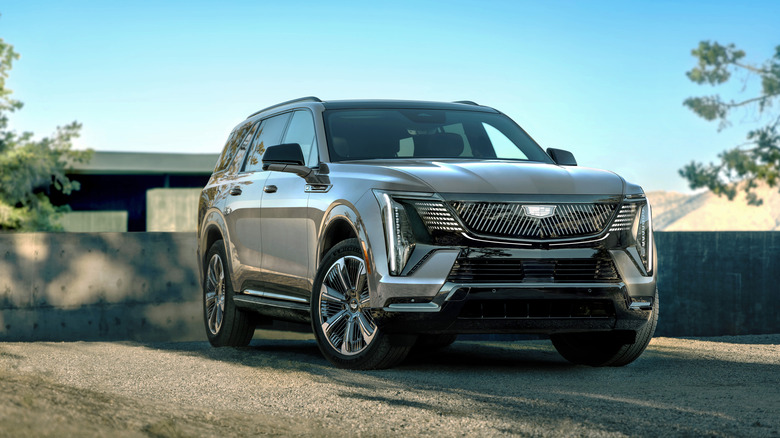
You could argue that the Cadillac Escalade should also have been grouped with the Tahoe and the Yukon, since this third member of the GM full-size family has identical third-row legroom and cargo space at 34.9 inches and 25.5 cubic feet, respectively. However, the Escalade has a distinctly luxury-oriented mission, reflected in its substantially higher base price of $91,100; we think shoppers would be unlikely to cross-shop the Caddy against its cheaper cousins. (We'll also mention the extended-length Escalade ESV here, which offers 36.7 inches of third-row legroom and 41.5 cubic feet of space behind there.)
The Caddy's model range extends to the $168,000 V Series, which comes with a supercharged 682 hp 6.2-liter V8. Even regular Escalades come with a 420 hp 6.2-liter V8 that's good for a tow rating of up to 8,100 pounds. For 2026, there's also the three-row electric Escalade IQL. Both two-wheel drive and AWD are available across the range, except for the V Series and IQL, which come with standard AWD. Features like GM's Super Cruise hands-free driving tech are also standard on all trim levels of the Escalade.
Land Rover Range Rover
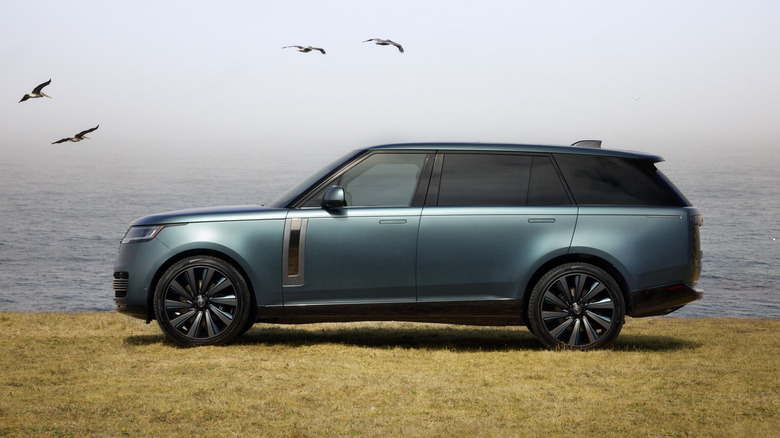
Land Rover's big luxury SUV, the Range Rover, offers a three-row model with a generous 35.8 inches of third-row legroom. However, that comes at a steep cost in the form of reduced rear cargo space, coming in at only 8.7 cubic feet. Seven occupants would be hard-pressed to bring all their luggage on a trip — unless a few of them don't mind holding it on their laps. Still, the Range Rover offers sybaritic luxury at the three-row long-wheelbase model's $120,700 base price. Four-wheel drive is standard, of course; this is a Range Rover, after all.
We should note that Range Rover is more or less a sub-brand of Jaguar Land Rover, and it currently consists of four models. The just-plain Range Rover is the top-of-the-line flagship model that we're examining here. Yes, it's confusing. Anyway, this Range Rover offers a lineup of gas and hybrid drive trains ranging between 395 and 606 hp. Its adjustable air suspension delivers a cloud-like ride on pavement while still providing major off-road cred.
Ford Expedition/Expedition Max
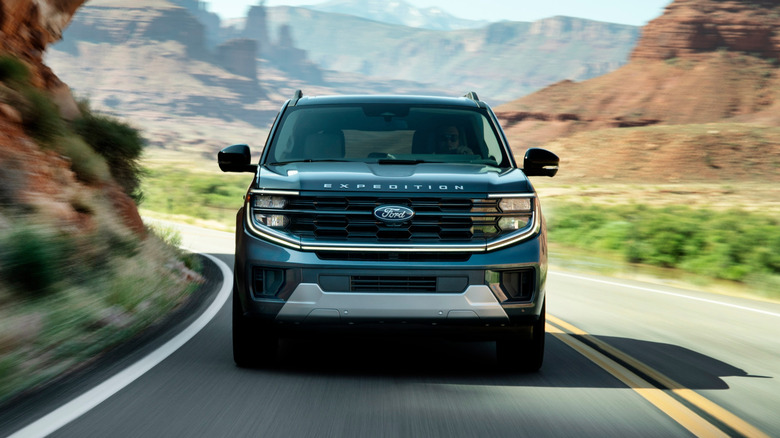
Offering 36.5 inches of legroom in the rear-most seat with 21.6 cubic feet of cargo space just aft of it, the rolling giant known as the Ford Expedition can take the whole family (and all the family's luggage) to the lake for the weekend. If your family includes compulsive over-packers, there's a long-wheelbase Expedition Max with the same legroom but 36.1 cubic feet of cargo space. Add in a 9,600-pound tow rating, seating for up to eight people, and ControlTrac Four Wheel Drive, and the Expedition lives up to its name.
Ford's website refers to the Expedition's engine as simply the 3.5-liter EcoBoost V6. Sounds boring, right? Like something you would have found in a Taurus 20 years ago. But the high-output version is a twin-turbo port-and-direct-injected 440 hp V6 that generates 510 lb-ft of torque. It gets the job done, even in this 5,900-pound truck. For 2026, the redesigned Expedition offers some new interior features and a split tailgate that drew mixed reviews from critics. That model year's prices start at $62,400, while the top-of-the-line King Ranch trim begins at $84,060. The off-road-focused Tremor edition offers Rock Crawl mode and all-terrain tires.
Jeep Grand Wagoneer/Grand Wagoneer L
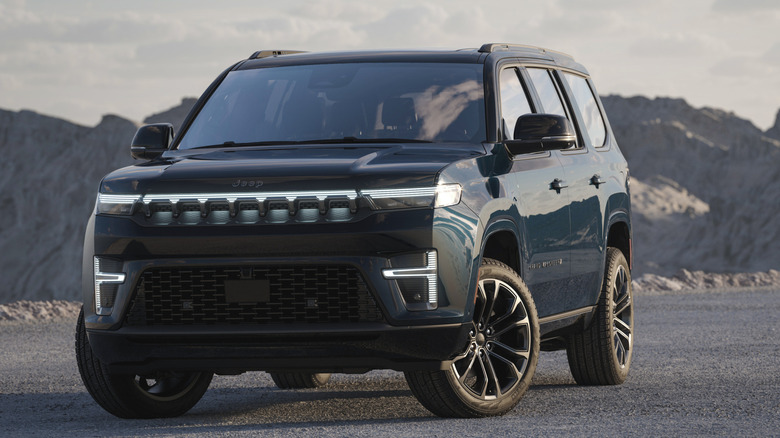
Jeep refreshed the Wagoneer for 2026, which resulted in the company dropping the base model and keeping the Grand Wagoneer at a reduced price. In fact, the base Grand Wagoneer is now priced lower than the base version used to be. The Grand Wagoneer offers 36.6 inches of third-row legroom and 27.9 cubic feet of cargo space. Like the Expedition, it comes in a long-wheelbase version, which Jeep calls the Grand Wagoneer L. That model's third-row seat offers the same legroom, but there's a whopping 42.6 cubic feet of cargo space behind it.
For 2026, the Grand Wagoneer's standard engine is the Hurricane twin-turbo inline-six, a 3.0-liter unit that pumps out 420 hp and 468 lb-ft of torque. This gives the SUV 10,000 pounds of towing capacity. Prices start at $63,240 for a regular-wheelbase Grand Wagoneer and $66,240 for a Grand Wagoneer L. The top trim level, Summit Reserve, just barely cracks the hundred grand mark with its base price. Four-wheel drive is standard on all but the base trim level.
Chevrolet Suburban/GMC Yukon XL
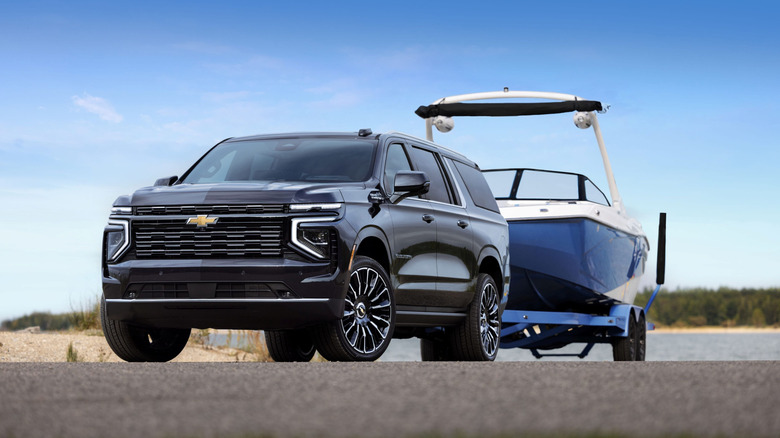
The Chevy Suburban and its GMC Yukon XL twin are the reigning kings of the third-row legroom, with 36.7 inches in both models. Both mega-utes offer a very generous 41.5 cubic feet of cargo space behind their last rows, too, which is better than any of their competitors except the Grand Wagoneer L. The 2026 Suburban starts at $63,400, while its more luxurious GMC counterpart opens the bidding at $72,200. As with the Tahoe and the non-extra-large Yukon, the price gap widens as you go up to higher trim levels.
Both SUVs offer the same choice of three engines. The base power plant is a 355 hp 5.3-liter V8, and the gutsier choice is a 420 hp 6.2-liter V8. For those who want greater fuel efficiency, a 305 hp 3.0-liter diesel inline-six is available. The models offer optional adjustable suspensions that can provide easier access for passengers and greater clearance for off-road obstacles. Towing capacity is 8,300 pounds for the Suburban and 8,400 pounds for the Yukon XL. Each vehicle can seat up to nine passengers if equipped with front bench seats. And here's a fun fact: the Suburban has a star on the Hollywood Walk of Fame. The Yukon XL must be jealous.