

These Are The Most Fuel-Efficient Cars Ever Sold In America

We need to open this one with some housekeeping around methodology. Specifically, fuel economy gets messy when electricity enters the conversation, so this list sticks to EPA miles-per-gallon ratings from gas-powered cars sold in the U.S. Hybrids count, but only if they don't plug in. Aside from making the math messy, full EVs and plug-in hybrids are honestly just kind of distracting in this conversation. If you're into that sort of thing, we'll benignly concede that the Honda Prologue you're powering with a windmill in your backyard is infinitely efficient.
But for the rest of us, the march of progress presented by humble internal combustion is still worth at least a brief internet retrospective. That said, we're going back in time a little bit here, so if you're actively cross-shopping for something to buy right now, you should probably also check out the most fuel-efficient new cars you can buy, according to Consumer Reports.
How these mpg numbers work

If you've ever dug into historical mpg ratings, you may have noticed some eyebrow-raising numbers here and there, especially when it comes to suspiciously strong performance from older vehicles. The '80s and '90s are kind of the dubious mileage sweet spot where vehicles were both legitimately getting pretty efficient, but also benefitted from a dated testing methodology.
Anyway, the EPA has since tried to balance these measurements back into reality, with their current and historical figures now reflecting the closest "real-world" EPA combined ratings available today. Essentially, the updated approach is intended to reflect actual motoring realities instead of the perfect storm of optimism that lead to inflated numbers in the past. So, while we're not trying to discount the rosy glow of nostalgia-tinted glasses, we did try to make sense of the data and aren't trying to get away with anything. After all, this is Jalopnik, not Volkswagen circa 2015. See something about all this you don't like? Just roll with it. Miles per gallon isn't actually the best way to measure fuel economy anyway.
2012 Honda Civic HF – aero and gearing before hybrids won (32 mpg combined)
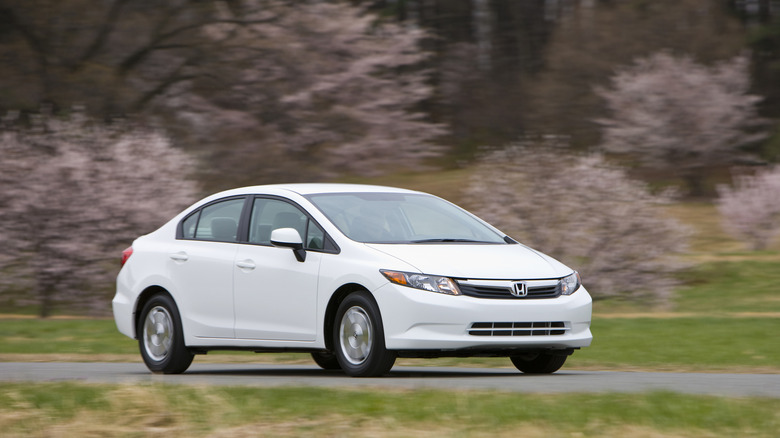
One of Honda's defining characteristics is a relentless commitment to squeezing every last drop out of something that has been iterating to perfection, before cautiously moving on to the next thing. You'd think the company that came up with the Insight way back in the 1900s wouldn't be solving for its fully-electric model with a half-hearted General Motors collab in 2025, but here we are.
Roughly halfway between the Insight and that GM-partnered Honda Prologue was the 2012 Honda Civic HF, a design exercise in getting the last bit of juice out of pure gasoline architecture, before conceding that really big batteries may have some staying power in this industry one way or another. Tall gearing, low-rolling-resistance tires, and aerodynamic tweaks gave it Prius-like efficiency without hybridization, something of a John Henry story set against an automotive engineering backdrop. Still, even though all of those tweaks and optimizations can add up, this one wasn't able to push any further up this ranking, perhaps begging the question of whether the limits of ICE efficiency may have something to do with how city mpg is usually worse than highway mpg.
2014 Toyota Corolla LE Eco – quiet overachiever (34 mpg combined)
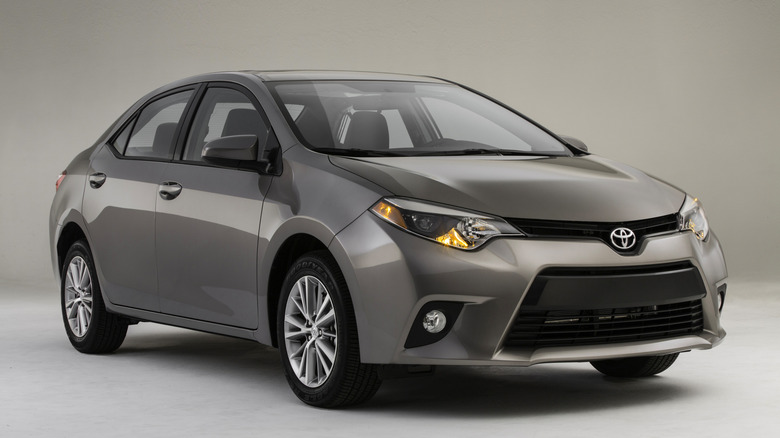
A masterclass in unpretentious efficiency, this particular Corolla is what happens when you optimize airflow and gearing without asking owners to change their lives (or personalities) as part of the bargain. The Corolla LE Eco is the definition of sneaky genius, without a single styling cue that goes out of its way to show everyone that they're looking at some hypermiling vehicle of the not-too-distant future.
Nobody brags about owning one, but everyone who drives it ends up with the same reaction: "Huh, I still haven't filled up." Its 34 mpg combined rating comes from Toyota's meticulous refinement, along with variable valve timing, a "7-speed" continuously variable transmission (CVT), and subtle aero tricks. Heck, the company even went hard with terminology like "Valvematic," even though we all know that VTEC is really the only way to sound cool when you're talking about your proprietary approach to making valves go up and down. Anyway, it's an efficiency hero disguised as a boring appliance, landing it among much more braggadocious companies on lists like this one.
Mitsubishi Mirage – modern minimalism meets...nothing else (39 mpg combined)
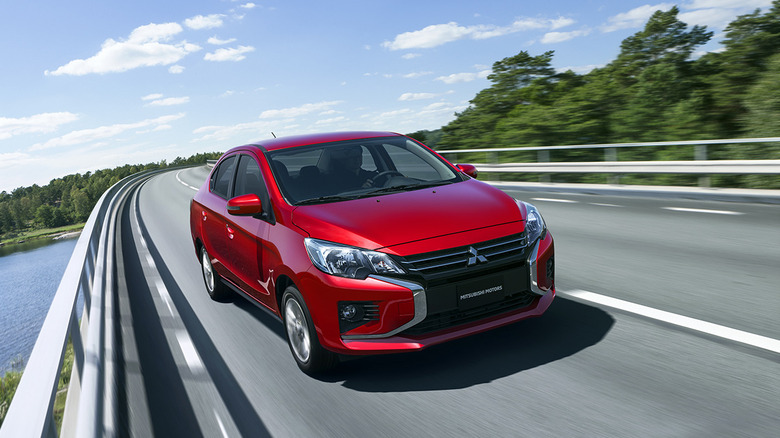
There's not a lot going on with the Mitsubishi Mirage. Its creature comforts are almost non-existent, with very little going on that isn't required by federal law. The Mirage's primary differentiators are fun colors and a price so low that, as a new vehicle, its primary cross-shopping competitors are much nicer alternatives that are 15 years old, give or take.
In theory, it is the perfect car for people who don't care about cars, but a test drive is usually enough to make even that demographic realize that maybe they care about cars a tiny amount. In any case, as much by accident as anything else, this scrappy little Mitsubishi eschewed turbocharging and hybridization (a.k.a., things that cost money) in favor of a 1.2-liter 3-cylinder engine with a CVT that lets you wring serious mpgs out of it through sheer austerity. All things have a season, though, so even enthusiasts can occasionally come up with a case for the Mitsubishi Mirage.
2003 Manual Honda Civic Hybrid – early hybrid ambition (41 mpg combined)
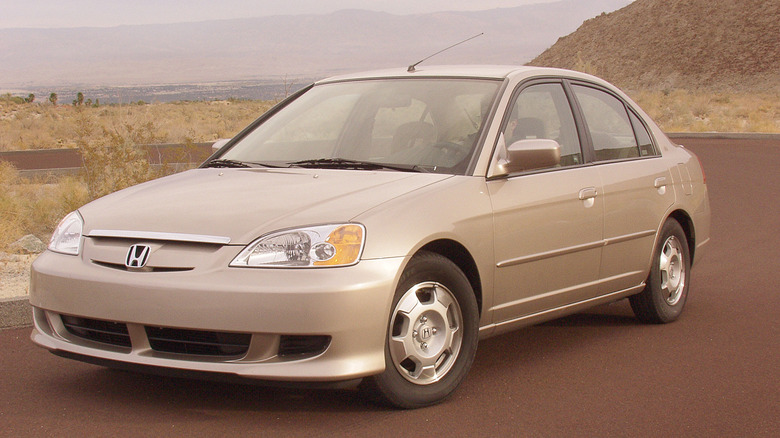
Honda went hard on hybridization early, pioneering the whole approach in 1999 when they launched the Insight that you're going to read about in a minute. A decade and change later, a manual version of the Civic Hybrid arrived, and, to this day, it remains a cult favorite and a huge efficiency win by any standard. This was also a time when the thought that super efficient vehicles can probably just look like regular cars was a relatively novel one (this observation brought to you by the Honda Insight's rear wheel skirts).
In any case, it was a time when squeezing every bit of efficiency out of a car like this was a combination of automotive engineering and no small amount of driving finesse, rowing your own gears not in pursuit of dynamic performance, but impressive mpgs. The manual Civic Hybrid was weird, earnest, and maybe a bit ahead of its time. It's also one of very few hybrids to ever let drivers feel a sense of superiority about their environmental footprint and their gearbox at the same time. Still, despite the niche win and the technological head start, 25 years later, Honda wouldn't even show up among the five most fuel-efficient hybrids you can buy, according to Consumer Reports.
1987 Honda CR-X HF – the lightweight blueprint (46 mpg combined)
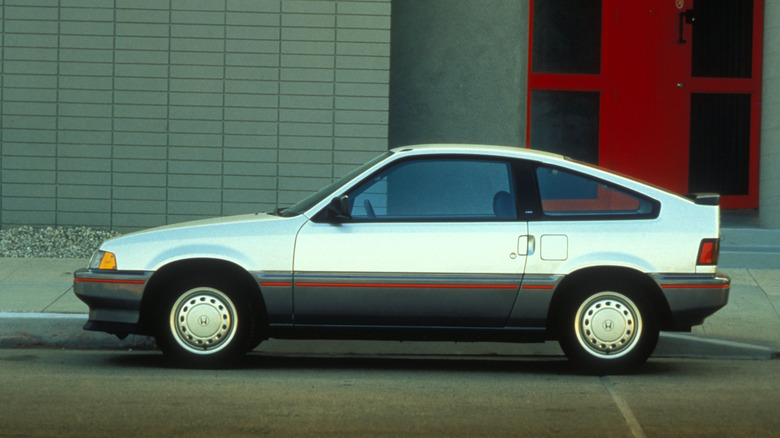
The CR-X HF was really the first mainstream hybrid, assuming you mean that it felt like a hybridization of internal combustion and brisk walking. 1980s Honda was minimizing weight with the same fervor that modern German sport sedans are now packing it on. In retrospect, this was the era in which the company was just beginning to shape its Si-framed performance ethos that you can still appreciate in its lineup today (sort of).
Anyway, long before car nerds were arguing about whether the last Si was a real Si, the CR-X was a simple, smile-inducing grocery getter that also had the DNA (and chassis, sort of) to be an entry-level supercar for the AutoZone set. But alas, staggering speed was left on the table, and we instead got this charming and fuel-sipping piece of history that to this day will easily get you smiles around town, at least from those who know. At less than 1,900 pounds, it makes the lightweight enthusiast favorite Alpine A110 look bloated, meaning that the CR-X has a spot not just on this list, but also in our hearts.
1994 Geo Metro XFi – pure 90s simplicity (47 mpg combined)
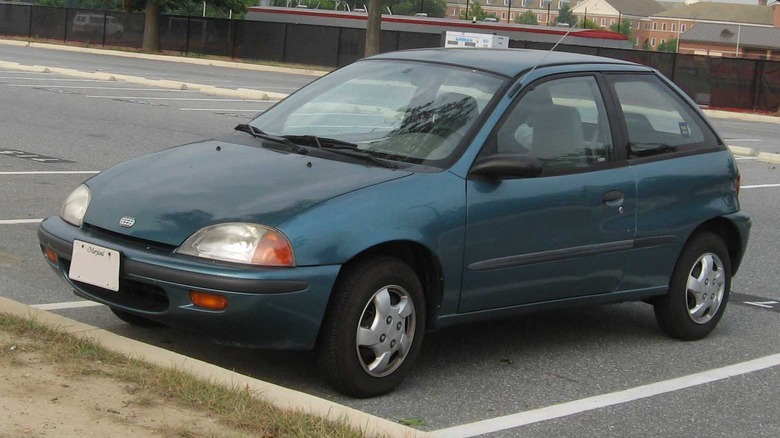
This next car offers three cylinders, trivial curb weight, and fuel economy that you earn simply by being willing to be caught dead behind the wheel of one. The Geo Metro XFi is the car that defined bare minimum for the motoring masses, a spiritual predecessor to today's Mirage without a shred of the cool factor of the CR-X that helped pave the way for such unrepentant economy. It barely had seats, it barely had horsepower, and yet, none of that really mattered. You weren't there to flex, you were there to drive 40+ miles on a gallon of that awesomely cheap '90s gasoline.
Still, what it lacked in dignity the scrappy Geo made up for in mpg math. At barely 1,600 pounds, it was less a car than an accidental experiment in how few resources a company could devote to the act of internal combustion and still technically qualify as locomotion. That three-cylinder (1.0-liter) engine doled out 52 horsepower, which just goes to show that sometimes that's all you really need.
The Metro became an unlikely cult classic for hypermilers, who learned that a gentle right foot and an open stretch of highway could push a Suzuki-built shoebox past anything you may have thought possible, especially with a good tailwind. The Metro was a masterclass in doing the absolute most with the absolute least and is proof that efficiency has never required complexity, just a generous portion of humility and a very light car.
2010 Toyota Prius – the 50 mpg normalizer (50 mpg combined, obviously)
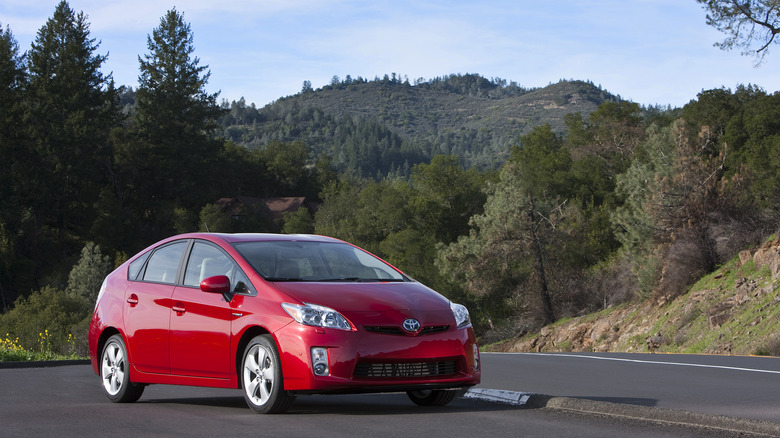
This is the one. It was the Prius that changed the world. We're talking about a cultural tipping point where 50+ mpg was possible in an exceedingly normal car, bringing the eco-savvy, celebrity-embraced smugness of earlier Prius models to the masses. It drove like a car, looked fairly normal, and delivered on the promise of Toyota reliability, even when skepticism toward hybridization was plenty alive and well. Whether you love it or love to hate it, this car redefined what efficiency looked like in the mainstream, and it paved the way for future iterations that would lead to the then-unthinkable opinion that a Prius isn't just not ugly, but potentially the best looking car on the market.
Under the hood, Toyota didn't just tweak the hybrid drivetrain, it overhauled it. The 1.8-liter Atkinson-cycle 4-cylinder engine and electric motor combo delivered improved performance while hitting an official EPA rating of 51 mpg city/48 mpg highway/50 mpg combined – the best fuel economy of any non-plug-in mass-market car at the time. And that's to say nothing of the style, as the body got sleeker, flatter, and more aerodynamic.
2000 Honda Insight – aerodynamic efficiency design goblin (53 mpg combined)
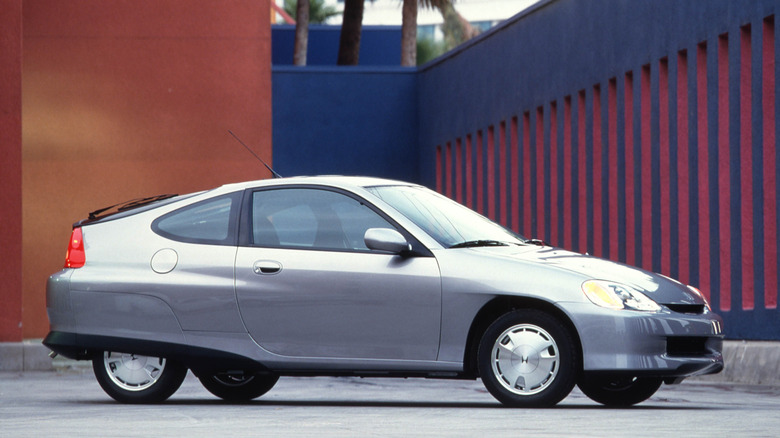
Two seats, three cylinders, and a shape designed unrepentantly for the wind tunnel — the Insight was special. It delivered insane fuel economy by leaning into the premise unrepentantly, with only a modicum of Honda-esque practicality remaining after surrendering all other sensibilities to weight reduction and aerodynamic efficiency. It felt like a clean-sheet design exercise that found its way to being the purest expression of efficiency engineering to ever land in an actual showroom.
At under 1,900 pounds, and with a drag coefficient of 0.25, the original Insight didn't just sip fuel — it pushed the limits of both aerodynamics and the technology available at the time. Honda used an aluminum chassis and body panels, plastic fenders, and a 1.0-liter 3-cylinder engine paired with a tiny electric motor, all in pursuit of efficiency purity. It came only with a manual transmission and room for two, which made it both a technical marvel and a commercial oddity. In hindsight, it wasn't just the first hybrid sold in America, it was a mainstream toe in the waters of unrepentant efficiency without a single care for flash or style.
Still, as vaguely comparable levels of performance became available in much less compromised packages, the place the Insight held in Honda's lineup became consistently unclear, leading to the occasionally overstated announcement that the Honda Insight is dead (again).
2016 Toyota Prius Eco – the efficiency peak (56 mpg combined)
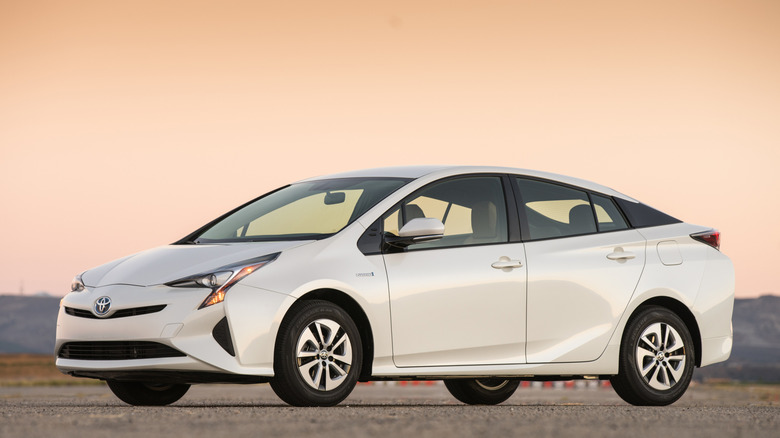
If you want maximum real-world fuel economy from a gas car without trying, this is as close as it gets. By 2016, Toyota had perfected the art of fuel thrift. The Prius Eco trim quietly set a new record for efficiency without changing the car's personality. It didn't brag. It just worked, returning 56 mpg combined like it was almost an accident. Even if it wasn't one of the small cars America would fall in love with, it did have a certain non-enduring charm. It was among the last of its kind in the sense that it still operated under the premise that maximizing mileage was an exercise in minimizing everything else, back before the market started deciding that it wanted exceptional efficiency and a cushy leather interior at the same time.
Built on Toyota's new TNGA platform, this Prius was lighter, stiffer, and more composed than its predecessors. Engineers trimmed friction losses in the hybrid system and redesigned the cooling system to run more efficiently under low loads. The Eco variant went further – dropping the spare tire and rear wiper to shave crucial pounds. It wasn't sexy, but it was smart in that quintessential Prius way: no nonsense, no drama, and no wasted drop of fuel. While most automakers were chasing plug-in hype, Toyota doubled down on perfecting the art of gasoline minimalism — and nailed it.
2023 Toyota Prius – the glow-up (57 mpg combined)
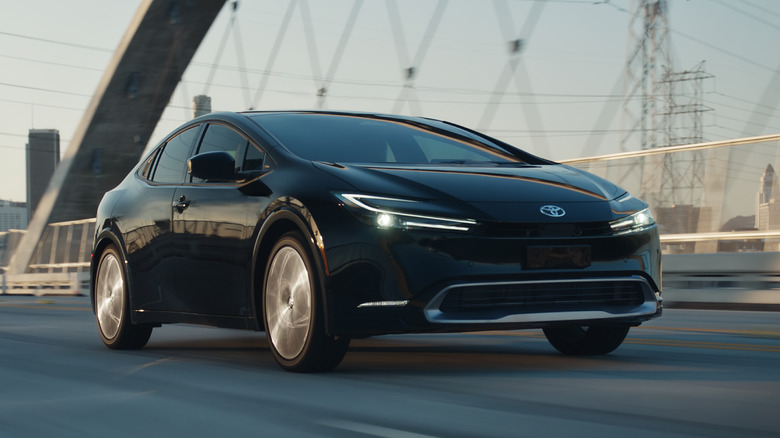
If this were a Hollywood story, our list might end here, with the triumphant return of the mainstream hybrid icon that started it all. The 2023 Toyota Prius was a hot hybrid for a changing world, keeping hybrids in the game despite their increasingly clear role as the middle children of automotive progress and representing either the best or the worst of both ICE vehicles and electric ones, depending on your opinion of such things.
After Toyota doubled and tripled down on insisting that hybrids must look at least a little bit stupid, this one surprised us all by showing up faster, more efficient, and dressed to impress. At last, there's a Prius that can catch your eye at a gas station (assuming you happen to catch it at one) — progress with no aesthetic penance required.
Underneath the sleek new shape, sat an updated TNGA-C platform with a 194-hp hybrid drivetrain and CVT that offered nearly 60% more power than before, all while still being capable of 57 mpg combined. It handled better, accelerated confidently, and, for the first time, looked like something you might actually want to drive instead of just defend. It was proof that efficiency and flash don't have to live on opposite sides of the design studio.
Hyundai Ioniq Blue – the Prius rival that won it all (58 mpg combined)
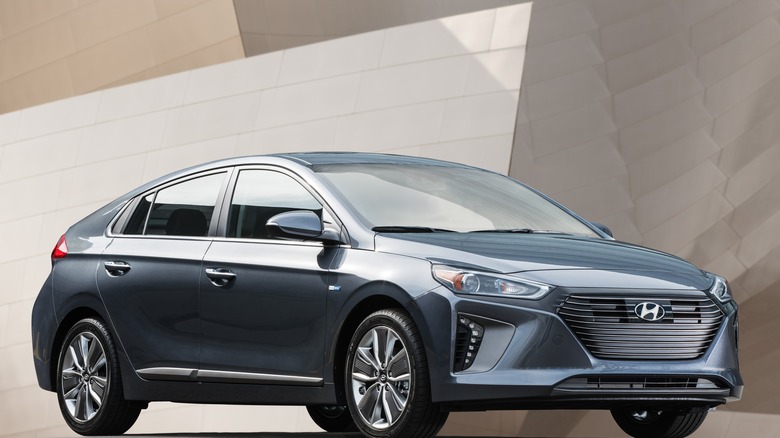
Even in a world where a list of the five most fuel-efficient hybrids you can buy is literally 60% Toyotas, Hyundai took today's top spot and then promptly moved on to other things. Setting a new mpg combined record for a non-plug-in hybrid, this thing was efficient, unremarkable-looking, and is probably unfairly overlooked as the ultimate iteration of quiet excellence, at least when it comes to the driving efficiency of yesterday. We're willing to bet it wasn't on your mind when you started reading this list, and if we ask you about this tomorrow, you'll probably have forgotten about it again. However, there is still a case to be made for the Hyundai Ioniq 5 Blue as the perfect EV for someone who loves quirky cars.
The Ioniq used a 1.6-liter Atkinson-cycle 4-cylinder engine and dual-clutch six-speed transmission instead of a CVT, which gave it a more mechanical and driver-focused feel than any hybrid had a right to offer. It was a direct shot at Toyota's dominance and a reminder that efficiency could be achieved through clever engineering rather than sacrifice. Ironically, the Ioniq name now lives on in Hyundai's EV lineup — and the humble Blue trim that once beat the Prius at its own game is already a footnote in the electric future it foreshadowed.