

Satellite Constellations May Ruin Up To 96% Of Astronomy Pictures Even From Telescopes In Space
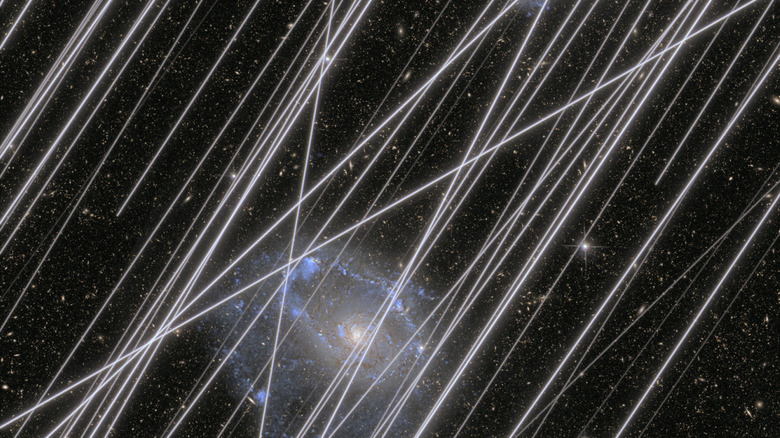
There's been a lot of concern lately about how much these newfangled satellite constellations will ruin ground-based astronomy. Passing satellites leave streaks of light pollution on an observatory's long-exposure image of space; while it was possible in the olden times to wait for one to transit through, the sheer number of satellites in low-Earth orbit (LEO) now is making that harder and harder. Well, don't you worry, because it turns out, it's worse than we thought. According to a new study released by NASA, these constellations will also affect space-based telescopes, such as Hubble among many others.
It couldn't be that bad, could it? It could. NASA's report, published in Nature, predicts that around 40% of all Hubble images will have at least one satellite streak in them. That's not the half of it (literally), since the report predicts that three other space telescopes would experience a 96% contamination rate, all but rendering these expensive and brilliant machines useless. That would be a disaster for astronomy. It's kind of hard to pierce the veil of the heavens when the image looks worse than an old 8mm film strip.
How we got here, and what to do
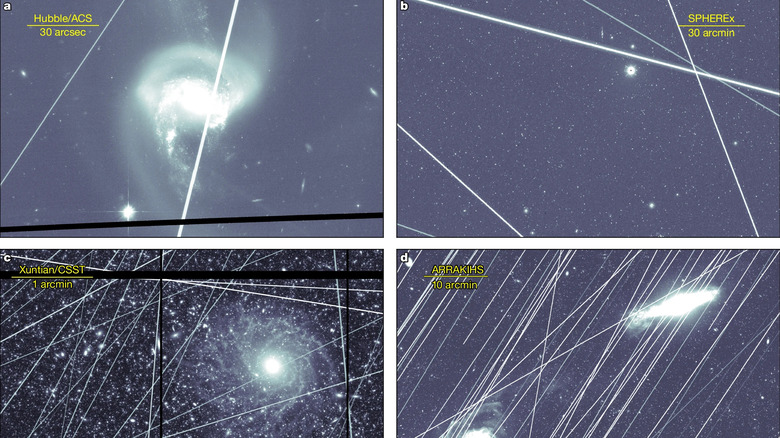
NASA ran its analysis on the assumption that all currently proposed satellites will launch successfully. That would bring the total number in LEO to a truly incomprehensible 560,000. For reference, there are only about 20,000 tracked objects in LEO now, and even that's a massive increase just since Starlink first launched in 2019. Essentially, SpaceX reduced the cost of launching stuff into orbit with its Falcon 9 rocket, which has made all this possible. Now everyone's trying to get their own constellations of small satellites into orbit, from Amazon to China. That race has left scientists in the dust.
Obviously, this all puts ground-based observatories in an even worse position. The brand-new Vera C. Rubin Observatory is one of the most powerful cameras ever built; in its first year, it intends to gather more data than every other telescope in history, combined. That astonishing feat is in jeopardy: NASA's study states that even if the total satellite count stays under 50,000, that will still ruin up to 80% of Rubin's photos. And unlike its space-based brethren, Rubin can't move around.
The report ends by reiterating some previously published solutions to the problem, though implementation is a long ways away. But as more and more beloved space images become contaminated, maybe public pressure will build to implement some of them. Vantablack paint on satellites? It would help! But even that's not enough on its own. The worst case scenario would be that only the distant James Webb Space Telescope, far beyond LEO, would be able to take useable pictures consistently.