

Stop Greasing Your Garage Door Track: Here's Why
We may receive a commission on purchases made from links.
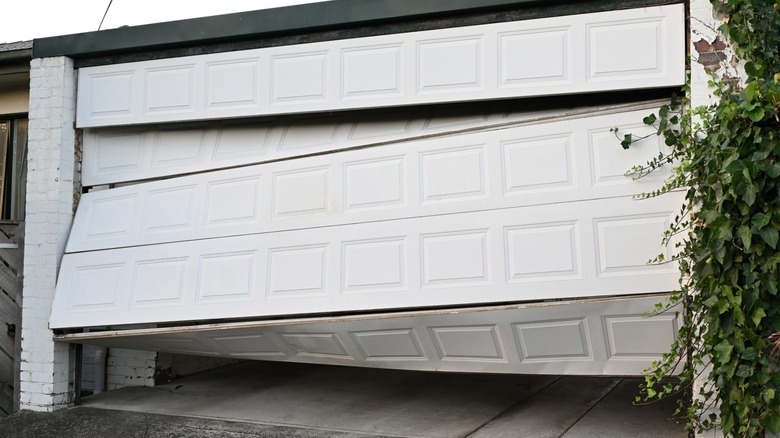
While remote garage door buttons may not be the feature you use most in your car, garage doors see a lot of use by people that have garages. Novice DIYers and new home owners may instinctively reach for some grease when they hear strange noises coming from their overhead garage door. The reflex is well-founded in the notion that if something is making noises that sound like grinding or screeching, it probably needs lubrication.
The problem isn't the desire to quiet the screaming coming from the garage door tracks. There really is a need to apply some lubrication. The issue is where the grease gets applied, even if the intentions of the DIYer are pure.
To the untrained eye, or ear, it can seem that the wailing sounds are coming from contact between the rollers attached to the garage door and the tracks in which they ride. Since it's a heavy-duty connection, supporting the weight of the entire garage door, people often reach for a heavy, sticky grease to help the rollers slide more smoothly.
While the application of grease to the track may muffle the sounds of agony for a bit, it won't last. In fact, it'll only cause more problems later. Garage door rollers are designed to roll along the tracks, not slide. If they're sliding, they may need to be replaced or the door is out of adjustment. Grease, and the dirt it attracts, hinders the rollers' ability to roll, creating tension within the system. Not to mention the mess it makes on the garage floor or your clothes should you brush against the track walking through the door.
Cleaning old grease from garage door tracks
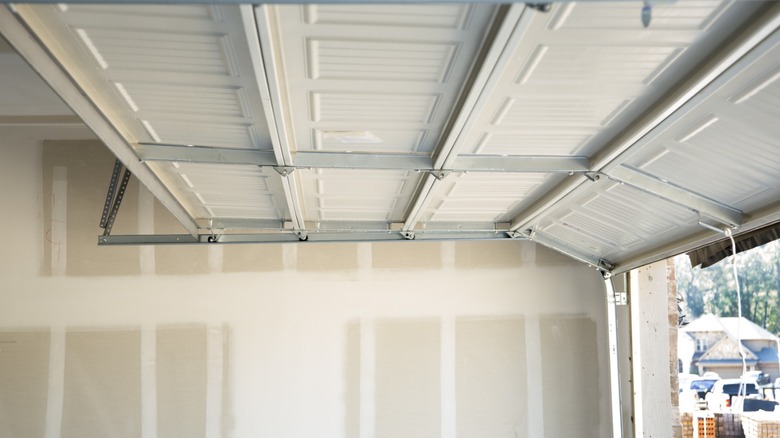
If someone, or you, has already applied grease to the garage door tracks, you'll need to clean them before proceeding. Be sure to capture used cleaning supplies and old grease for proper disposal.
You'll want to wear old clothes and gloves that are rated for use with grease and any degreasers you'll use. If the applied grease is thick and crusty, try starting with a plastic putty knife, wooden popsicle sticks, or tongue depressors to scrape it away. Once the big chunks are gone, an old cleaning brush or toothbrush might help get into the curves and tight spots.
Residual grease will require the use of shop rags and a good degreaser for final clean-up; the folks at Overhead Door suggest disc brake cleaner. Whichever degreaser you use, follow the instructions on the label and make sure the garage is well ventilated to the outside.
Don't grease your garage door tracks; do this instead
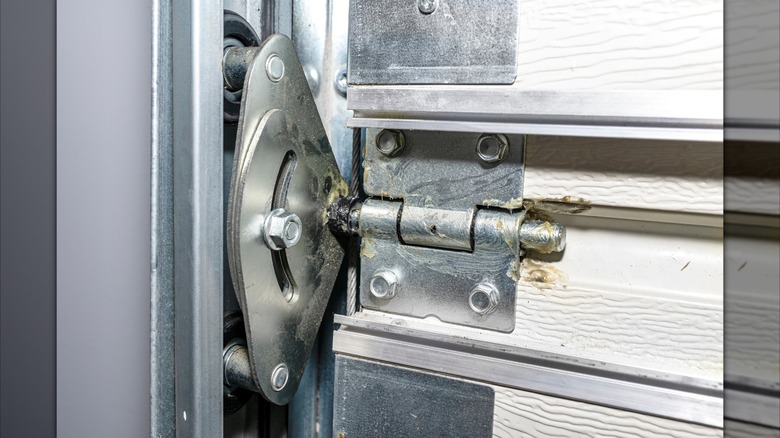
When you hear the first moans from your garage door, don't immediately reach for the grease. Instead, grab some cleaning supplies. The door tracks the rollers ride in should be clean, no dust, debris, and certainly no grease. Use a vacuum or rags to clean the tracks, then focus your attention on the garage door's other moving parts, cleaning away any accumulated gunk from hinges, locking mechanisms, and rollers.
Once the moving parts of the door are clean, it's time to apply some lubricant. People may have used whale oil before modern lubricants were developed, but now there are specialized products made just for garage doors. Garage door lubricants from Blaster and 3-In-One are two examples available on Amazon for under $8 each.
Whichever lubricant you use, don't apply it to the roller tracks. You'll want to apply lube to metal parts of the door lock, roller bearings (not the outside of the rollers), and hinges. The garage door's support and drive mechanisms can also get some love after cleaning. Apply lubrication sparingly to bearing plates of torsion bar systems, or pulley bearings of extension spring types. The drive chain and any cables and cable drums, if equipped, can also benefit from the application of a lubricant. However, avoid drive belt systems and nylon bearings.