

Direct Shift Gearbox (DSG): What It Is And How It Works
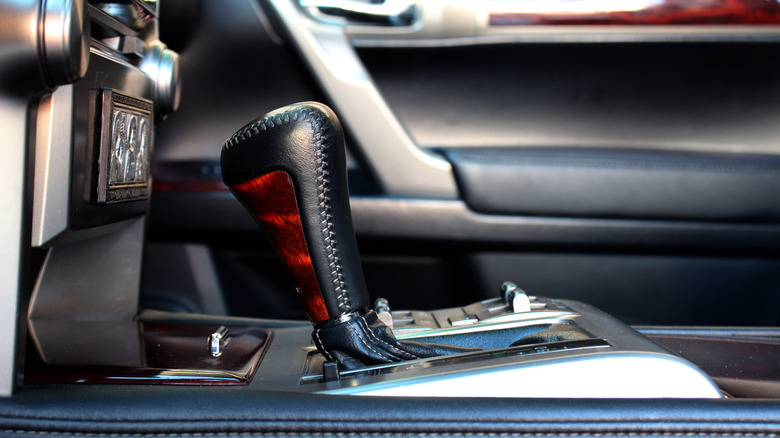
In the early 2000s, when the Direct Shift Gearbox (DSG) debuted, there was a problem that many drivers faced when buying a new car. Conventional automatics were smooth, but they weren't efficient, and manuals were efficient but tiring in traffic. Developed by Borg-Warner and licensed for Volkswagen, Audi, Skoda, SEAT, and Cupra models, the DSG offered automatic convenience with manual precision.
From the outside, nothing about a DSG car looks unusual. But there is a slight tweak that makes a world of difference: the gearbox selects the next ear in advance, cutting the lag that torque converters bring with them. This allows automakers to give consumers the snappier acceleration and lower emissions of a manual without having to buy one, although there are countries where manuals are still more popular. Audi calls its version of the DSG the S Tronic, while Ford, BMW, Mercedes, and others use similar designs under different names.
Dual clutches, two shafts, one goal
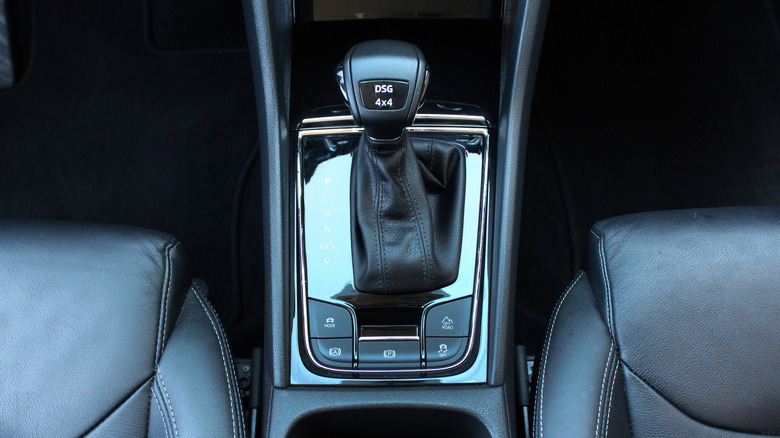
A DSG consists of two gearboxes; one handles odd-numbered gears (1-3-5), and the other handles the even gears (2-4-6). Both of these gearboxes are housed in one unit, and they come with their own clutches. A seven-speed version is used for engines on the smaller side. This one retains the aforementioned layout, but it also takes advantage of a dry clutch setup to improve efficiency.
While you're driving in one gear, the next logical gear is already engaged on the opposite shaft. When it's time to shift, the control unit opens one clutch and closes the other in less than half of a second. This shift point is decided by a mechatronic module in Volkswagen vehicles. This module consists of an integrated set of sensors and hydraulic actuators, and it determines the shift point based on parameters such as engine speed, road speed, accelerator position, and drive mode.
Why DSG became the benchmark for efficiency

In a surprising turn of events, early DSG cars had a leg up over their manual counterparts when it came to efficiency, which was a first at the time. This was thanks to a lighter weight and the ability to pre-select the next gear, which made gear switching faster and aided both acceleration and fuel consumption. DSG's clutch-based layout also helped avert a major problem found with torque converters (which are a big part of how automatic transmissions work) — namely, the thick hydraulic fluid that came with them, which wasted a lot of energy. DSG systems can cut fuel consumption by up to 10% compared to what a six-speed manual might manage. They also helped reduce wear and tear on gearbox components, extending overall service life.
Six-speed DSGs typically use wet clutches, bathing the clutches in oil for durability under higher torque loads. The seven-speed units often use dry clutches to reduce parasitic losses and emissions.
Where you'll find DSG today, and why it still matters

DSGs may have originated in the Volkswagen Group, but it didn't take long for it to spread. Today it appears in everything from VW crossovers like the 2025 Volkswagen Taos to Audi performance models, SEAT runabouts, plug-in hybrids, and even extreme machines like the Bugatti Veyron and Chiron. Porsche took the same core idea to supercars with its proprietary dual-clutch PDK system.
In a testament to the everyday usability and efficiency of DSGs, Volkswagen has started dropping manual options on some cars entirely, instead opting to offer DSG only variants. Even as hybrids and EVs begin to dominate the conversation, the DSG remains as one of the most significant transmission breakthroughs in the internal combustion era. It stands as proof that sometimes the best solution is the one that quietly does everything well. If you want a gearbox that shifts faster than you can think while still making your commute easier, this one still manages to be a compelling option on the market.