

Ford's Lion Diesel Engine In The F-150 Was An Underrated Engine That Deserved Better
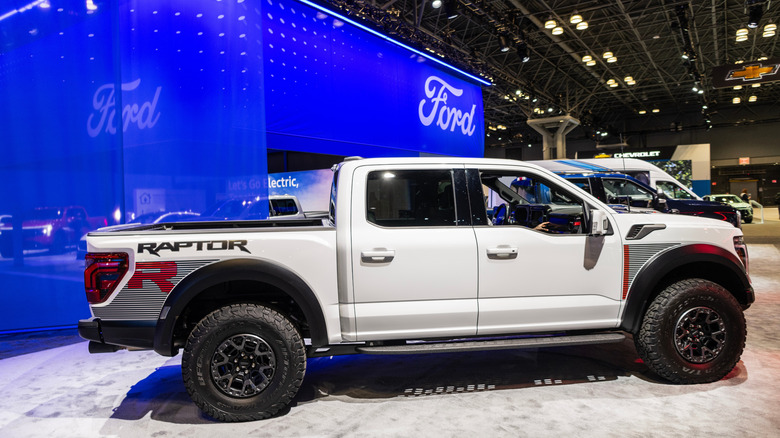
The 3.0-liter Power Stroke V6 that Ford installed in the F-150 (which was a successor to the F-100) wasn't just an off-the-shelf European diesel. Its origins can be traced back to an architecture Ford first developed with Peugeot-Citroën. But before it came to the F-150, this so-called Lion engine family was further refined throughout the years in Jaguars and Land Rovers, later being rebuilt from the ground up with heavy-duty components befitting the requirements of most truck enthusiasts. Ford gave it a stronger forged crankshaft, a compacted-graphite iron block, upgraded bearings, a high-pressure 29,000 psi injection system, and a water-cooled variable turbo.
And in spite of how infamous diesel engines are for their noise, the Lion barely emitted more than a polite murmur. Testers had to stand directly in front of the grille to make sure it wasn't hiding its spark plugs somewhere. It was just that quiet once it warmed up, idling like a mild-mannered gas V6.
Diesel efficiency in a class that forgot what efficiency looked like
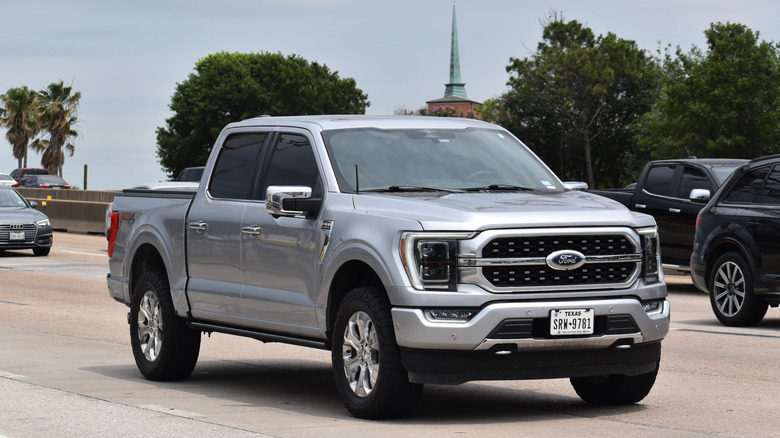
Skeptics might have been unsure when Ford claimed that the Lion-powered F-150 would hit 30 highway mpg, but they couldn't have been more wrong. The SuperCrew 4x4, popular for opening the floodgates for 4-door trucks back in 2001, came close, landing at 25 highway and 22 combined. Other pickup models had competitive results, but it was the rear-drive SuperCab that hit the magic 30 mpg. Numbers above 30 were also common in controlled hypermiling loops.
The Lion's massive low-rpm torque meant it didn't need to downshift every time the wind changed direction. The 10-speed simply slid through its ratios without drama. Yet, despite nailing the efficiency brief, the diesel F-150 sat in a weird no-man's-land. Most half-ton buyers towed just a few weekends a year, making the diesel's advantage feel theoretical. Add a $3,000–$4,000 premium and Ford's incoming hybrid and EV push, and the Power Stroke was squeezed from every direction.
A short run, a quiet death, and a legacy it never got credit for
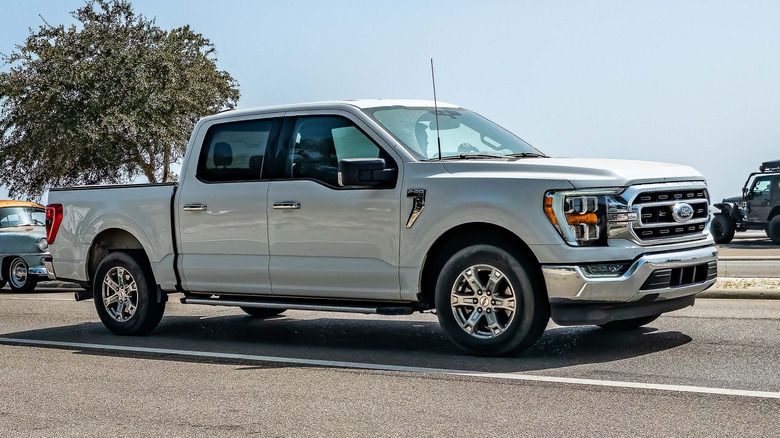
From 2018 to 2021, the diesel F-150 didn't change much mechanically — because it didn't need to. It came out of the gate polished; quiet, smooth, confident under load, and capable of towing 11,400 pounds or hauling over 2,000. The 3.5-liter EcoBoost might have it beat on raw power, but its composed nature was something else entirely. Whether it was dealing with muddy off-road courses or pulling some extra-heavy trailers, the Lion diesel was more than up for the task.
But the market never showed up. Ford anticipated diesel take rates of around five percent, and that's exactly where it landed. Meanwhile, emissions regulations became more restrictive, the hybrid PowerBoost arrived, and the all-electric F-150 Lightning loomed. The Lightning, in particular, turned out to be very successful, recently beating the Tesla Cybertruck in electric pickup sales. Today, the 3.0-liter Power Stroke sits as a short-run oddity in the F-150's engine lineage. It was built for long hauls, but it never got one.