

Every Tire Brand Owned By Goodyear
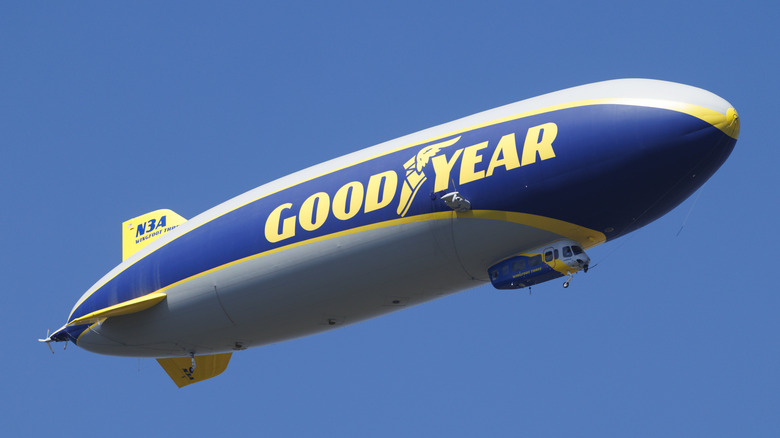
As opposed to other empires that began on the heels of religious, familial, or geographic conflicts, Goodyear's was essentially sparked by accident. In 1839, inventor and chemist Charles Goodyear was experimenting with a mixture of natural rubber and sulfur when he did something all too human — he spilled his concoction on a hot stove. Though he was likely expecting some sort of deathly chemical disaster, the result was a flexible, yet resistant compound — some might say "rubbery." He had just inadvertently invented the process we now know as rubber vulcanization, one of the most crucial discoveries in the development of automobile tires.
Though it wouldn't come into being until around 60 years after Goodyear's discovery, the brand has no doubt lived up to that "empire" label ever since. Its products have been sprayed in celebratory champagne from Indianapolis to Le Mans, helped millions travel over the earth's roadways, and of course, it has that cool blimp. Truly, it's the Coca-Cola of tire companies.
And just like that tasty soda, Goodyear's corporate hands have touched just about every nook and cranny of its respective global industry. Curious if your favorite tire is under the Goodyear umbrella? Well, here's every single brand they currently own.
Dunlop
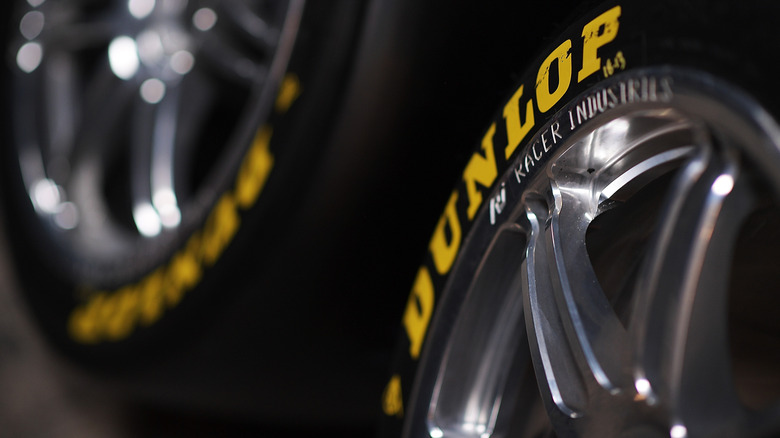
In late 19th century Belfast, Ireland, John Boyd Dunlop watched his son ride his tricycle over cobblestone streets, rather uncomfortably, and decided it would be good for him to have a functioning spine when he grew up (we're assuming). After fixing a few thin rubber sleeves to the tricycle's wheels and filling them with air, Dunlop's DIY solution became the first air-cushioning system in the world. Eventually, he would patent this idea, before opening his first factory in Dublin.
The business quickly grew, establishing another plant in Japan, and from there, exploding into other ventures. Dunlop was a pioneering company in terms of the wider-set tires we see today, and throughout the 20th century, its rubber became dominant in Formula 1, Rally, and Le Mans, where it has won 34 times in total — a record that has yet to be been broken today.
Today, though it's a name brand, Dunlop is a fairly accessible premium tire option, with its SP Sport series tire being a solid and affordable enthusiast choice for performance rubber. As far as ownership goes, this one's a bit tricky. In May 2025, Goodyear sold all of its Dunlop branding to Sumitomo Rubber Industries, retaining only the rights to sell Dunlop motorcycle tires in specific markets. However, Goodyear still has Dunlop listed amongst its group of brands, so clearly the brands are still affiliated with each other.
Cooper Tires
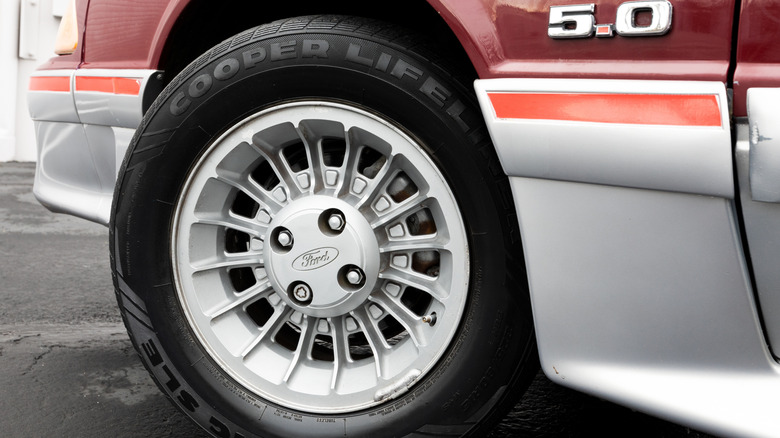
Cooper isn't just a dusty old tire company for boomers and their muscle cars. In fact, it was almost as big of a conglomerate as Goodyear itself, being the proprietor of brands like Mickey Thompson, Dick Cepek, Mastercraft tires, Starfire, Avon tires, and Dean. However, after Cooper was acquired by Goodyear in 2021 for $2.8 billion, they all fell under the same umbrella.
Cooper was founded in 1914 by brothers-in-law John F. Schaefer and Claude E. Hart when they purchased two small tire-related businesses in Akron, Ohio. After a few decades of business, the Cooper name debuted, inspired by one of their company directors, Ira J. Cooper. The middle of the 20th century was incredibly formative for the brand, as the move from bias-ply to radial tires was beginning to take shape in America by the 1970s. The period before and after this shift cemented Cooper as a force of innovation and development with products like the polyester and fiberglass-corded 70 Series tires from the 1960s, and the iconic Cooper Cobra Radial G/T performance tire from the mid-1980s.
Despite Cooper's currently massive scale of operations, they aren't sellouts. For most of its history, Cooper sold and distributed only through independent mom and pop shops — one more reason why folks still swear by the brand's products after more than 100 years. As an added bonus, this is also one of the few companies that still make tires in America.
Mickey Thompson
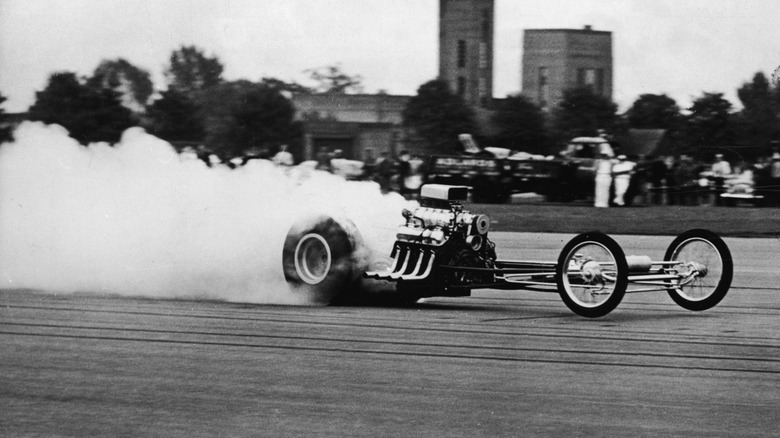
Numerous brand names are linked to individuals who founded or inspired them, but none are quite as blood-bonded as Mickey Thompson. Thompson's contributions to hotrodding are incalculable, and because it would take an entire library to encapsulate his accomplishments, here are a few notables: Designing and building the first slingshot-style dragster in the early 1950s, breaking the land speed record at Bonneville in 1960 at 406.6 mph (he also reclaimed many speed records previously held by the Nazis), winning the 1968 NHRA Spring Nationals in the Funny Car class, winning the Baja 1000 at age 54, and posthumously being inducted into the Automotive Hall of Fame in 2009.
Though specifics aren't available, he apparently once did an IQ test that reportedly categorized him as nearly a genius. Unsurprising, considering he got his start in business making his own prototype speed parts, testing them at races, and then selling them if they worked well enough. His company became a mainstay in drag and circuit racing culture almost immediately, and it continues to build high-quality, purpose-built street and strip tires today.
Devastatingly, Thompson was murdered in 1988 alongside his wife Trudy over a business conflict, the orchestrators of which wouldn't be convicted until 2007. We choose to believe he'd be proud to see his life's work owned by Cooper, and by proxy, Goodyear.
Mastercraft Tires
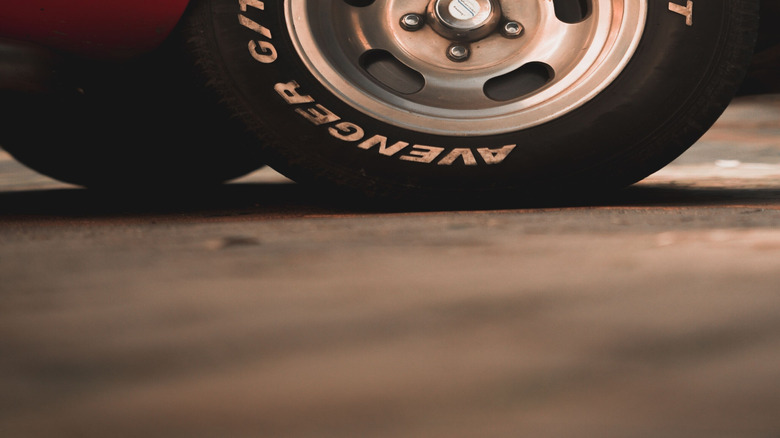
It may not be as recognizable as Cooper or Mickey Thompson, but Mastercraft Tires actually predates them all. Founded in 1909, this brand is among the oldest in the world, and got its start in none other than the rubber capital of America, Ohio — the same place where Cooper and Goodyear began. Early on, Mastercraft (called Falls at the time) was in the thick of the Ford Model A popularity, which, as one could imagine, was a demanding business (the Model A was one of the most popular cars in America in the late 1920s and early 1930s).
Consequently, Mastercraft's operations caught the eye of corporations looking to grow, and guess who they got in bed with? Surprise, it's Cooper Tires, baby. The Falls brand name was dropped in the 1990s and replaced with the "Mastercraft" moniker we refer to it today. Just like Mickey Thompson, Mastercraft was indirectly bought by Goodyear in its big 2021 acquisition of Cooper Tires.
In 2025, Mastercraft knows exactly what it is. It's evident that working people are at the core of the brand's demographic, focusing solely on tires made for tough weather and long commutes that demand durable rubber. It doesn't even sell a summer tire — only all-season and winter products.
Kelly Tires
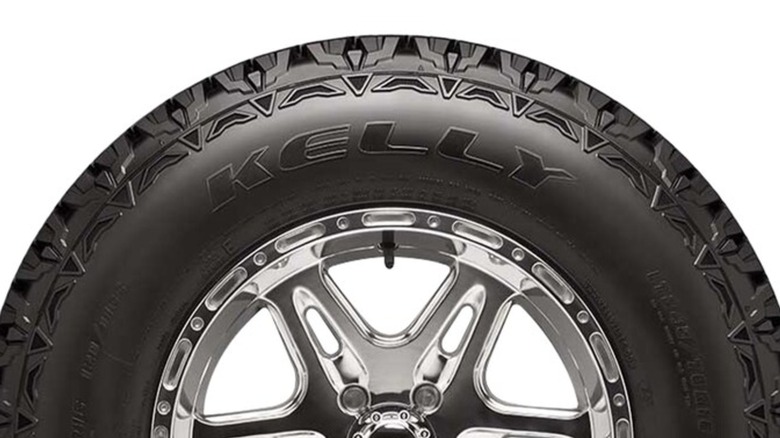
Mastercraft's long-standing track record is impressive, but Kelley had already been in the tire business for 15 years when it first showed up in Ohio. In fact, Kelley is the single oldest American-made tire brand in existence, and celebrated its 130th anniversary in 2024. Founder Edwin Kelley is rightfully credited with starting this company, though its quick rise in success and eventual save from Great Depression floundering could be attributed to his business partner, Arthur Grant.
Grant was behind one of the most technologically advanced carriage tire designs ever drafted, the blueprints of which ended up being not just a point of pride for Kelley's brand, but also a leveraging tool. Many other rubber and tire companies attempted to emulate Grant's tire, but alas, nothing is quite like the original. Dozens of these manufacturers threw in the towel and purchased the rights to build Grant's patented technology. The most notable among them? Goodyear.
Fast forward about 30 years, and Kelley was in trouble. During the Great Depression, the business shed more than half of its sales in just five years. Fortunately, in its final sink-or-swim moment, a man named Edmund Burke came in and reorganized, before eventually selling the company to Goodyear in '35. Since then, Kelley has been a trusty choice in the conglomerate's mid-tier segment, featuring mostly all-season and all-terrain rubber with unique tread patterns and innovative technology in the road noise and efficiency department.
Roadmaster Tires
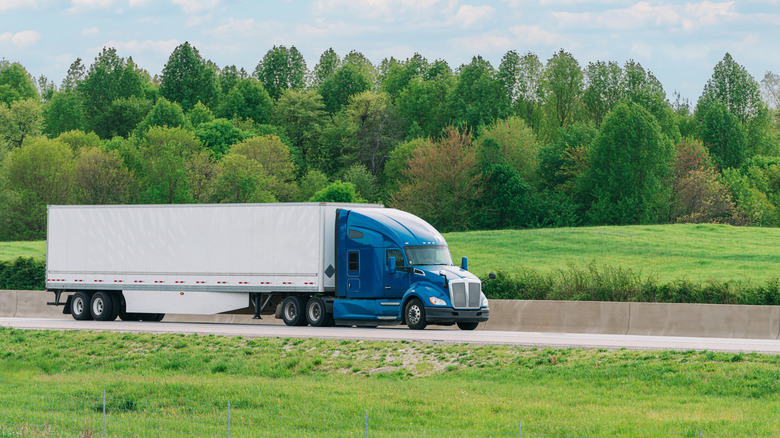
Roadmaster existed in an incredibly quiet corner of Cooper Tires' holdings for years before it got called up to the big leagues, so to speak. Its name had been seldom used in any of Cooper's public products, though Department of Transportation registries confirm its existence as a functioning subsidiary under Cooper prior to its rebrand in 2007.
That very year marked a transition that would see Cooper phase out its own transport tires, handing the reins of commercial truck tires over to Roadmaster, which would dedicate its entire brand to the segment. Safe to say, Roadmaster hit the ground running. Immediately, it debuted four new long-haul tires, and by 2010, it was an early adopter of the government's SmartWay program, which laid out specific goals for transport tires to decrease rolling resistance and increase fuel efficiency.
In the following years, Roadmaster has grown substantially, to the point where they offer commercial tires for nearly any application you could think of, including use by different kinds of semi-truck, inter-regional delivery, bus and public transportation, and other mixed-service vehicles. Now, unless you're a trucker, it's likely you've never interacted with a single Roadmaster product, but if you've ordered something online, bought an item from the grocery store, or purchased literally any physical product that needs to be transported, odds are a Roadmaster tire has been involved a few times.
Starfire Tires
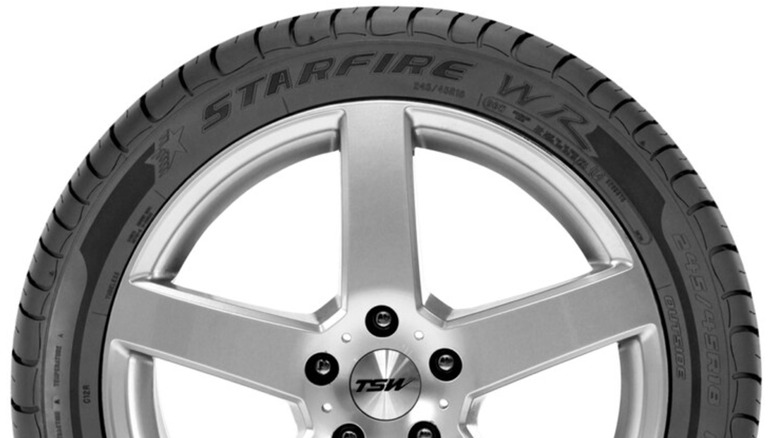
We've all been temporary connoisseurs of cheap tires at some point, and there's a good chance you came across Starfire during your search. The brand itself doesn't bring a ton of history with it, but because it was conceptualized as a Cooper Tire subsidiary from the start, one might say it inherited the knowledge and history of its parent.
Starfire was launched by Cooper in 1994, and at its core, it operates as a budget brand delivering a range of all-season tires for passenger vehicles. The affordability of its tires is a massive pull for Starfire, but with the nature of lower costs comes slightly less robust warranties on most of its products (about 50,000 miles). Still, Starfire isn't pushing a conflicting image. It has a specific market, low prices, and decent quality for the price.
On another note, it's probably a good time to mention that Starfire is one of five Goodyear brands that are only sold in the Americas (the others include Roadmaster, Mastercraft, Kelley, and Mickey Thompson). Goodyear, Cooper, and Dunlop are the corporation's only global tire brands, and the ones we have yet to cover make up Goodyear's EMEA-only market (Europe, Middle East, Africa).
Sava
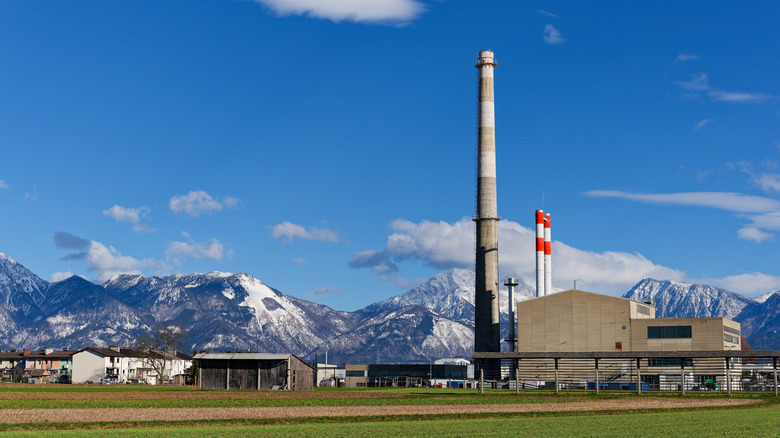
Researching Sava makes you feel like Sherlock Holmes. This Slovenian brand is fascinating in multiple ways, but none more than its seemingly nonexistent products. Its website advertises a few tires on the home page, but actually finding them is another story. If you want a Sava tire, international third-party websites might be the best avenue, but that's besides the point, and only the tip of the iceberg.
Sava sprouted from a company called Atlanta back in 1920, and produced tires and other rubber products throughout the remainder of the 20th century. In 1998, Goodyear purchased a majority stake in Sava's tire and rubber production, and by 2004, it would end up purchasing the remaining portion of the Sava company. In 2011, Sava was fully integrated into Goodyear Dunlop's Europe organization.
Why put so much effort into this Eastern European tire maker? Well, what Goodyear was really after was its powerhouse of a factory. The Kranj plant, named after the Slovenian town where it's located, was the pearl in Sava's oyster, producing more than 130 million tires from the 1950s to the 2020s, and receiving over $300 million in development funding from Goodyear, which then spent an additional $107 million in a 2018 expansion. By now, it's evident that the game plan was always about maximizing Goodyear's European production.
Fulda
Germany has a temperate climate and like many places in the U.S., it experiences extremes on either side of the seasonal spectrum. That's one of the main reasons why Fulda is so darn good at designing tires. Founded in 1900 and named after the town in which it resided, Fulda began by making products for carriages. It wasn't until 1906 that it entered the motorized vehicle tire business, and once the first World War came to a close, it ditched technical rubber products for good.
Fulda entered new markets like clockwork; it seemed with every decade, the brand would deliver popular solutions for a new need, whether that was cushioning tires for bicycles in the 1920s, smooth luxury car tires in the 1930s, mud and snow-optimized products in the 1950s, or passenger car tires in the '60s. It was bought by Goodyear in 1966, but it didn't stop moving forward, as by the 1970s they had one of the most popular low-profile, high-performance tires on the market.
Perhaps most impressive, though, is Fulda's contributions to the European tire grading/labeling system. It worked side-by-side with the union to develop the A through E labels that identify levels of wet grip, rolling resistance, and other factors — all of which are featured on every single European tire today. Fun fact: Fulda was the company that commissioned the one-off Maybach Exelero in 2003 as a testing exercise for its tires.
Debica
Debica was founded in 1937 and opened its first plant in 1939 in the Polish town of the same name. If that sounds like bad timing to you, you'd be right. Almost immediately following the start of business operations, the Second World War put the lid on it, halting production and development for several years before Debica could attempt to regain its momentum. But regain it, it did.
Over the next several decades, Debica's factory evolved to facilitate its car, van, and truck tire operations, eventually becoming one of the most modern and advanced tire plants not just in Europe, but the entire world. In 1996, Debica had done enough to garner the attention of Goodyear's empire, and soon, it had a new majority owner. The stake Goodyear bought was worth $55 million in the mid-1990s, and over the next decade, it would invest more than three times that much into Debica's plant and operations ($170 million by 2005).
At its now bustling plant, Debica produces not just its own tires, but also Goodyear, Fulda, and Dunlop products as well. Over the last 10 years or so, Debica has expanded its scope to produce high-performance tires for the aforementioned brands it serves at the plant, and has been the OEM tire for multiple manufacturers, including Ford, Volkswagen, Renault, Opel, and Peugeot.
Avon
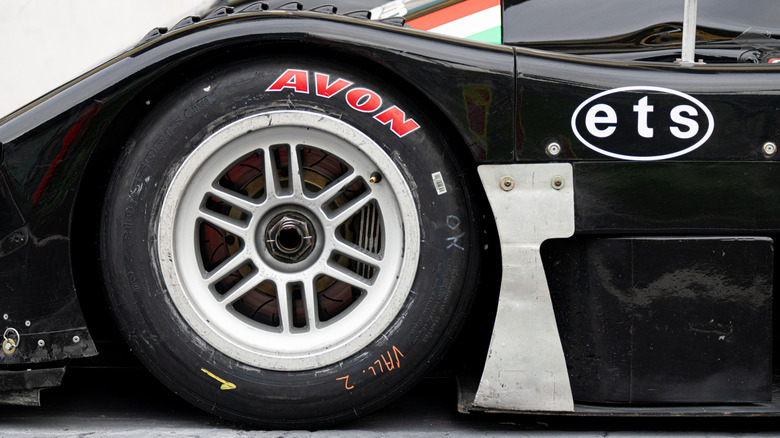
Along the Avon River near Bristol, England in 1885, J.C. Mugnussen and E.G. Browne purchased a small, withering textile mill, and quickly got it running again, this time, as a rubber operation. It started with bicycle tires and rubber parts for rail cars, but since then, Avon has done just about everything under the sun – and we mean 'everything.'.
Avon built rubber products and gun-towing automobile tires for the military effort in the United Kingdom during WWI, and manufactured millions of gas masks during WWII while simultaneously becoming Rolls-Royce's OEM tire manufacturer. It also made golf balls, soccer balls, and the world's first stitchless tennis ball. Though it wasn't satisfied with typical sports for very long, as in the late 1950s and early 1960s, it would produce the winning tire for every motorcycle driver's championship six years in a row.
When two wheels weren't enough, Avon set its sights on four wheels, and subsequently carried Carroll Shelby to his 1959 24 Hours of Le Mans victory with Aston Martin using Avon tires. And somehow, it still wasn't done. Avon continued through the 20th century with even more ventures, dabbling in medical supplies and even body armor for the defense sector. Finally, in 1997, Cooper Tires purchased the tire side of Avon's business, and now finds itself as Goodyear's main motorcycle tire brand.
Goodyear
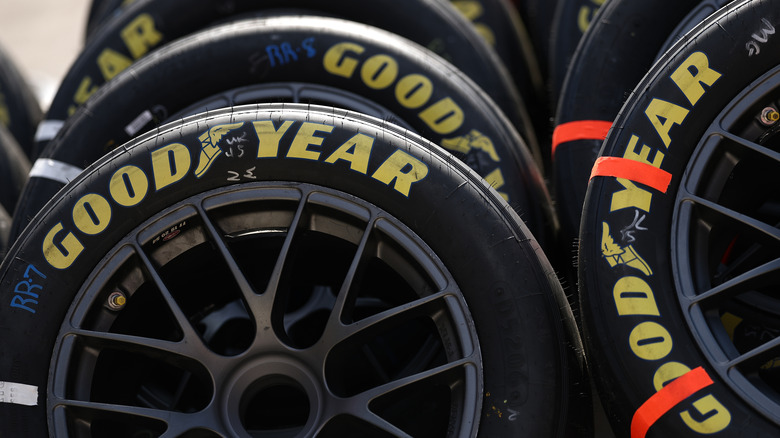
Don't worry, we didn't forget the king. Charles Goodyear (the guy who spilled his stuff on a stove) may have his name on the building, but he was only the inspiration for the company. Its true founders were brothers Frank and Charlie Seiberling, who bought two factories in Akron, Ohio in 1898. Some of the company's first products were poker chips, horseshoe pads, and of course, rubber tires.
In a short couple of decades, Goodyear would begin focusing on automobile products, create the first tubeless tire, and become the largest tire business on Earth. Around the same time, circa 1929, Goodyear launched the first of its iconic blimps, one of which was christened by Amelia Earhart herself.
Now, everyone is privy to the motorsport prowess Goodyear has garnered at world-class series like Le Mans, IndyCar, and Nascar, but you may not be as familiar with its space program. Yep, Goodyear designed, developed, and manufactured everything from guidance systems to satellites (and even an inflatable plane) to assist during the space race years. It even created the very first computerized search engine in history. The rest? Well, that's everything you've read up until now. It's acquired 11 other massive brands and continues to be a driving force in the tire industry, always flying under its iconic winged foot of Mercury.