

10 Major Car Brands You Can't Buy In The U.S.
You might assume that every global automaker would fight tooth and nail to sell its cars in the United States. Honestly, who wouldn't put up with the occasional ugly bumper requirement or questionable emissions test to access the shrieking eagle of prosperity that is the American free market? Alas, much to the dismay of anyone who's pining for a dirt cheap appliance of an EV or in love with the concept of a performance wagon that doesn't cost $100,000, that's really not how it works.
Between safety rules, emissions standards, brand overlap, tariffs, and occasionally baffling politics, plenty of major names skip the U.S. market entirely. We're not just talking about vaporware supercar manufacturers who seem to exist only on Instagram, but serious global players with cars you can buy almost anywhere else. They have merch and F1 teams for goodness sake! Anyway, here are 10 of the biggest, plus some perhaps unsatisfying reasons why you don't see them on the road. (Unless you live elsewhere and are just here to gloat, which is totally fair, if we're being honest.)
Dacia (Romania / Renault Group)
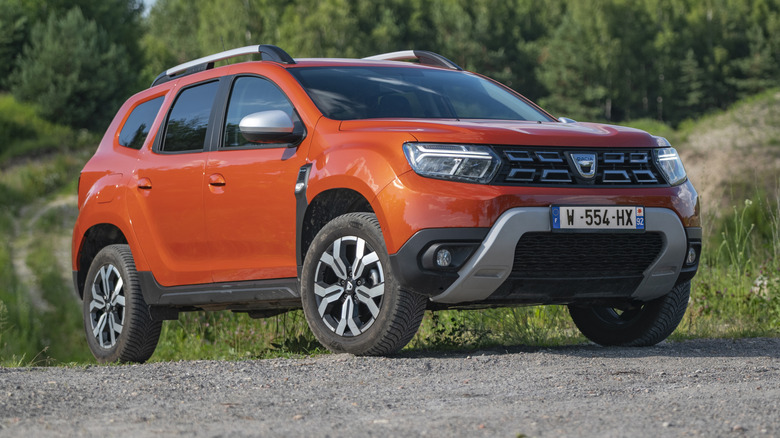
The Brand: Dacia is Renault's budget-first division, born from a core Eastern European automotive philosophy: If a car starts, stops, and doesn't actively hurt you, that's luxury, baby. Over the past decade, the company has gone from Cold War curiosity to a legitimate sales phenomenon by leaning into simplicity. Dacia builds unpretentious, durable cars with just enough bells and whistles to satisfy regulators and maybe your technophobic uncle.
One We'd Like to See: Dacia Duster. It's the compact SUV that Europeans treat like a folk hero.
Domestic Equivalent: Chevy Trax or base Subaru Crosstrek? (We're just spitballing here.)
Why They're Not Here: Dacia's entire business model depends on avoiding expensive markets. In Europe, it undercuts mainstream brands by thousands because it skips design flourishes, premium tech, and (here it comes) the added engineering required to pass U.S. crash and emissions certification. Federalizing a Duster for America would require airbags, emissions tweaks, crash-structure upgrades, lighting changes, and software work, any of which would be enough to blow the margins on such a thing. Add the cost of launching a dealer network and suddenly the "incredible €18,000 deal" becomes a $26,000 crossover with no brand recognition and a value prop that we largely ignore from companies we actually know, much less ones we don't. Dacia works where value is king and, even though we all deserve cheap cars, America can't even figure out how to make value pricing work for fast food anymore.
Citroën (France / Stellantis)
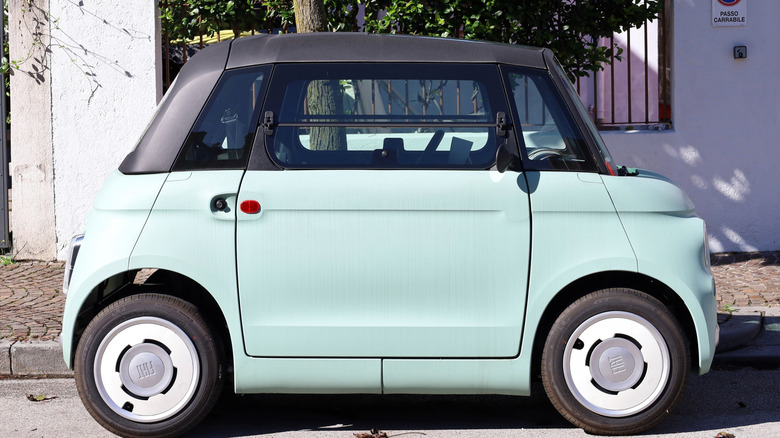
The Brand: Citroën is France's reigning champion of automotive comfort and quirk, not to mention the leading cause of automotive writers puzzling over how to make an ë show up on a word processor. While other European brands chase premium badges and Nürburgring lap times, Citroën has spent a century building cars that prioritize softness, whimsy, and a general sense that life should be pleasant, not stressful. From hydropneumatic suspension legends like the DS to the current lineup of pillowy crossovers and the absurdly charming Ami EV, Citroën occupies a niche that simply doesn't exist in America: cars that look like modern cartoon furniture. In Europe, it's a mainstream brand. In the U.S., it would be considered a cult. (But not, like ... a bad cult. Think Subaru.)
One We'd Like to See: Citroën Ami. A pillow fort with headlights and an adorable name to match.
Domestic Equivalent: Nothing, really. A Juke or a Fiat Abarth might get you a third of the way there then leave you feeling further apart than ever. Sometimes you can't chase down a vibe.
Why They're Not Here: Citroën's U.S. absence isn't so much about engineering, it's about strategy. Stellantis executives have made it clear they will not launch additional European mass-market brands in North America. The company already struggles to feed and care for its diverse stable of Jeeps, Chryslers, Dodges, and Fiats, and Citroën's positioning overlaps too closely with Fiat's urban-cute appeal while lacking any U.S. dealer footprint. So while we're not shocked that Citroën doesn't typically make the cut in our roundups of cars you wish were sold in your country, maybe it should.
Peugeot (France / Stellantis)
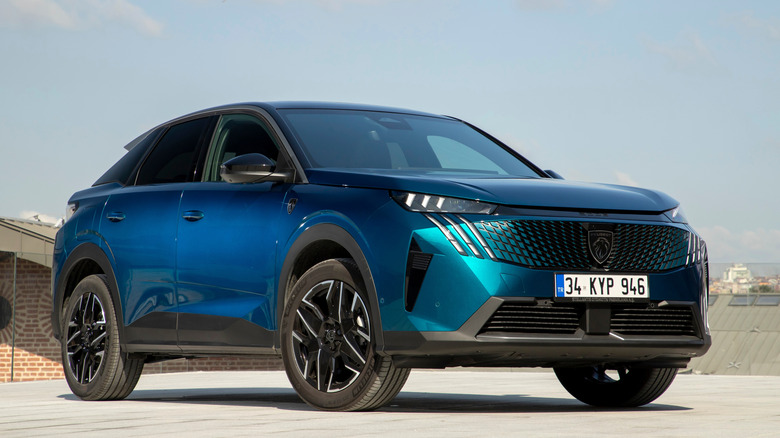
The Brand: Peugeot is one of Europe's biggest mainstream automakers — a brand known for sharp design, legitimately premium-feeling interiors, and crossovers that tend to look far more interesting than the ones populating American rental lots. While the lion badge disappeared from U.S. roads decades ago, Peugeot has reinvented itself abroad with modern platforms and the slick "i-Cockpit" interior layout, which turns even affordable models into something that feels a bit boutique.
One We'd Like to See: Peugeot 3008. The truest "wait, why do we not have this?" crossover.
Domestic Equivalent: Volkswagen Tiguan or Mazda CX-5.
Why They're Not Here: Peugeot's near-return is one of the great modern "almosts." Before the Stellantis merger, PSA Group had a concrete plan to reenter the U.S. — think market research, early scouting, and very fancy corporate titles like "the North American strategy team." Then, PSA merged with FCA to form Stellantis, and priorities shifted overnight. Faced with too many brands and not enough resources, Stellantis leadership shelved Peugeot's return and directed investment toward Alfa Romeo instead. The real tragedy here is that Peugeot wasn't blocked by regulation or demand, it just lost a corporate cage match when it mattered the most. In a different universe, we're all complaining about markups on plug-in 3008s at CarMax by now, but instead we get to sit on the sidelines while Alfa Romeo hopes scrapping their all-electric plans will make Americans care again.
Opel (Germany / Stellantis)
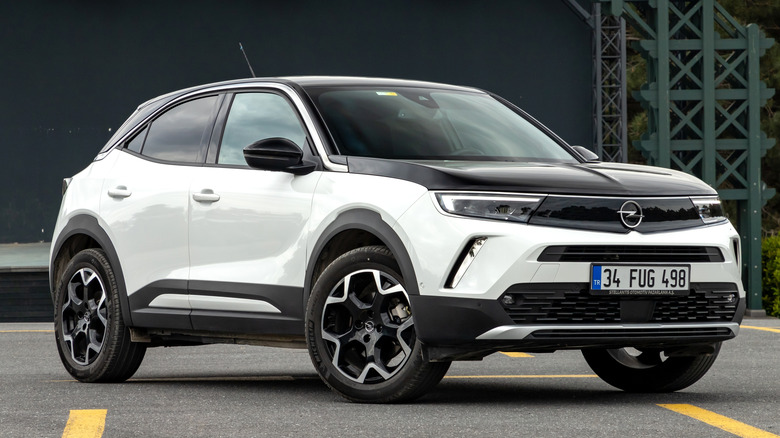
The Brand: Americans have actually been driving Opels for decades, they just had Buick badges on the nose, and you probably shouldn't mention this to your grandfather. The old Buick Regal? Opel Insignia. Buick Cascada? Opel Cascada. Encore? Heavily Opel under the skin. Opel spent a century as General Motors' European arm before GM sold it to PSA in 2017. Today, Opel builds clean, smart, slightly understated cars and EVs for people who enjoy cars that are never made into bedroom posters for teenagers.
One We'd Like to See: Opel Mokka-e. Fun color palette, tidy footprint, decent range.
Domestic Equivalent: Buick Regal. Other lame Buicks. Sorry: "Other Buicks."
Why They're Not Here: When PSA acquired Opel (and then merged into Stellantis, as one does), the brand became one more badge in a crowded corporate pantry. Stellantis doesn't have the dealer capacity or marketing stomach to revive Opel in the U.S., especially when its cars would directly overlap with Jeep's small crossovers and Dodge's future electrified lineup. And unlike Peugeot or Citroën, Opel already had a back-door presence here via Buick, which makes the business case even worse. Instead of becoming a surprise comeback story, Opel was quietly folded into Stellantis' tangled mishmash of brands in a way that probably improved the number at the end of one row of a McKinsey spreadsheet at some point.
Lancia (Italy / Stellantis)
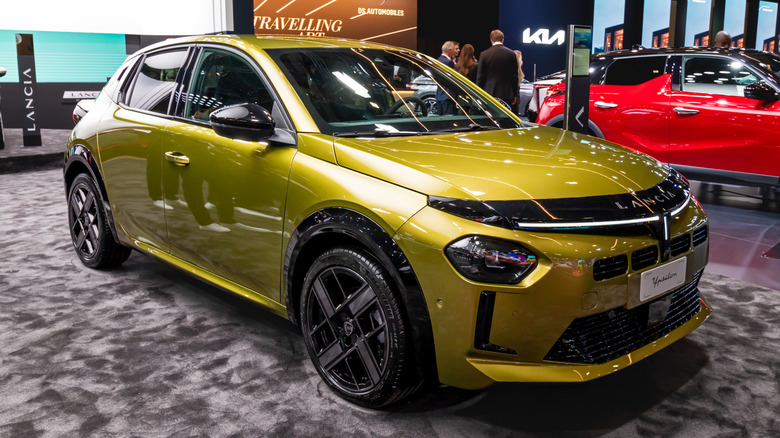
The Brand: Once upon a time, Lancia was the mad scientist of European performance, inventing rally monsters like the Stratos, the 037, and the Delta Integrale. These cars were so good at winning stuff that the FIA eventually changed the rulebook to calm them down. Today, the brand is more "fashionable Roman aunt with nice sunglasses" than fire-breathing homologation hero. Modern Lancia sells exactly one car, the Ypsilon, almost exclusively in Italy, though it quietly outsells several Stellantis second cousins. The brand is currently in the middle of an ambitious reboot, promising a return to premium interiors and elegant electrified hatchbacks, with just enough nostalgia sprinkled in to get a certain type of person emotional about fashionable little cars again.
One We'd Like to See: Lancia Ypsilon for chic city car energy
Domestic Equivalent: Mini Cooper or Fiat 500e, sorta.
Why They're Not Here: Lancia can barely cover Europe right now, so the U.S. isn't even on the mood board. Stellantis is rebuilding the brand over there first, and even if it weren't, the U.S. market has almost completely abandoned small premium hatchbacks. Launching Lancia here would require federalizing a niche product for customers who overwhelmingly choose crossovers, then convincing Americans to fall in love with a badge they haven't seen since the Carter administration. Even Fiat struggles here, despite somewhat disproportionate name recognition and retro charm. So, at least for now, Lancia's U.S. strategy is simple: Pretend this continent doesn't exist until the reboot sticks in Italy and then hire someone to design a crossover version of nostalgia chic that will disappoint us all.
Alpine (France / Renault Group)
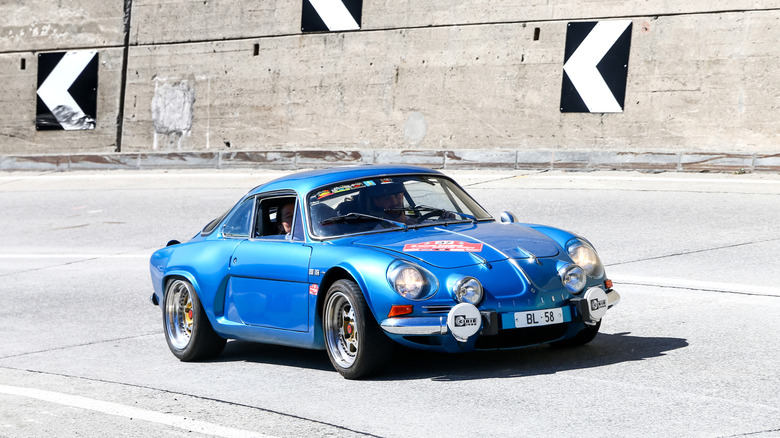
The Brand: Alpine is Renault's lightweight performance division and a spiritual successor of when sports cars didn't weigh as much as midsize crossovers. Its flagship A110 is a mid-engine coupe that trades brute force for delicacy with an aluminum chassis, razor-sharp steering, and a driving feel that automotive journalists genuinely will not shut up about. So while we're more than willing to point out when experts are wrong about certain sports cars, we're also happy to concede when the consensus is right (even if insufferably so). The A110 is the kind of cult-favorite machine that lives in enthusiast group chats over here while Europe gets to enjoy it without a second thought.
One We'd (Really) Like to See: Alpine A110. A featherweight purist energy with a nonnegotiable spot on this list.
Domestic Equivalent: Porsche 718 Cayman or Toyota GR86, but only until you drive an AA110.
Why It's Not Here: Alpine has wanted to come to America for years and even lined up AutoNation as a potential retail partner. But small-volume sports cars face punishing federalization costs (think crash structures, low-speed impact standards, pedestrian safety rules, and software certification), and that bill got even bigger as U.S. tariffs started flying. Alpine currently sells comparatively tiny numbers of cars in Europe. Scaling for the U.S. would mean huge upfront costs for uncertain demand. Until the brand's electrified lineup launches and Renault can justify American infrastructure, the A110 remains forbidden fruit, admired from afar while U.S. buyers debate whether the Cayman is all it's cracked up to be. (We still think so.)
MG (UK via China / SAIC Motor)
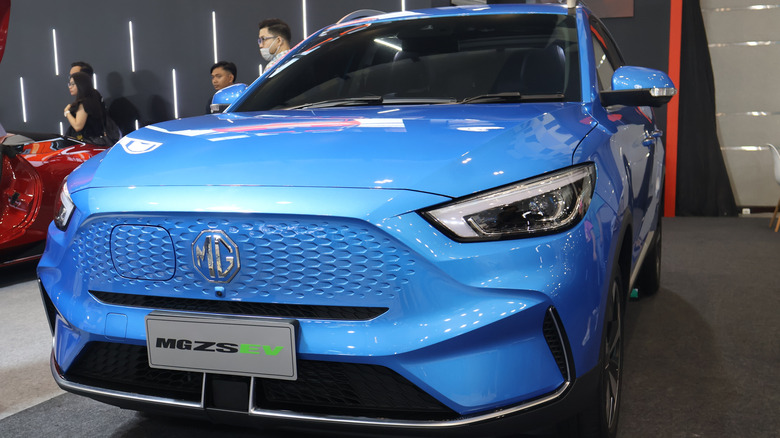
The Brand: MGs were once just plucky British roadsters that smelled faintly of gasoline, leather, and electrical anxiety. Today, the nameplate has been rebooted by Chinese giant SAIC into a global value-EV and crossover brand. Instead of breezy two-seaters, MG now sells practical electric hatchbacks, small SUVs, and hybrids that built their reputation on being affordable and surprisingly competent. In Europe and Australia, MG has carved out a devoted niche by doing something almost no modern automaker tries anymore: offering EVs that normal people can afford without a tax credit. The cars aren't glamorous, but they start, drive, and don't cost a mortgage payment to finance, an increasing novelty in 2025.
One We'd Like to See: MG ZS EV, an approachable electric crossover with a name that looks like some letters fell off.
Domestic Equivalent: Chevy Bolt EUV or Hyundai Kona Electric
Why It's Not Here: MG succeeds abroad by building to a price. Bringing its lineup to America would mean reengineering cars to meet U.S. crash, emissions, and software standards, then constructing a nationwide dealer and service footprint, all while competing against a variety of incentives that foreign-built cars don't qualify for. When those costs stack up, MG's "cheap and cheerful" proposition evaporates like the steam from your English breakfast tea. Or Chinese green tea? Like a fart in a convertible, how about that? Regardless, it's not that Americans wouldn't buy a $25,000 electric crossover, it's that the U.S. turns those into $32,000 crossovers before the marketing budget even hits. Besides, does it really add anything meaningful to the 15 or so cheapest EVs you can already buy in the U.S.? We probably made too much fun of those goofy little roadsters when they were here the first time anyway.
Chinese Electric Stuff (BYD, NIO, XPeng, Zeekr, etc.)
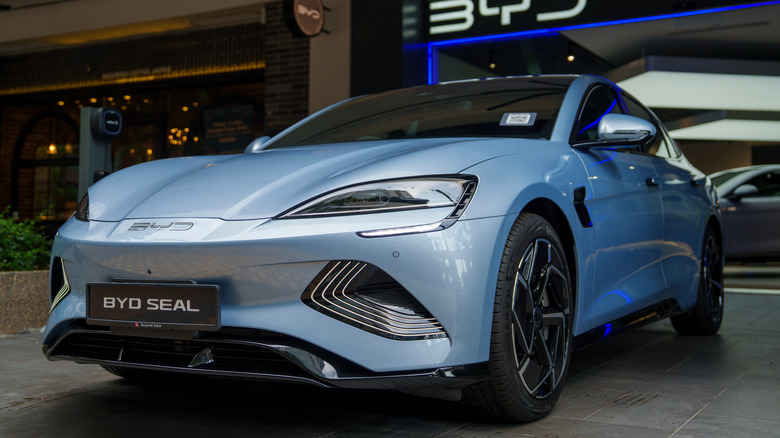
The Brand(s): China's electric automakers aren't "up and coming" anymore. They're here, they're undeniably competent, and they're making legacy automakers break out in cold sweats. Of course, by "here" we mean "there," because the only thing right now that's a match for Chinese manufacturing ambition is American protectionism, as deal-breaker tariff levels make damn sure that the EV game is not a meritocracy.
Glocally speaking, BYD outsells Tesla in several markets, NIO has battery-swap tech like it's from a sci-fi movie, XPeng leans into autonomous wizardry, and Zeekr sounds like the name of a cyberpunk VR nightclub yet still builds actual, real-world premium EVs. In Europe and Latin America, these cars aren't exotic, they're increasingly normal.
One(s) We'd Like to See: BYD Seal or NIO ET5, both long-range EV sedans priced like someone remembers that the middle class is supposed to be a thing.
Domestic Equivalent: Tesla Model 3 or Hyundai Ioniq 6, but also ... not. There's really no comparison for what's coming (or isn't).
Why They're Not Here: Short version: Like we said, America said "No." The slightly longer version: The U.S. slapped 100% tariffs on Chinese-built EVs in 2024 and layered tax-credit rules on top that effectively block vehicles with Chinese batteries or manufacturing ties. Even if BYD and friends wanted to sell here, the math doesn't math. A $28,000 BYD Seal in China becomes a $50,000 boondoggle stateside. Add geopolitical tension, IP concerns, and the fact that domestic automakers would super duper rather not wake up tomorrow and compete with a $12,000 EV (hi, BYD Seagull), and you get the cleanest "nope" in trade policy history. The cars are ready. The tech is ready. The price is right. Think of that what you will and don't forget to thank tariffs for making cheap cars more expensive.
Chery (China)
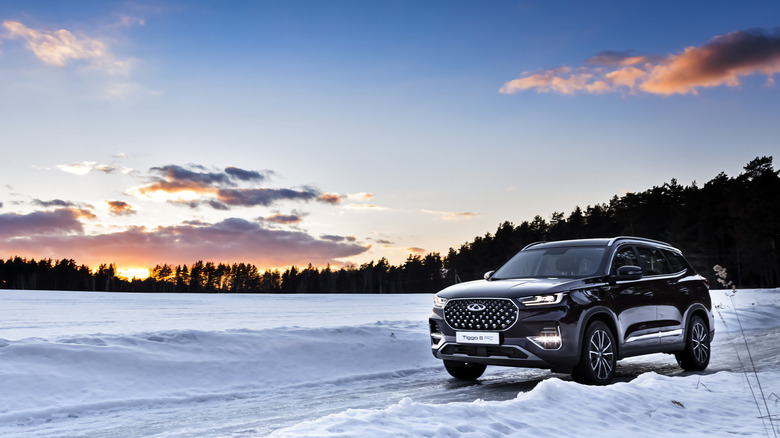
The Brand: Chery is one of China's largest automakers and arguably the closest of this group to actually making the American dream a reality. (The American dream of a Chinese automaker crossing the Pacific, not the one where you can afford both a mortgage and food.) They came dangerously close to launching here via a U.S. distributor called HAAH Automotive, which promised Americanized versions of Chery SUVs under new brand names that honestly sounded like someone's forgotten crypto startup ("Vantas" and "T-GO"). Still, beneath the branding chaos was a compelling idea: modern, tech-friendly family SUVs priced well below Korean competitors, backed by a company with the production scale to pull it off.
Ones We'd Like to See: Chery Tiggo 8 Pro / Exeed TXL, where China does to Korea what Korea did to Japan, automotively speaking, of course.
Domestic Equivalent: Kia Telluride or Hyundai Palisade.
Why They're Not Here: Chery's entire American plan fell apart when HAAH couldn't secure funding for federalization or a U.S. manufacturing partner, ultimately filing for bankruptcy in 2021. Without a distributor, without a factory, and with worsening U.S./China trade vibes, the plan went up in smoke. The quickly dissipating kind of smoke, too ... not the stuff that billows out of your budget electric car for nine hours after it burns to the ground next to the interstate. Still, they're doing plenty of business elsewhere, so maybe this story isn't over, and Chery is surely yet another Chinese brand that might become the first sold in America.
Lada (Russia / AvtoVAZ)
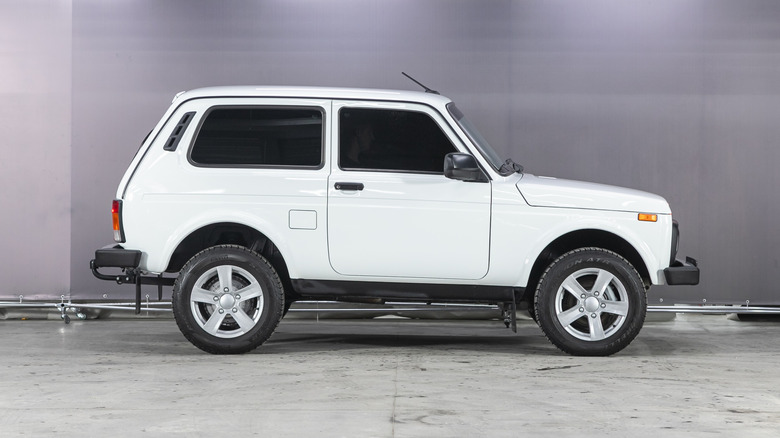
The Brand: Lada is Russia's national automotive identity distilled over decades into a vehicular ethos. It's equal parts stubbornness, simplicity, and "it'll run, don't worry about it," produced for decades as brutally basic vehicles designed to go one more mile, no matter what (and then another, and then another). The brand's icon, the Niva, is a tiny, agricultural-feeling 4x4 that has been around since the late 1970s and has the exact kind of unkillable energy that inspires cult followings and YouTube overlanding videos. It costs about as much as a lightly used ATV, looks like it was engineered using graph paper, and regularly outlives its owners, national governments, and local infrastructure.
One We'd Like to See: Lada Niva Legend.
Domestic Equivalent: Jeep Wrangler Sport (spiritually), but still a shameful luxury item by comparison.
Why They're Not Here: Lada actually did take a swing at America, and it ended about how you'd expect. U.S. safety and emissions requirements were too expensive to engineer around, especially for a company whose business model depends on building vehicles with the mechanical complexity of a pocketknife. That was enough to kill the project, but now there's an extra little wrinkle: sweeping U.S. sanctions on Russia's auto sector. Even if the Niva could magically pass crash tests, emissions standards, pedestrian safety rules, and the psychological shock Americans would experience sitting in a car with exposed metal interior panels, sanctions make a U.S. return effectively impossible. And hell, most of us only romanticize rugged simplicity until you actually give it to us, at which point we start wondering where the CarPlay is. So, while like so much of this list, these aren't going to live on American soil anytime soon, we still take comfort that, somewhere out there, a Lada Niva refuses to die.