

Why You Should Think Twice Before Letting A Quick Lube Touch Your Honda's Transmission
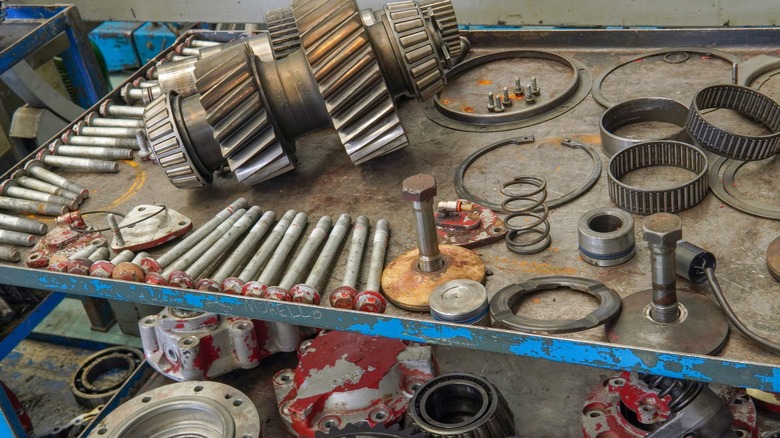
Most drivers figure it's easy enough to change your transmission fluid, dropping the pan, draining the fluid, and refilling it at home. However, Honda's automatic transmission service has always been different. Several older generation models from the late 1990s to mid 2000s have glaring transmission issues.
The 1999-2004 Odyssey had internal gear damage and torque-converter failure, leading to a major warranty extension after widespread breakdowns. Also, the 2001-2005 Civic, especially early models, often burned through clutch packs and overheated their transmission fluid, causing harsh shifts and complete breakdown. Even the 2003–2004 Accord V6 had a second gear that could overheat and give out anytime despite regular transmission maintenance.
These failures exposed how sensitive Honda's transmission design was to the exact fluid inside it. While most automatic transmissions use planetary gears and torque converters, Honda relies on a series of clutch packs and hydraulic pressure controls that are closer to a manual setup. This design works efficiently with fluid that meets Honda's precise friction and heat-resistance standards, which is why using the wrong transmission fluid could cost you a new transmission.
The generic ATF doesn't cut it in a Honda
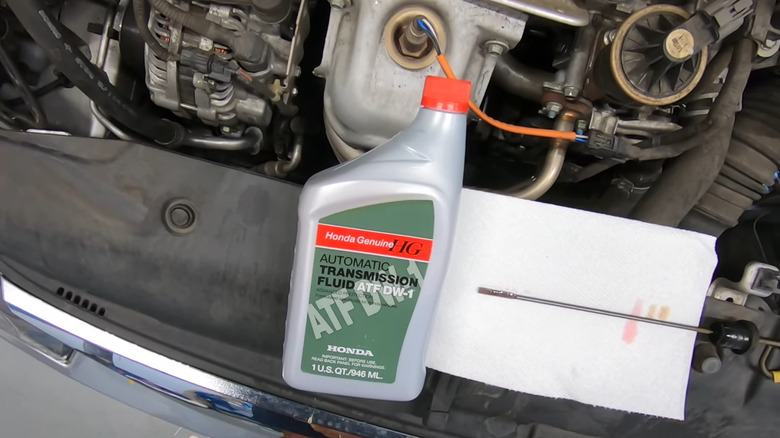
Right from the start, Honda realized its transmissions needed something different. The brand's first major transmission fluid, ATF-Z1, was petroleum-based with a viscosity index of about 215.5 and kinematic viscosity near 7.64 centistokes at 212 degrees, which made it stable at high temperatures. ATF-Z1 had special friction modifiers, anti-foam agents, and detergents to keep hydraulic pressure steady and prevent buildup inside valves and solenoids.
Honda later replaced Z1 with ATF-DW1, a fully synthetic fluid with improved oxidation resistance and low-temperature flow. DW-1 maintained similar friction characteristics, allowing it to work safely in older transmissions while reducing shift shock as they aged. Generic fluids can't replicate this balance because they're formulated to meet multiple manufacturers' requirements at once. Hence, they compromise on key properties like friction coefficient and viscosity stability. Honda's transmissions depend on very narrow friction and pressure tolerances to control clutch engagement and shift timing, so even minor deviations can upset how the system builds and releases hydraulic pressure.
A quick flush can wreck your gearbox
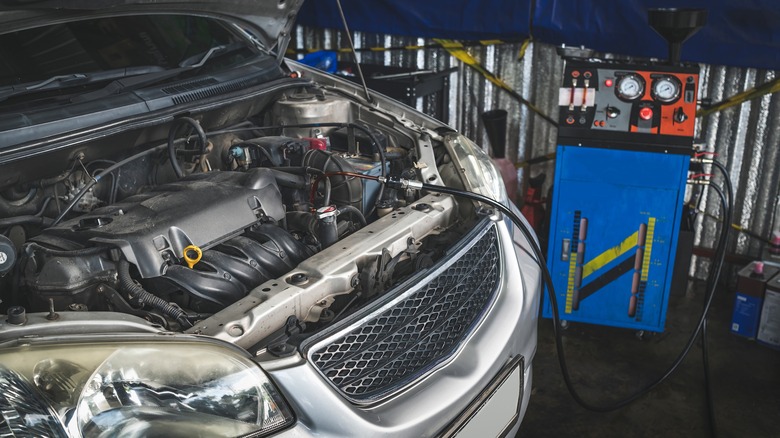
Quick-lube shops push hard for transmission flushes when you want to replace your car's fluid. Most of these shops hook your car up to a power-flush machine that forces fluid through the system under high pressure. Though these approaches may work for certain cars, they spell trouble for Honda transmissions that depend on precise fluid chemistry and controlled flow.
Such pressure can overload fragile valve bodies and solenoids, causing internal seals to blow. Honda transmissions also have a small magnet on the drain plug that traps the fine metallic particles naturally shed by the gears and clutch components. A high-pressure flush from a quick-lube shop can knock that buildup loose and send the particles back into circulation, where they can settle in tight passages and interfere with smooth fluid flow.
The safer approach is a simple drain-and-fill using genuine Honda ATF at the intervals listed in the owner's manual. That's roughly how long your automatic transmission fluid should last before you change it, usually around 30,000 to 60,000 miles depending on how and where you drive. The transmission maintenance involves replacing a portion of the fluid without forcing debris through the system or stressing the internal seals. After two or three services, nearly all the old fluid is cycled out naturally. It takes a bit longer, but it keeps the transmission clean and pressurized correctly.