

What Is Spark Plug Indexing?
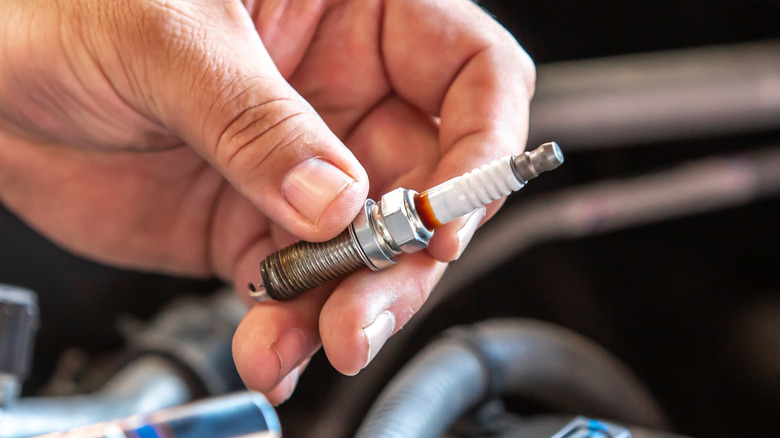
If you've ever seen a mechanic draw a tiny line on a spark plug before changing it, they're not performing witchcraft — they're indexing it. The idea is simple. Most standard types of spark plugs have a ground strap — that little metal arm that arcs over the center electrode. When the spark plug fires, that strap can either help or hinder the flame kernel. Point it toward the intake valve, and you're giving the spark a clear path to ignite the air-fuel mixture. Face it the wrong way, and you're blocking the flame kernel. Spark plug indexing won't do much in a stock car, but in high-rpm, high-compression builds, it's a whole different story – this minor tweak can mean a smoother burn, cleaner emissions, and a few extra horsepower.
Combustion is all about timing and flow. When the spark ignites the air-fuel mixture, the flame expands outward. If the electrode blocks that path, you get a tiny disturbance. This is not a major issue for daily driving, but in a tuned or high-compression engine, it translates to lost potential. After all, when you're chasing smoother combustion and better efficiency, even a degree or two of spark angle matters.
How spark plug indexing works and why tuners swear by it
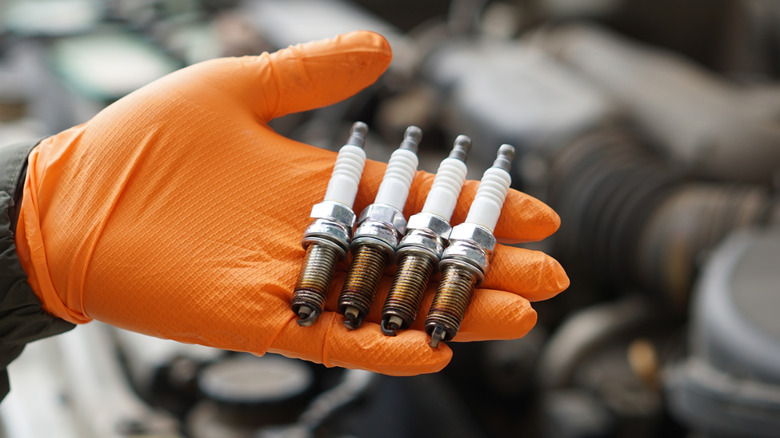
Before threading in a spark plug, the mechanic will mark where the ground strap sits, and install it in the position of the intake valve. If it's not pointing toward the intake valve, they'll use a different indexing washer to alter how deep the plug sits. Finally, they tighten and torque the plug to the correct spec, and double check if the ground strap is aligned to the intake valve position. It's kind of painstaking. It's almost ridiculous. And yet, in the world of combustion perfection, it matters.
The goal is to create consistent flame propagation. In a tightly packed, high-compression engine, any inconsistencies in the position of an indexed performance spark plug can influence detonation, knock resistance, and ignition timing. Some dyno tests -– like those shared by Vivid Racing -– show marginal power increases of around 1-2 hp, which is negligible for daily cars. But in racing, that little added horsepower is something.
This is also why indexing is more common in performance or boosted builds than in stock engines. Turbocharged setups, for instance, are particularly sensitive to combustion efficiency. Engineers know this too, which is why newer spark plugs, like NGK, are already "indexed." Still, for many garage tinkerers, marking and rotating plugs remains a badge of pride –- a nod to an era when performance was earned with a wrench and patience.