

How Long Does A Bottle Of Coolant Last Once Opened?
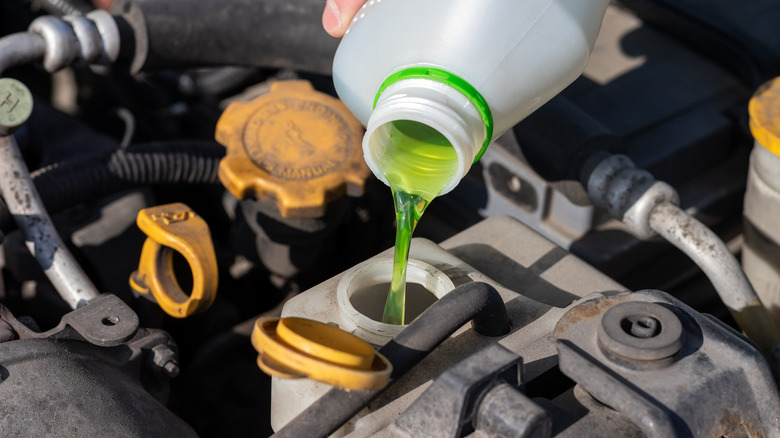
The coolant inside your car's radiator can remain fresh and usable longer than the engine oil. On average, oil changes every are necessary every 5,000 miles or six months to avoid premature engine wear and sludge formation. However, coolant can last 30,000 to 100,000 miles or longer. That doesn't mean it won't succumb to chemical breakdown through contamination or air exposure, though.
For instance, coolant that has turned into a frothy, brownish color could be the result of a blown head gasket, but it could also be a telltale sign of rust and corrosion within the cooling system. Coolants come in many bright colors to make it easier to find or detect leaks, but a drastic color change could mean a radiator flush is in the cards. Nevertheless, periodic inspection and replenishment of coolant will help prevent unexpected overheating issues while providing the lubrication necessary to prevent rust and other damage.
The good news is that the bottle of coolant in your garage has a relatively long shelf life. A sealed, unopened container of antifreeze can last almost indefinitely if stored properly, preferably in a cool, dark place away from direct heat or sunlight. Things change after opening the bottle, however, as exposure to air and other impurities will decrease the coolant's shelf life to about three to five years under proper storage conditions.
Fresh coolant is best
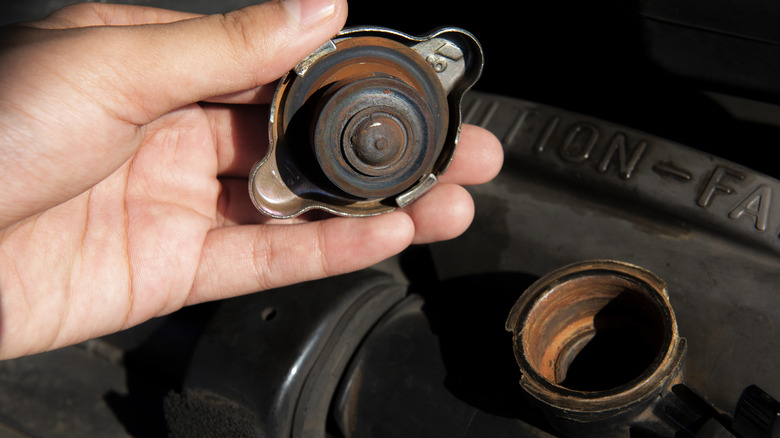
Despite its longevity, coolant can go bad. Before pouring the contents of a coolant bottle that's been sitting in the trunk for who-knows-how-long, give it a quick inspection. Watch out for signs of discoloration, sediments on the bottom of the container, or a foul odor, all of which can indicate that the coolant has gone bad or is expired.
Naturally, you don't want to pour bad coolant into your car's radiator or reservoir, since expired coolant doesn't have the chemical stability of fresh coolant. Using expired coolant is bad news for your cooling system, as it won't be as effective in raising the boiling point or preventing the liquid from freezing in cold weather. Moreover, the additives will also break down, and it won't have the intense lubricating properties of fresh coolant.
We wouldn't hedge our bets on years-old coolant, and it's not worth risking your engine's health and well-being for a liquid that costs less than $25 per gallon. If you recently cracked open a fresh bottle of coolant to replenish the radiator, remember to replace the cap, tighten it sufficiently, and keep the bottle under the kitchen sink or somewhere out of direct sunlight. Some people use a pen or marker to scribble down the month and year they opened the bottle, which takes away the guesswork when determining the coolant's remaining shelf life.
Coolant comes in many types, so don't forget to check the owner's manual to avoid using the wrong kind. Lastly, coolant is a mixture of water and antifreeze, but RV antifreeze is different and has no place in your car's radiator and cooling system.