

All-Season Vs. All-Terrain Tires: The Differences Explained
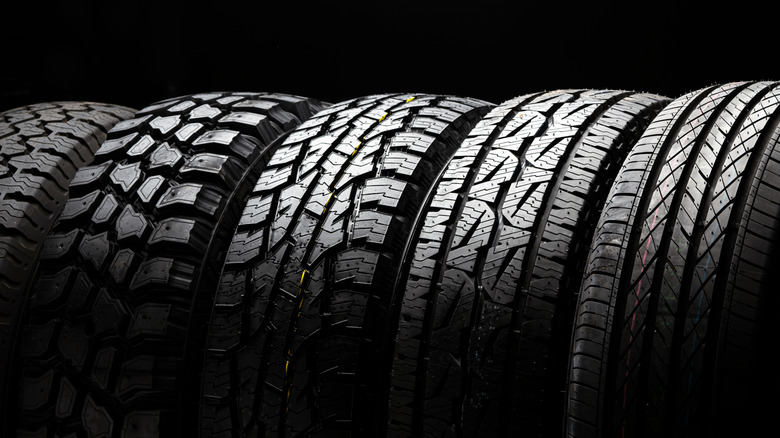
It's tempting to select a set of tires based on how aggressive or sporty they look. Those rugged all-terrain tires look like they belong on a monster truck, while the sleeker all-season models practically scream commuter special. In reality, all-season and all-terrain tires are engineered for very different jobs, and you should choose tires based on their functionality and your real-world needs.
All-seasons are the do-it-all sneakers of the tire world. They're built for comfort, efficiency, and predictable handling, whether you're crawling through traffic in the rain or cruising down the interstate. They'll even handle a dusting of snow if you're careful while hitting their performance limit only in extreme winter conditions. All-terrains, on the other hand, are the hiking boots equivalent. These are chunky, aggressive-treaded tires that have a willingness to chew through gravel, sand, or muddy ruts. All-terrain tires are great for daily driving and most weather conditions, albeit at the cost of some highway civility.
Our readers run a variety of tires based on their cars and driving requirements. So, it's not really about which one is better, it's actually about which one suits your driving needs throughout the year. If you don't want to bother with tire changes between summer and winter months, live in a region with mild winters, and mostly drive in an urban environment, all-season tires are the way to go. If you live for all-weather adventures on dirt roads, trailheads, or campgrounds that start where the pavement ends, then all-terrains are the ticket. However, there's more to the story.
What makes an all-season tire tick?
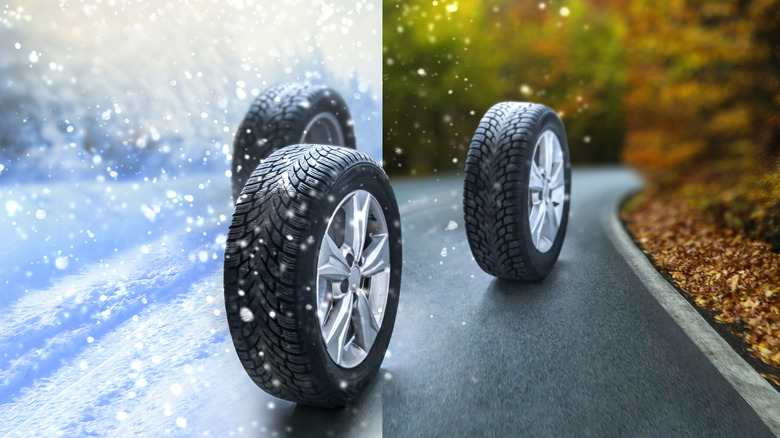
All-season tires are the daily drivers of the tire world. They're engineered to be jacks-of-all-trades, delivering balanced performance throughout the year in wet, dry, and moderately snowy conditions. These tires borrow traits from both dedicated summer and winter rubber, blending them into one do-it-all package that's designed to keep you rolling year-round. In the cold, the rubber stays pliable enough to hang on to slick asphalt, but it remains firm enough to handle the heat of summer without turning gummy. Add in tread patterns meant to channel away water, and you've got dependable grip in the rain, plus just enough bite to get by in light snow.
Being jacks-of-all-trades, however, means that they're masters of none. A proper winter tire digs in with deeper tread blocks and a softer rubber that stays grippy on ice. All-seasons can't match those qualities, which is why they start to struggle when temps plunge. Flip it around and, in scorching summer heat, they don't hold up as well as dedicated summer tires, either, as the rubber wears faster and the grip isn't optimal. Versatility is the selling point of all-season tires, but it also sets their limits.
Still, for drivers who spend most of their time commuting, road-tripping, or running errands on pavement, these tires represent the sweet spot between comfort and cost. They don't require swapping between season changes, and their low rolling resistance means that they run quieter and faster while sipping less fuel. If you're looking for a set, we rounded up the best all-season tires you can buy, according to Tyre Reviews.
Why do all-terrain tires look (and act) so tough?
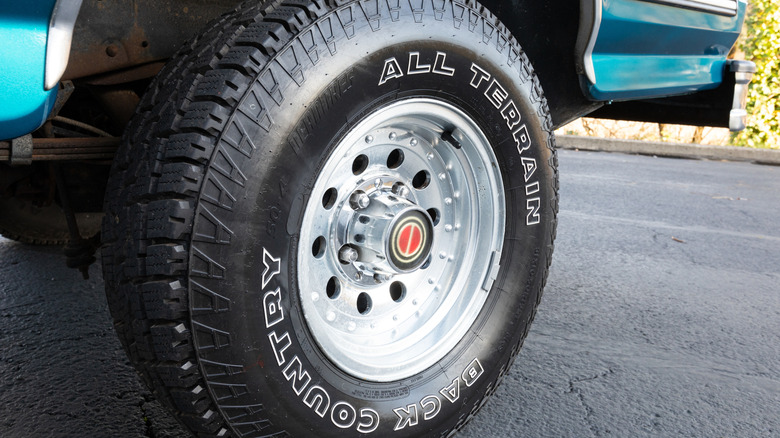
All-terrain (A/T) tires sit right in the sweet spot between highway (H/T) rubber and hardcore mud-terrain (M/T) boots. They're built to handle your Monday commute and your Saturday trail run without swapping wheels. The rubber compounds are tougher, designed to survive gravel, dirt, and uneven terrain without falling apart. The tread is where the real difference shows. A/Ts feature larger voids and open tread blocks along the shoulders, which means they bite harder into mud, snow, and loose dirt, while clearing debris as they spin. Some of the bolder designs even push the tread onto the sidewall, known as wraparound tread. Not only do all-terrain tires look like they are begging for an adventure, but they also provide extra grip and help shield the upper sidewall from sharp rocks. Some A/Ts even come with reinforced sidewalls for an added layer of protection when the trail gets nasty.
The trade-off? They won't match top-tier all-seasons when it comes to fuel economy, comfort, or quietness on long highway drives. So, if your driving time is split between pavement, gravel, and the occasional mud pit, all-terrains are the do-it-all option rugged enough for fun but civilized enough for the commute. It's important to state that all-terrain tires aren't the same as mud-terrain tires, despite their similar appearances.
Everyday trade-offs: weather, noise, and fuel economy
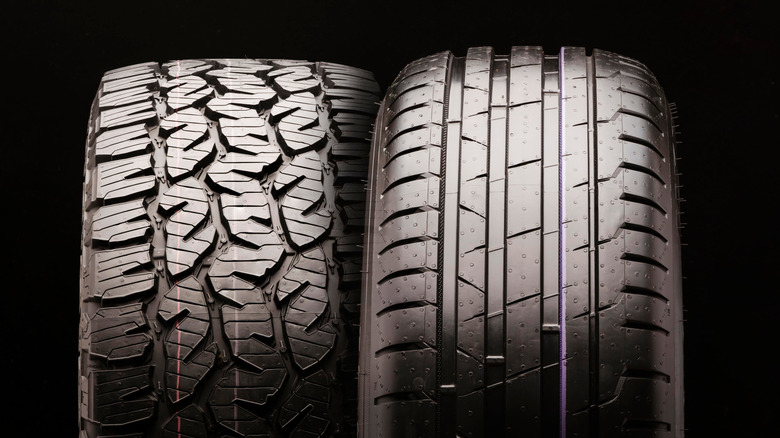
Here's where the rubber really meets the road. All-season tires are built with a tread profile that plays nice on pavement, giving you a smooth, predictable ride for city commutes and highway slogs. They're made from compounds that like mild temps, allowing them to thrive in that 40 to 50-degree Fahrenheit sweet spot. Push them into snowstorms or onto icy roads, though, and grip can quickly become compromised. There's an upside, though — all-season tires offer lower rolling resistance, so they sip fuel instead of guzzling it, and they're usually more stable at higher speeds. They're also quieter than their chunky cousins, so you won't feel like you're rolling around in a lifted rock crawler every time you pull into the grocery store lot.
All-terrain tires, meanwhile, are the multitools of the tire world. They ditch sleek road manners for chunky open treads that bite into gravel, mud, and even light snow. Those wide voids between tread blocks don't just look badass, they also fling away dirt and slush as you drive, keeping grip consistent when the weather turns. Thanks to their tougher rubber mixes, A/Ts provide greater grip and load handling across a wider range of conditions. The trade-off is that you'll sacrifice some fuel economy and serenity for that confidence when the asphalt ends. Many A/Ts are rated with the Three-Peak Mountain Snowflake symbol, meaning they've met standards for severe snow service.
Which tires go farther for your dollar?

All-season tires are the mileage champs. Most decent sets deliver 50,000 to 80,000 miles of tread life on pavement and come with tire warranties that cover manufacturer defects and last for 70,000 miles or more. They're cheaper to buy, too, ranging from $80 to $200 per tire for mainstream models, while top-tier tires can cost upward of $300. Their lighter weight and lower rolling resistance translate to better fuel economy, saving you about 2–3% at the pump compared to A/T rubber.
All-terrain tires are built for the tough stuff, so don't expect marathon highway mileage. You're looking at 40,000 to 65,000 miles, with warranties usually topping out around 60,000 miles. The aggressive tread patterns and chunkier rubber make them grippier on gravel, mud, and snow, but it also makes them hungrier for fuel. Prices reflect that extra muscle, and standard all-terrain tires typically cost about $150 to $400 each, with exotic off-road monsters climbing past $500.
Factor in maintenance and use, and the math gets clearer. If you stick mostly to pavement, all-seasons are the smart option. If you regularly drive on rutted trails or over sharp rocks, all-terrains pay you back with durability, resisting cuts and punctures that would kill a road tire easily.
So, which tire is right for you?

It all comes down to the lifestyle you're chasing, the vehicle you own, and the climate conditions you reside or drive in. If your vehicle spends nearly all of its time on pavement, tackling commutes, errands, and the occasional road trip, all-seasons are your best bet. They're affordable, efficient, and built for comfort. However, if you're the type who loads up camping gear every weekend, hits the trailheads before sunrise, or just wants peace of mind when the pavement ends, all-terrains are worth the trade-offs. They deliver capability that all-seasons simply can't match.
The good news? Shopping for tires is easier than ever. Tire Rack's comparison tests allow you to take the guess work out of shopping, while Consumer Reports can help you compare specific parameters, allowing you to shop for tires that give you the best bang for your buck. Just remember not to pick your next set of tires based on looks alone. Pick them based on the life you live behind the wheel. That way, whether you're cruising through rush-hour traffic or bombing down a fire road, your tires will be able to handle the job.