

What Causes High EGT On A Diesel Truck?
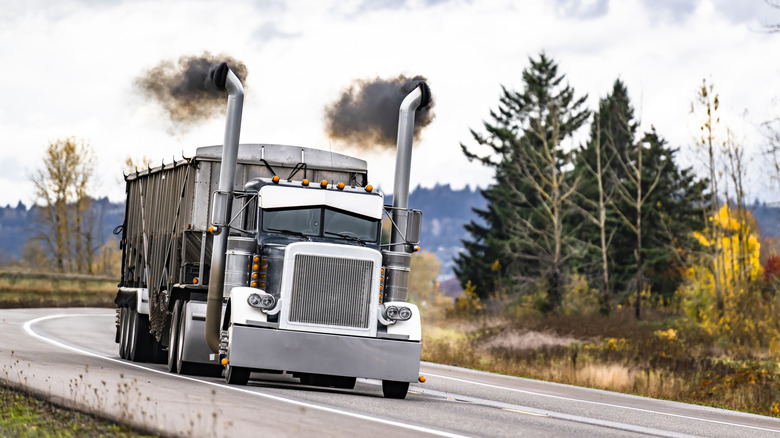
If you've never heard of EGT (Exhaust Gas Temperature), don't feel bad. You're not losing points in Diesel Owners Club 101. But you should know it. There's more to that smoke coming out of your exhaust.
Most drivers glance at their coolant temp and oil pressure but never think about what's happening in the exhaust stream. Here's the thing: EGT is one of the most critical health indicators for a diesel engine, especially under heavy load. It's literally the heat coming out of your engine's cylinders, measured with a thermocouple either in the exhaust manifold (pre-turbo) or just before the downpipe (post-turbo). Pre-turbo readings are hotter and must be more accurate for engine safety.
Why does it matter? Because modern diesel engines, compared to gas, burn fuel at high compression, and when that balance of air and fuel is off, temperatures can spike fast. Sustained readings above roughly 1,200°F are where engine components start to degrade. Push toward 1,800–2,000°F and you're entering "melt metal" territory — pistons, valves, and turbo blades can literally warp or crack. Unlike your coolant gauge, which reacts slowly, EGT shows you in real time when combustion heat is climbing into danger. That's why performance diesel drivers, towers, and even casual enthusiasts install pyrometers — not for looks, but to have an early warning system before damage is done. In short, EGT is your engine's temperature truth-teller. Ignore it, and you're gambling with expensive parts.
What's cranking up that temp: the usual suspects
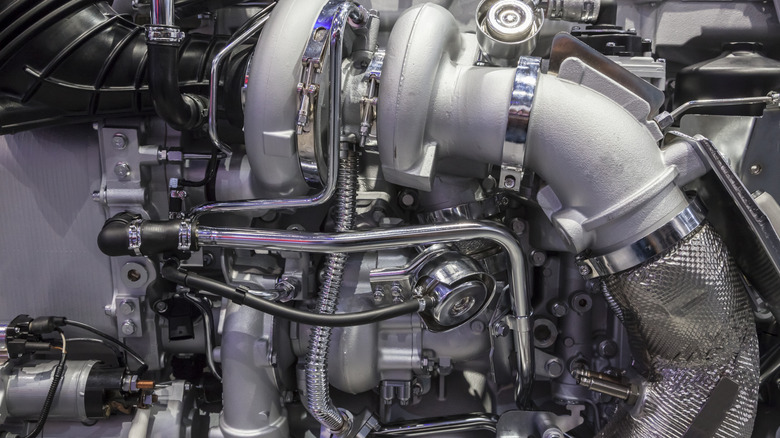
High EGT isn't a random event. It's almost always the result of too much fuel and not enough air. Diesels are efficient, but under heavy throttle they can easily run rich if airflow is restricted. This imbalance creates hotter combustion, which then shows up as elevated exhaust temps. Common culprits include dirty or clogged air filters, intake blockages, malfunctioning turbochargers, high outside air and water temperatures, or restrictive exhaust systems.
Heavy towing or hauling amplifies the problem. Climbing a steep grade at full throttle forces your engine to burn more fuel for power. Exhaust temps can skyrocket if the turbo can't keep up. Performance mods can also make this worse. Bigger injectors or aggressive ECU tunes may add horsepower, but without matching airflow upgrades, you're just feeding the heat monster.
It's also worth noting that cooling system issues — like a weak intercooler or low coolant — can indirectly raise EGT by reducing your engine's ability to shed heat. In short, when EGT climbs, it's not the exhaust that's "broken." It's a sign that somewhere in the air-fuel-cooling chain, the balance is off. Finding and fixing that imbalance is the only way to bring temps back down before damage happens.
Ignoring it can be expensive – here's how to avoid it
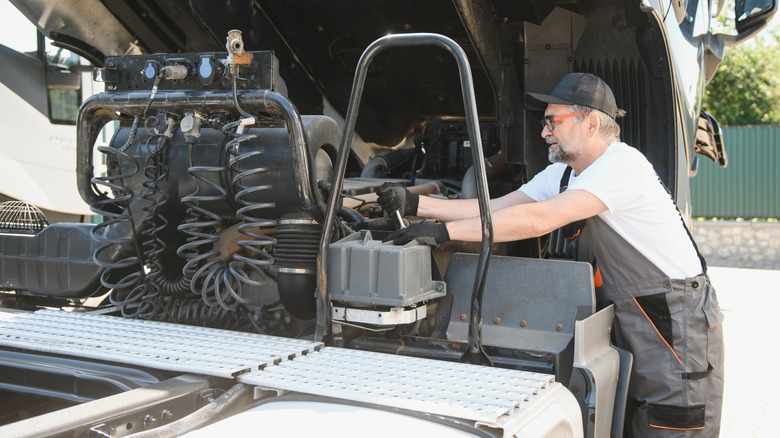
Letting EGT stay high is like leaving a kettle boiling with no water – it's only a matter of time before something gives. The damage can be catastrophic: pistons can develop holes, cylinder heads can crack, and rings can lose their seal, leading to massive compression loss. Each of these repairs costs thousands, and in many cases, it's cheaper to replace the engine entirely.
Prevention starts with awareness. An EGT gauge is your best defense – watching it lets you back off the throttle before you enter the danger zone. Routine diesel maintenance also matters: keep air filters clean, check your diesel fuel system (DFS), inspect the cooling system, and ensure the exhaust system operates correctly. When towing, shift to a lower gear rather than forcing it to hold a high gear under strain. It will also generate high temperatures when you abruptly accelerate or brake.
Upgrades can help, too. Larger or performance turbos move more air, reducing heat. Better intercoolers cool intake air, allowing more efficient combustion. Some owners even use water-methanol injection systems to cool EGT under heavy load. But all of this comes second to daily driving habits – ease off when temps climb, because once EGT damage happens, you're not looking at a "quick fix." You're looking at a pricey lesson in diesel physics, paid in thousands.