

What Is (And Isn't) Covered By Most Tire Warranties

Buying new tires for your car might not be an experience that many people look forward to, but finding the right tires for your needs is integral to both your safety and your enjoyment behind the wheel. I have found Tire Rack's tire comparison tests on YouTube to be helpful for that pursuit, but if tire warranties have you understandably perplexed, let's make some sense of it all.
Every automotive tire manufacturer offers some kind of tread-life warranty with coverage that usually ranges from 20,000 miles to 100,000 miles. Most tires also have a warranty that covers tire workmanship and materials faults, which also have their own quirks. Tread-life warranties can offer buyers assurance that the tread on their new tires will last at least as long as the distance the warranty covers. Unfortunately, if you are hoping to take advantage of either of these warranties, they usually come with very strict rules that must be followed throughout the entire use life of the tire in order to qualify for a warranty claim and replacement or reimbursement. Here's what that means.
Tread-life warranties explained

Tire manufacturers will advertise that their tires come with a warranty that lasts for several thousands of miles. These warranties usually only cover tires that have worn down evenly across the tread well before the mileage estimate provided in the warranty terms. For example, if a tire comes with a tread-life warranty that covers 100,000 miles, but your tires wore down evenly to the levels specified in the warranty (usually a tread depth of around 2/32) after just 50,000 miles, then you may be able to get new tires or reimbursement. There are many catches to consider, though.
In order to take advantage of most tread-life warranties, tire manufacturers will likely want to see receipts or other proof showing proof of purchase, and that you had your tires rotated at the manufacturer recommended intervals. If these conditions are met and it is determined that your tire tread is worn out before the mileage limit, then you are likely to receive a prorated reimbursement. Edmunds says,
This prorating method is similar to how companies reimburse owners under car battery warranties. For example, let's say you had a tire with an 80,000-mile warranty and saw only 70,000 miles of life out of it. In theory, you haven't reached the mileage threshold, so you have a case to make for the remaining 10,000 miles.
Even so, Tirerack.com notes that because manufacturers won't consider replacement until the tires are worn down to the 2/32nds tread-wear indicator, consumers often have to continue driving with potentially compromised safety or reduced tire performance before they can make a warranty claim.
Tire workmanship and materials warranties and voiding warranties
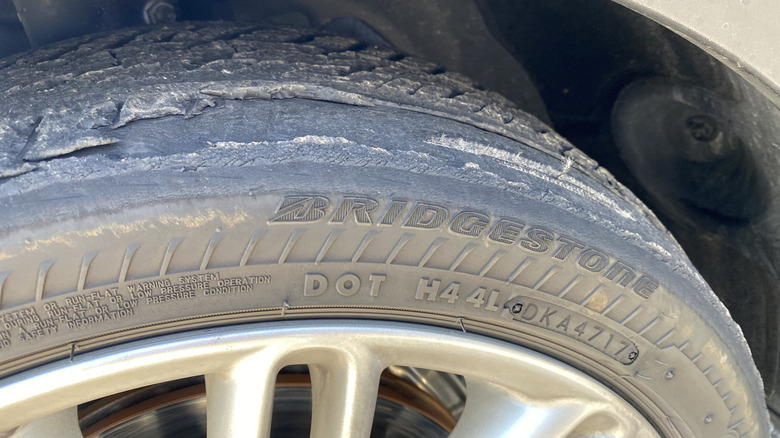
Most tire manufacturers offer warranty coverage that will account for defects in the manufacturing of the tire, or in the materials the tire is constructed from. According to America's Tire, "Most manufacturers will outright replace a tire if a manufacturing defect is found within the first 2/32" of a tire's tread life. A number of defects can lead to a tire recall, so keep your eye out for manufacturer's updates." We've covered tire recalls in the past, but they aren't very frequent occurrences.
If you're buying a new set of tires or you recently purchased a new set of tires, read the warranty information to know the set of parameters that the manufacturer warranty specifies and follow these stipulations for the life of the tire. This will give you the best possible chance to take advantage of the warranty if need be. Many tire warranties require proof of frequent tire rotation in order to be considered for tread life warranty claims, so when you get your tires rotated, keep your receipts.
Abusing your tires through racing, burnouts, drifting, extreme off-roading, and other acts can also void your warranty, so again, read the terms of your warranty closely soon after buying your tires to give yourself the best chance at retaining warranty coverage.