

Why Your Car's Radiator Fluid Turns This Color (And What It Means)
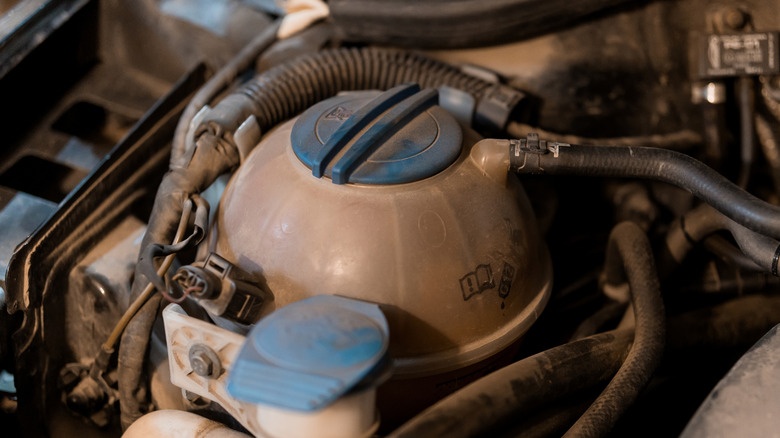
There is no one single correct color for coolant, because different cars require different specific types of coolant. Some of the more common colors include pink, orange, blue, and green, and while coolants used to be classified by color, they no longer are, so it's important you buy on the chemical make-up of the product, not just the color. That being said, there is one color which your coolant ideally should not be, and that's brown.
Unless you've opted to use muddy water as coolant (not a recommendation, by the way), then your car's coolant will never be brown at the point of pouring it in. What actually happens is that the coolant slowly turns brown over time while it's in the system — but why does this happen? The reasoning is quite simple, really. If there is any rusting or corrosion within your car's coolant system, then this will change the color of your coolant to a murky brown over time. It's more common on cars with iron engine components, be it blocks or heads, as naturally rust will build up here, rather than on a car with aluminum components for example.
It's also possible that your head gasket is on the way out. When your head gasket goes, oil mixes in with the coolant, and while this will look like an oily film in the coolant to begin with, as it mixes in overtime, it will begin to look like a brown sludge. There will also be white sludge on your oil cap. This is much more serious than simply having corrosion-contaminated coolant, and will need to be rectified sooner rather than later.
A coolant flush could return your system back to normal
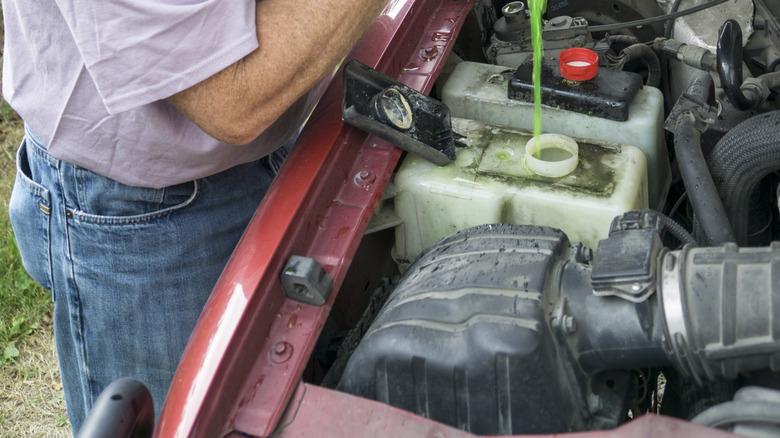
If you suspect head gasket failure, or another similar problem, such as a failed oil cooler leaking into the coolant, then a coolant flush isn't going to solve your headache. It's a waste of time if you're not also going to fix the root cause, be it head gasket or otherwise. However, if you suspect your coolant has turned brown simply due to it being well overdue a change, and that over time it's picked up heaps of corrosion while circulating around your engine, then a coolant flush might just be the best option.
Brown coolant is just one of the signs that your radiator needs to be flushed, overheating is a common symptom too. There are products out there specifically designed for flushing out your coolant system, and the process is fairly simple. There are plenty of how-to guides out there, but essentially, start with a cold engine, and then drain the coolant via the drain plug or by removing coolant hoses. At this point, it's wise to clean up any rusty points while the hoses are disconnected, and then run some water through the system via a hose or similar until the water runs clear.
Then, simply close the system back up, pour in the correct amount of coolant system cleaner — this will vary from product-to-product and from car-to-car — top up with water, run the car for the recommended time, and then drain the system once again. At this point, you can then top up with the correct coolant and your days of brown sludge flowing through the radiator should be over.