

This Is The Oldest Engine Still Being Produced Today
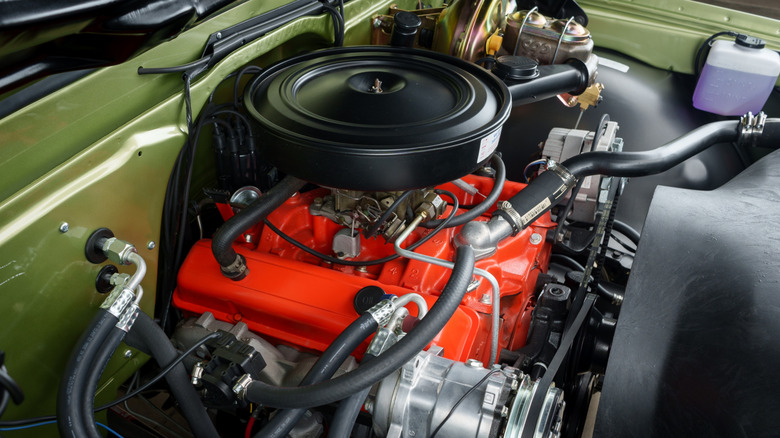
Even restricting this topic to "production engines," this one's still going to be a tough nut to crack. Some obscure government-backed automaker in a country with a triple-digit population might have been cranking out handfuls of Pensive Iron Forge Inc. "Super Pheasant" flathead inline-7s every year since 1941, and the only way to find out about it would be if the company's heirs post comments on this article. Unfortunately, we can't fall back on some old standbys, either.
The Bentley/Rolls-Royce 6.75-liter V8 ended production in 2020 after 61 years. The Volkswagen Group's absurdly complex cube-dimensioned W12 appeared in 2001 and breathed its final breath in 2024. AMC's inline-6 appeared the same year The Beatles were on Ed Sullivan (1964), and ended the year the highest-selling album was the "High School Musical" soundtrack (2006). So, we're going to look at engines still in production as crate motors by the original manufacturer, as well as engines still installed in production cars.
That way, the focus is on cars and there's no need to muddy the waters with farm and industrial engines, steam engines, jet engines, rocket engines, siege engines, The Difference Engine, or "Engine No. 9" by the Deftones. By these criteria, the likely longevity king of crate motors is the small-block Chevrolet (SBC) V8, which was introduced in 1955 at 265 cubic inches and is still available in 350 form directly from GM. The oldest engine still getting fitted to vehicles from the factory would be the Cummins B-Series diesel inline-6. It began production in 1984, but wasn't fitted as a factory engine option until 1989 in Dodge Ram pickups. You can still buy a new Ram with a Cummins B-Series today, and they make enough torque to warp the space-time continuum.
The Cummins B-Series will outlast us all
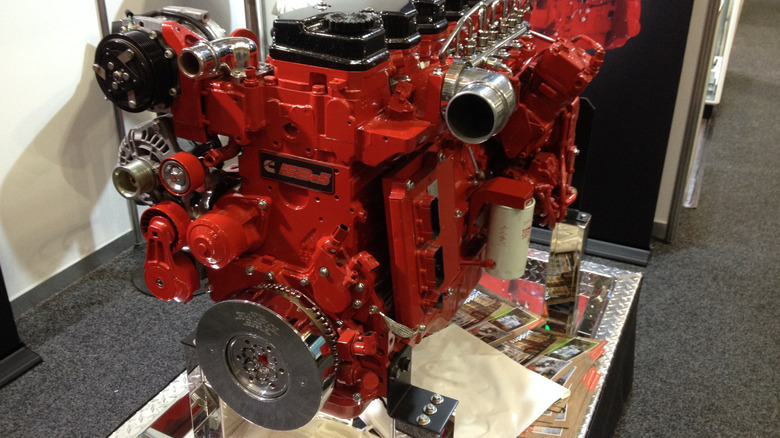
There will be three things to survive a nuclear war: cockroaches, W123 Mercedes, and Cummins B-Series inline-6s. They'll be what our descendants will use to pull the universe back together after its heat death. It shouldn't be any surprise that the Cummins B-Series inline-6 is the in-vehicle longevity champ. This legend may have some flaws, but they're far and few between.
For example, if you're buying a 5.9 Cummins, be aware of the '89 through '02 examples with dowel pins that can shake loose and destroy the engine. The dowel pin issue can be fixed in as little as three hours, though, so don't let it scare you. Really, the only seriously problematic ones are the '99 to '01 models with the "53 block" that can be prone to cracking.
Overall, Cummins got it right out of the gate. These engines are known for their durability, with some exceeding a million miles. Or, if longevity isn't your bag, you can find insane modders who are getting upwards of 3,000 hp out of the B-Series. What, is the current factory rating of 430 hp and 1,075 lb-ft of torque not enough for you? Do you need to tow Luxembourg, or something?
Where lineages diverge
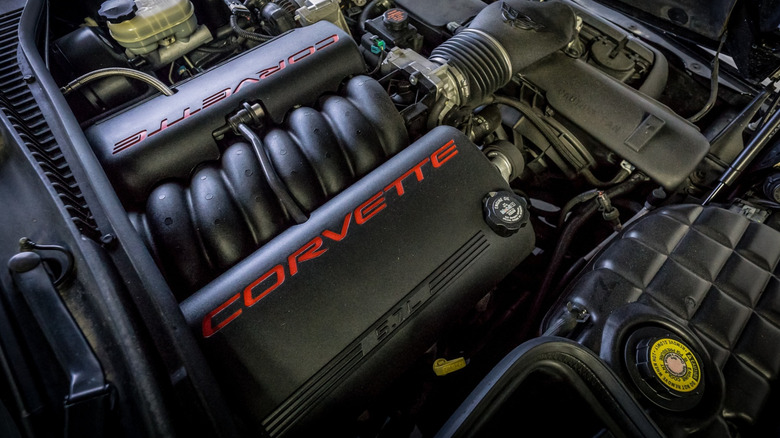
As Jack Reacher would say, "In an investigation, details matter." It might not seem fair to claim that "There aren't any current-production vehicles with an SBC," when there are plenty of Corvettes and CT5-V Blackwings running around with Gen V LT "small blocks." However, Gen I and II SBCs (1955-1996) are as closely related to the Gen III, IV, and V LS/LT "small blocks" (1997-current) as Bruno Mars is to Mars, the God of War. SBCs and LS/LTs have the same 4.40-inch bore spacing, hydraulic-roller lifters, and rod bearings, but that's about it. And while the LS and current LT engines do have some differences, their DNA is more similar than it is divergent.
When creating the LS, GM ditched the old small block tooling that had 42 years of wear on it and developed new tooling. It also moved away from the SBC iron blocks to new, lighter, and stronger aluminum blocks. SBCs have two-bolt and four-bolt main bearing caps, while LS/LTs have skirted blocks, cross-bolted mains, and six total main bolts. Head chamber designs diverge drastically, too. But if you're building a street rod or a resto-mod and want to keep it old school, Chevrolet Performance will happily sell you a V8 with a design forged during the Eisenhower administration.
Other aging engines still found in new vehicles include Nissan's VQ-Series V6s (1994), Honda's K-Series (2001), and Stellantis' Gen III Hemi (2003). Aftermarket builders also make new versions of old motors, such as BluePrint Engines' Ford, Chevy, and Chrysler-compatible offerings. Still haven't managed to track down a "Super Pheasant" flathead, though.