

Meet Legendary Pilot 'Punch' Dickins, Who Bravely Flew His Fokker Through The Canadian Bush
We're spoiled. Nine in ten American adults have a smartphone in their pocket with over 100,000 times the processing power of the computer that landed men on the moon in 1969. Those devices also give users access to a fairly comprehensive global navigation system, making it pretty hard to get lost. Things weren't always type-it-in-and-go with Google Maps displaying your vehicle as a McLaren Formula 1 car. Frankly, adventurous souls had to explore and map the great unknown long before you could buy a road atlas or punch in a destination. People like Clennell Haggerston "Punch" Dickins.
Yes, it's a name characteristic of a bygone era. So go ahead, take your cheap shots, but this guy has one impressive record. Dickins was a Canadian infantryman in his teenage years, then an ace pilot, one of the original officers of the then brand-new Royal Canadian Air Force, and eventually a sky-faring adventurer responsible for mapping vast expanses of the wild, untamed north.
Much like Charles Lindbergh and his windshield-free distance flight, some people just can't stop breaking limits. Punch preferred to do his exploring aboard a Fokker Super Universal, though he spent time behind the controls of an Airco D.H.9 bomber during the First World War and an Armstrong Whitworth Siskin fighter biplane in the 1920s.
Clennell 'Punch' Dickins went from infantryman to adventurer and aviation legend
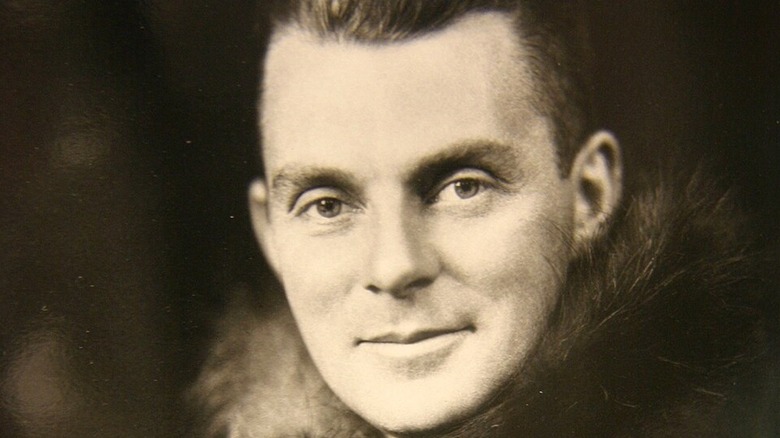
"Punch" Dickins was not afraid of soaring off into the unknown. Though he first enlisted in the 196th Battalion at 18, he soon transferred to the Royal Flying Corps. It didn't take long for Dickins to make a name for himself. By 1919, Punch received a Distinguished Flying Cross for his actions in World War I. He's also credited with downing seven enemy aircraft. Even though he was a bomber pilot, Dickins earned the hallowed title of ace, all before reaching the voting age of 21. That's enough to earn fame and acclaim, but Dickins was far from done pushing the envelope.
In 1924, the then-new Royal Canadian Air Force stationed Dickins in Edmonton, Alberta. Punch was one of the branch's original uniformed officers and settled into his role as a test pilot. During his time in Edmonton, the intrepid pilot flew an open-cockpit Armstrong Whitworth Siskin biplane in high-altitude, sub-zero conditions. This guy was tough. Punch left military service in 1927 and joined Western Canada Airways. Of course, the decorated combat pilot wasn't going to be happy ferrying businessmen and vacation-goers around. Instead, Punch piloted the first airmail flight into the Canadian Northwest Territories using a Fokker Super Universal.
In 1929, Dickins flew a 4,000-mile journey over the Northwest Territories, including unexplored areas with no radio contact. If that wasn't wild enough, portions of Punch's adventures brought him close to the north magnetic pole, where his compass, really his only navigational tool, was rendered unreliable. That was a big year for Dickins; he also flew the entire length of the Mackenzie River in two days. That adventure took him around 2,000 miles from Edmonton to Aklavik and added the accolade of being the first pilot to cross the Arctic Circle to his list of achievements.
Punch logged over a million miles flying over Canada and received some serious recognition
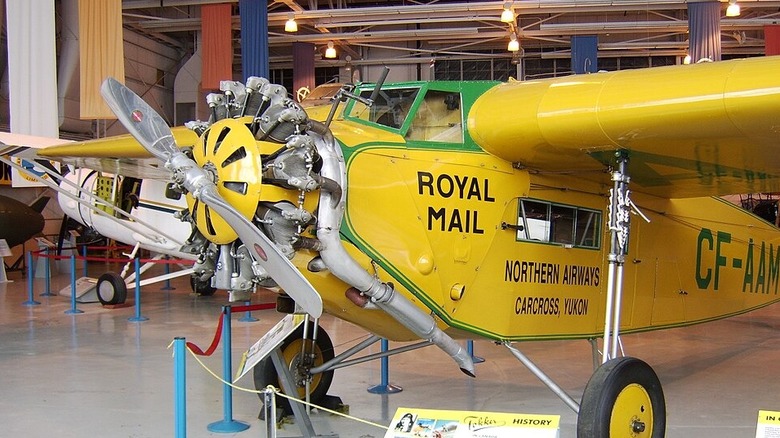
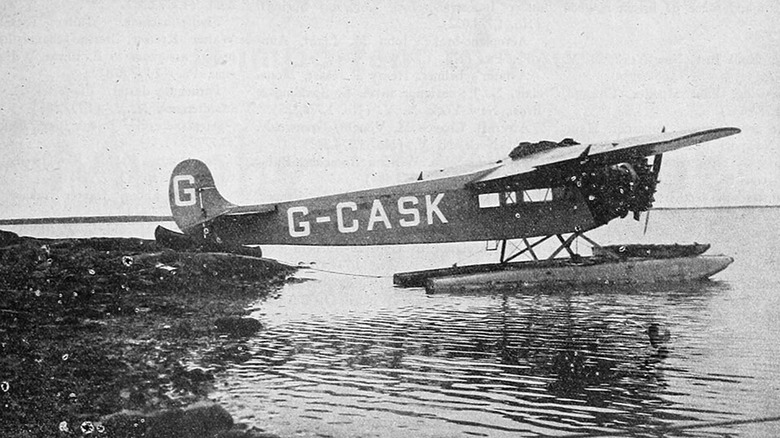
All the while, his primary ride of choice was the Fokker Super Universal. It was aboard a pontoon-bearing Super Universal with the registration markings "G-CASK" that Punch carried out his 3,960-mile survey flight over the Barren Lands of the Northwest Territories. That flight pitted Punch and the Fokker against 37 hours of flight time over largely unmapped land. It's a lot of time in the air, especially considering that he certainly wasn't flying one of the fastest military aircraft ever built. Not even close. That said, over the course of his career, Dickins logged over one million miles in Northern Canada.
You don't rack up a record like Dickins' without an award or two. By the end of his life, Punch was an Officer of the Order of Canada (OC), an Officer of the Most Excellent Order of the British Empire, a recipient of the McKee Trophy, and a 1974 inductee into Canada's Aviation Hall of Fame.
And yet, Punch wasn't finished getting recognized for his aviation accomplishments when he died in 1995 at the age of 96. Around 140 million miles away from the Canadian airspace Punch explored, the National Aeronautics and Space Administration chose to commemorate the aviator's adventurous spirit. NASA named a rock in Mars' Endeavour Crater after Dickins, immortalizing the pioneering pilot with "Punch Dickins Rock" nearly 10 years after Punch's death.