

Every Subaru Outback Generation Ranked Best To Worst By Reliability
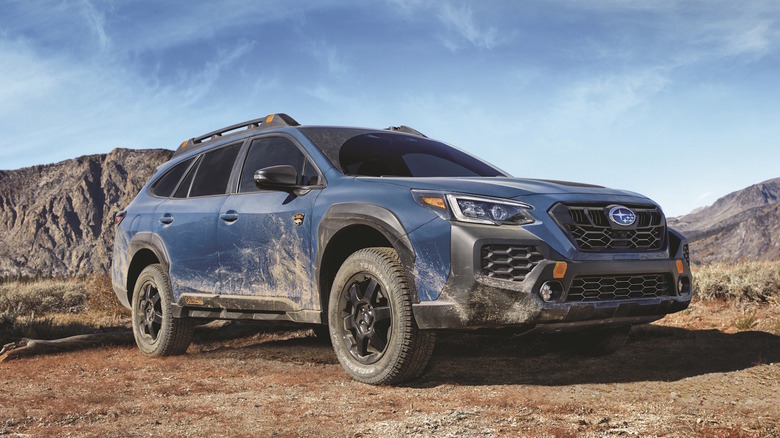
While the Crosstrek and Forester sell better for Subaru in the U.S., the Outback still performs well. It's also one of the longest-running Subaru nameplates in America. That means many generations to choose from: seven if you include the model's early Legacy-based origins. This long history can make it hard to decide which Subaru Outback generation is best to buy used, but looking into the reliability of each one is a great place to start.
We've done the research for you by diving into Consumer Reports' (CR) reliability ratings and owner complaint data from the National Highway Traffic Safety Administration (NHTSA). We also analyzed J.D. Power's reliability ratings, which reflect early ownership and skip pre-2008 models, as a second opinion. In one respect, the results aren't surprising: The sixth-generation Outback (2020–2025) tops the list. We'll explain the details below, but older models can be reliable, too. The second generation (2000–2004) also ranked high. That leaves the third through fifth generations with varying degrees of reliability.
We skipped two generations. The seventh-generation Outback debuted for 2026 with a redesign of a proven formula, so it's too new to judge its dependability. Consumer Reports still uses its "predicted reliability" tag for the 2026 Outback, which is average. Meanwhile, NHTSA shows only 21 owner complaints on record as of this writing. That's too few to assign a thumbs-up or thumbs-down. The first generation (1995–1999) also gets a pass for a couple of reasons. Some purists may point out that the Outback began as a Legacy trim level for 1995 before becoming its own model line for 2000. Consumer Reports also didn't publish Outback reliability ratings before 2000. And, finally, first-gen Outbacks are far from new. By some definitions, these are classic cars because they're over 25 years old.
Sixth-Generation Subaru Outback (2020-2025)
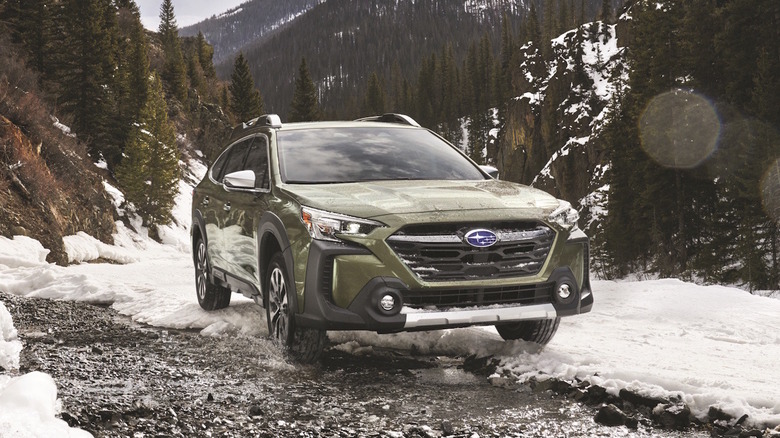
It's a reasonable argument that the sixth-generation Outback only tops the reliability charts because of its relative newness. Yet, it's hard to ignore the data. Combining CR's reliability ratings across the sixth-gen Outback's six model years produces the highest average reliability score among all five generations we've analyzed. The particular standouts are the 2023 to 2025 models, with above-average rankings. If you're looking for a late-model Outback, these editions should be your targets. And here's a shocker: These are the only Outback models ever with an above-average score from CR. This era of Outback also earned praise from Consumer Reports for seat comfort.
All the others, dating back to 2000, have average or below-average dependability ratings. Among the sixth generation, the 2020 through 2022 Outbacks are the reliability laggards, with the 2020 model year being below average. NHTSA data reinforces these standings for these earlier sixth-gen models. With 902 reports, the 2020 Outback has the third-highest number of consumer complaints on file as of writing. The 2022 model year has a still-high 465 complaints. J.D. Power's ratings for this generation also have their ups and downs. The 2020 and 2021 Outbacks scored 71 out of 100, the lowest of any Outback the company has rated, before climbing to 79 for 2023 and 81 for 2025. Keep in mind that J.D. Power surveys owners during the first three months and first three years of ownership, so the final results aren't in yet for the last years of the sixth generation.
Of course, the sixth-generation Outback isn't perfect. NHTSA complaint data shows body and exterior issues to be the number one gripe for owners. Rounding out the top three complaint areas for this group of Outbacks are electrical problems and issues with the driver assistance system.
Second-Generation Subaru Outback (2000-2004)
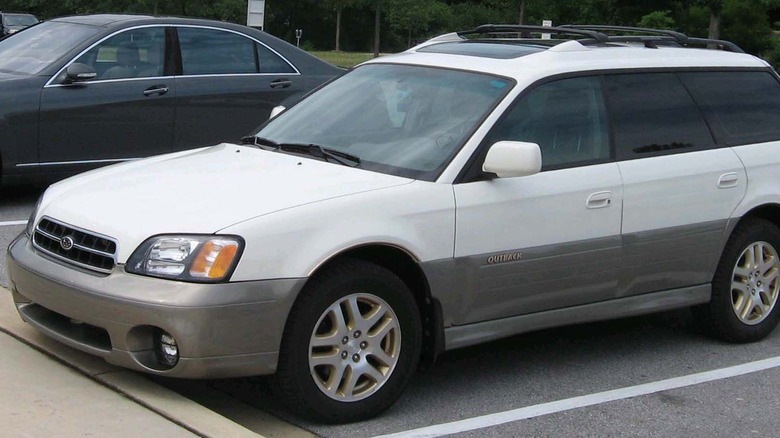
Surprisingly, the second-generation Outback ranks as the second-most dependable version when averaging CR's reliability scores. All five model years earned average ratings, which helps keep the results rather consistent. In fact, the 2000 and 2004 model years were just a few points shy of reaching above-average status. It's fair to call this generation a Legacy with higher ground clearance and a taller greenhouse, but it's still a standalone model, which makes reliability easier to research. J.D. Power didn't rate the Outback from these model years.
Despite this generation's age (with some model years already falling into the classic car category), they have fewer complaints on file with NHTSA than some newer Outbacks. The 2003 and 2004 models have fewer than 100 each. Only the much newer 2023 and 2025 model years have fewer. Within this generation, the 2000 Outback is the outlier with 215 complaints.
While the 2000 and 2001 Outbacks' complaints center on steering and suspension issues, engine problems aren't too far behind. Powerplant issues were also the top grievance for owners of the 2002 through 2004 model years. If you know anything about older Subarus, you know where this conversation is leading: head gaskets. The 2000 through 2009 Outbacks are among the most affected Subarus. Over half of the engine-related complaints for the 2000 Outback involved a bad head gasket, which is the worst of any model year. Similar reports continue into the later years of this generation, but in lower volume. The data points to the 2000 model year as one to avoid, or at least inspect thoroughly for a faulty head gasket. Investigating head gasket issues is also prudent for the remaining years of the second generation.
Fifth-Generation Subaru Outback (2015-2019)
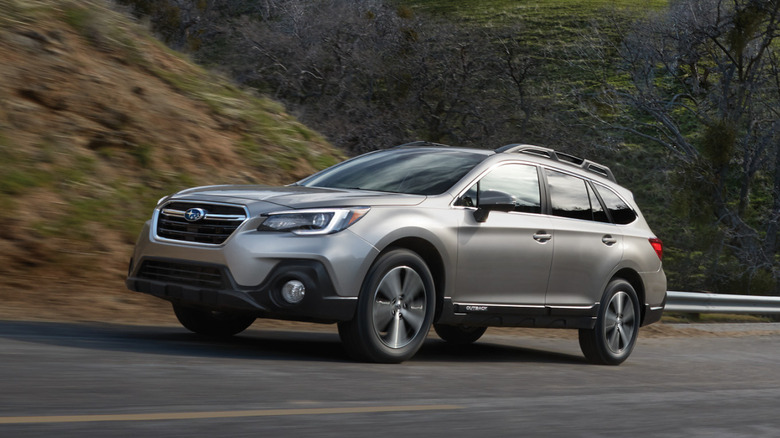
As the middle-ranked Outback generation, the fifth edition has highs and lows across its model years. Overall, these add up to average reliability. However, as tempting as a 10-12-year-old Subaru might be for a bargain-minded used car shopper, some fifth-generation Outbacks are best left in someone else's driveway. Consumer Reports flagged the 2018 and 2019 model years for below-average reliability. The 2017 model year doesn't get a thumbs-up either, with high owner complaints. If you're buying within this generation, targeting a 2015-2016 Outback seems like a good idea, since it has average reliability scores. J.D. Power sees Outback reliability a bit differently here: The organization rated the 2018 edition's Quality & Reliability at 81 out of 100, among the best of this generation. However, the 2015 Outback scored a 76, the lowest of this generation. The other model years earned a 79 or 80.
Further cementing the 2019 Outback as one to avoid, based on NHTSA data, is the unfortunate status of having more owner complaints (over 1,000) than any model year of this nameplate. It's a curiosity given this is the last year of a generation, as the first model year after a redesign can be more prone to problems.
Meanwhile, the 2017 model year earns the number two spot for complaint frequency (over 900 reports). The 2018 Outback has more than 800 reports. NHTSA data shows electrical issues in every model year of the fifth generation, which is something used car buyers should know. NHTSA complaint volume for the 2015 and 2016 models is still on the higher side (over 500 reports for each), but at least electrical troubles aren't the top complaint for the 2015 Outback; body and exterior issues lead the report count.
Fourth-Generation Subaru Outback (2010-2014)
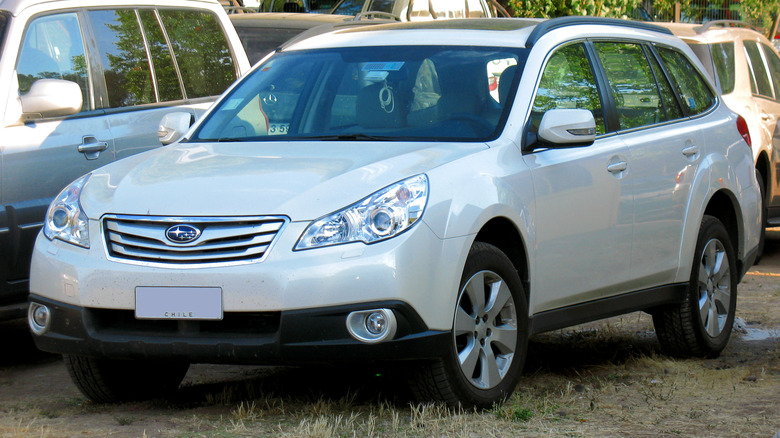
Used Outback shoppers will have to be even more selective with the fourth generation. This edition just barely reaches an overall reliability ranking of "average" from CR, and that's mostly because of the 2012 and 2014 Outbacks. The other model years (2010, 2011, and 2013) sit squarely in the below-average-reliability camp. These standings could be connected to the all-new platform Subaru launched for the fourth-generation Outback, which increased cabin space and wheelbase. Call it growing pains.
NHTSA data is mostly consistent with Consumer Reports' findings. The 2011 model year has the most complaints at over 650, followed by the 2010 Outback. The 2012 to 2014 editions have fewer complaints, but they still reach over 200 each. Every model year of the fourth generation earned an 81 or 82 from J.D. Power, the best of any Outback generation. Remember, however, that these ratings only cover the first three years of ownership, which may not be sufficient time for powertrain issues to surface.
What's especially eye-opening is that for 2010 through 2012, the number one complaint was in the transmission and drivetrain category. This coincides with Subaru introducing a continuously variable transmission (CVT) into the Outback for the first time in the 2010 model year. These issues subsided after 2012, but are still among the most common trouble spots. Meanwhile, engine problems rise to the top of reports for the 2013 Outback. If a fourth-generation Outback is a must-have, then the 2014 edition is the best candidate. It has fewer engine and transmission complaints. Airbag problems appear at the top of the owner reports. The 2014 Outback was recalled due to a Takata airbag inflator used with the front passenger airbag.
Third-Generation Subaru Outback (2005-2009)
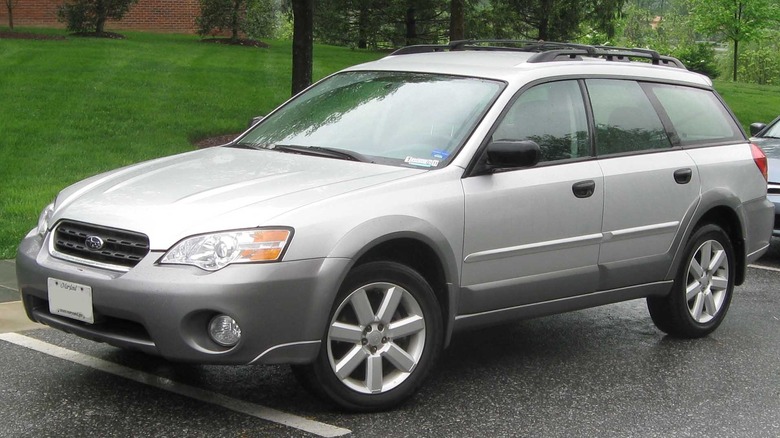
The third-generation Outback sits at the bottom of the barrel for many reasons, mostly because every model year has a below-average reliability rating from Consumer Reports. With other generations, a buyer could find at least a couple of options worth considering. That's not the case with the 2005 to 2009 Outback. J.D. Power's ratings for the Outback start with the 2008 and 2009 model years, both of which received an 81 out of 100. As mentioned above, this data reflects only the first three years of ownership. It's unknown if head gasket issues surfaced later with the surveyed vehicles, but this problem tends to surface near or past the 100,000-mile mark.
NHTSA data isn't encouraging. Engine trouble is among the top three complaints for all years, except 2008. Meanwhile, the 2008 Outback has its share of electrical and brake issues. Then the head gasket issue raises its ugly head again, affecting the entire third generation.
Surprisingly, the volume of owner reports submitted to NHTSA isn't off the charts. The 2007 (130 complaints) and 2009 (112 complaints) editions are on the lower end of the scale. Complaints are elevated for the 2005 (273), 2006 (281), and 2008 (230) Outbacks, but not at the level of some of the newer generations. Like the fourth-generation Outback, the 2005 through 2009 editions are not strangers to Takata-related airbag recalls.