

There's Evidence That Road Sign Fatigue Can Cause Drivers To Ignore The Rules
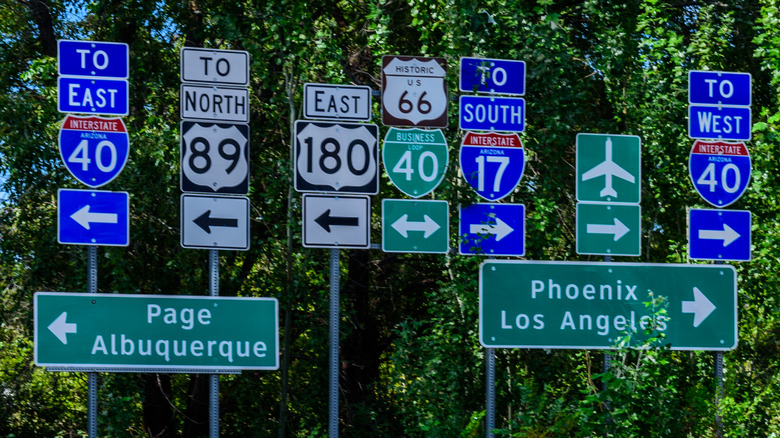
Road signs only work if drivers notice them, and plenty of people say they've stopped. A Signs.com survey of 1,000 U.S. adults found that 34% of people say that there are so many signs that they're less likely to notice or follow them. That 34% skews young — 40% each of Gen Z and millennials reported sign fatigue versus 19% of baby boomers, with men (39%) reporting it more than women (27%).
Behavior echoes the attitude. Of those thousand participants, 25% ignored a road sign in the past month. Three-quarters of drivers admitted to speeding, while 43% said they rolled through stop signs and 41% ran yellow lights instead of slowing to a stop. By those numbers, speed limit signs are the ones drivers disregard most — adding to the debate over speed limits and how much they improve safety.
The most common excuse was confusing wording or signage. In the survey, 61% said they'll ignore a sign that's unclear, ahead of judging a situation low-risk (55%). Half even said they'd brushed off a rule because they assumed it existed mainly for liability reasons. Meanwhile, 42% of respondents said they comply most when a sign is clear, 33% when the sign is relevant to their safety, and 28% when it's backed by enforcement they can see. Keep the caveats in mind, though. Signs.com sells road signs, and the figures are self-reported online answers.
What other research shows
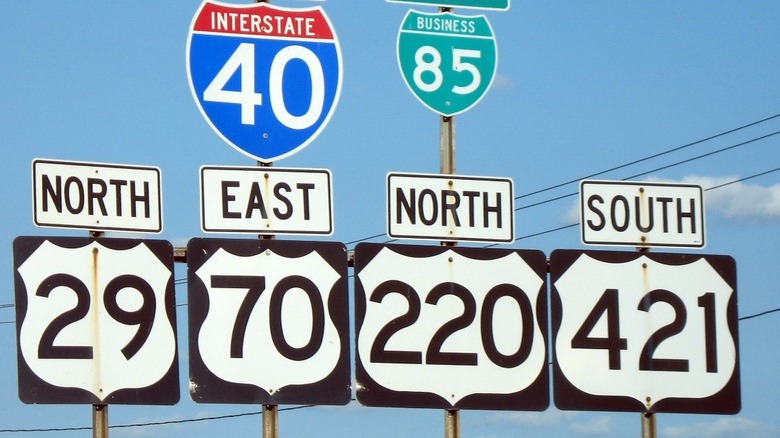
The Federal Highway Administration defines driver information overload as giving motorists more information than they can perceive and act on in time. It lists possible consequences from earlier research, including sharp slowdowns, late or erratic maneuvers, wrong turns, long glances away from the road, and disregarding critical information.
A 2022 simulator study of 30 drivers published in the International Journal of Environmental Research and Public Health found visual workload was lowest at about 30 bits of sign information per kilometer and rose when signage got either denser or sparser. Its authors note the results apply only to Chinese highways since the signs followed Chinese standards, but the broader pattern can still be considered for American drivers.
Confusion is measurable too. In a 2022 MyVision.org survey of about 1,060 drivers, roughly two in five couldn't identify the "divided highway ends" and "railroad after turn" signs, and about one in five mistook a text-free road construction sign for another sign.
So is sign fatigue real? FHWA notes there's little hard evidence, but people say it is, and the lab data shows too much signage raises drivers' visual workload. As for signs that do come down, retired road signs can sometimes be bought legally.