

What Happens To The Cars A Dealership Can't Sell?
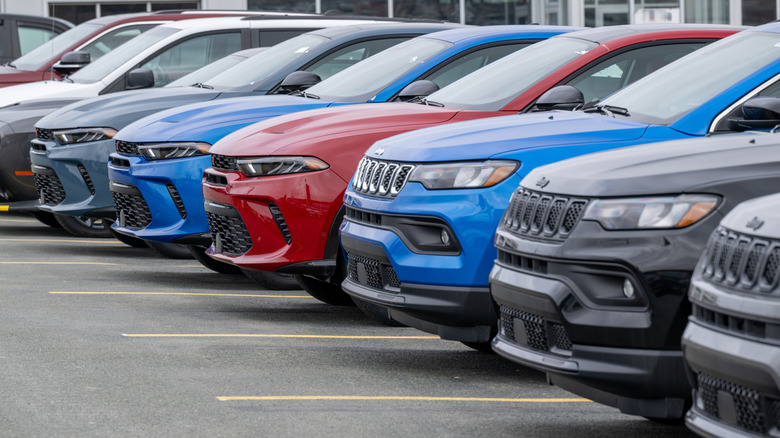
Americans buy about 16 million new cars every year, barring the occasional economic upheaval or global pandemic. Yet, that heady number doesn't take into account that not every car sells like manufacturers and dealers hope. Some models languish on lots for months or even years. One of the first things dealers try is offering customers a discount. At the dealership where I sold new and used cars, the bosses would also offer incentives to salespeople to move cars that just couldn't gain traction. More aggressive tactics like converting the car into a service loaner or demonstrator could also come into play. Then, surrender might come in the form of trading the car to another dealer or sending the vehicle to a wholesale auction. In case you're wondering, bidding at these dealer-only auctions usually requires a license.
Used cars can sit around, too. What's considered a slow seller? It varies by company, but many dealers consider 60 to 90 days on the lot long enough for a car to count as aged inventory. At my dealership, management started to get anxious at the 60-day mark. Why? Because most dealers don't own their inventories outright. The cars you see on the lot and in storage yards are financed. It's called floorplanning, which contributes a significant amount to the overhead. Last year, the average floorplan costs for a new car were about $237 per month. That amount quickly eats into profits as the months accumulate.
There wasn't always a reason for what made a slow seller. Sometimes, it was the color (the used car manager was prohibited from buying anything brown) or the lack of a particular option. Pricing was always a factor. An overpriced, unpopular model is a direct cause of crickets chirping.
How car dealers move old inventory: first steps
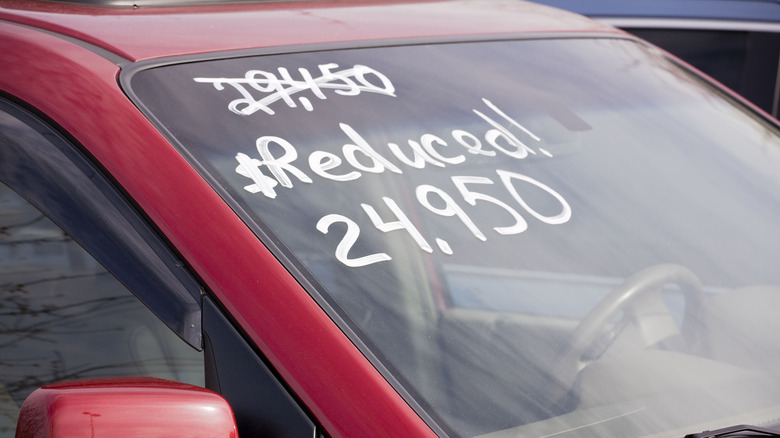
Money has a way of motivating customers and salespeople when it comes to old inventory. Sometimes, extra discounts or a better trade-in valuation is all it takes. In my selling days, management would also tack on bonuses on aged units. If someone came in hell-bent on the best deal possible and was less focused on the car (yes, those buyers exist), I would steer them toward these options. It was usually a win for everyone.
Yet, money can't fix everything. In these situations, the choice could involve taking the problematic new car out of inventory and doing something else with it. The typical routes are making the car a service loaner or letting a manager drive it as a demonstrator. After a time, the vehicle may then make its way back to the lot, but sometimes on the used car side of the business. Demonstrator units typically go up for sale before the odometer hits 3,000 miles. It may be sold as new if it was never registered, but the high-for-a-new-car mileage usually comes with a disclosure and a discount.
At the dealership I worked at, the company also had a thriving car rental division (they were stingy with loaner cars), so it wasn't unusual to see older units positioned there. In theory, any of these steps could be taken with slow-selling used cars, but from my experience, dealers often use newer models for loaners, demonstrators, or rentals.
How car dealers move old inventory: the last resort options
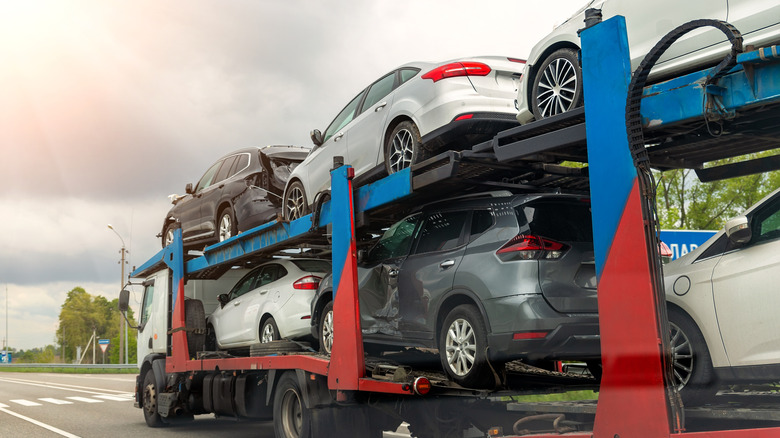
If discounts and incentives can't move older new inventory and changing over to loaners isn't practical, dealers use other measures to get the offending car off the lot. Dealers trade vehicles with each other. It's a common practice among franchised dealers. A slow-seller in one market might be the right model for another. The transaction could be a vehicle swap with a cash payment for any difference in value, or the other dealer will just make an outright purchase. My dealership had relationships with several other same-brand retailers outside our immediate trading area.
Wholesale auctions are the last-resort inventory disposal method. At this point, the dealership has decided to cut its losses. However, the bleeding can get worse. There are costs to bring a car to auction (fees and transportation costs). Also, an auction may not fetch a satisfactory price. It can be a gamble.
Specialized auctions for franchised dealers from the same brand also exist. New cars can go to auction, too. Minnesota statute, for example, allows dealers in that state to auction new vehicles. For used cars, outlets like Manheim and Openlane let dealers offload unsuccessful inventory. ADESA, which Carvana bought a few years ago, is another.