

Why Some Cars Will Have More Physical Buttons In The Near Future
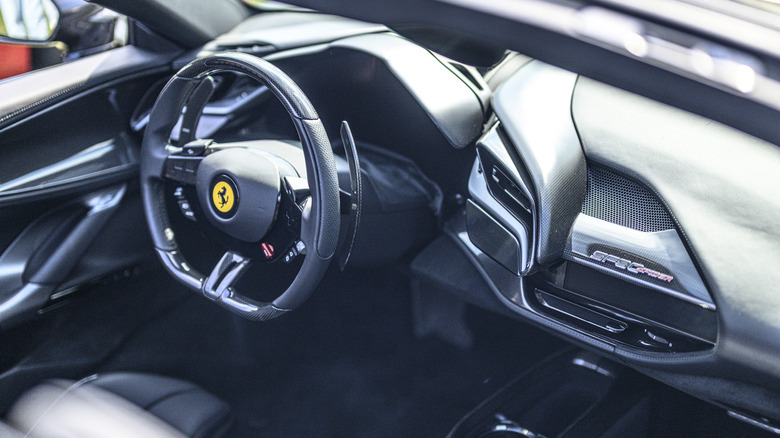
Physical buttons could officially make a comeback, and the reasons are straightforward: Drivers pushed back, safety testers sided with them, and even China has proposed making physical controls mandatory for critical functions. After a decade of hybridization, electrification, and shifting buyer tastes, it turns out that more tech doesn't automatically mean a better car.
Last year, we looked at how some car brands are rethinking touchscreens and bringing back physical buttons, and that's no longer a vague promise. It's happening in real cars right now. Ferrari is a good example. Customers criticized the touch controls on the SF90's steering wheel, so Ferrari reworked the design, and the 2027 Amalfi has real buttons. Ferrari is also offering a retrofit to owners stuck with the touch controls, and the Purosangue, the 12Cilindri, and the Roma are among the cars covered.
It isn't just about luxury cars, either. Volkswagen's ID.Tiguan, the ID.4's replacement, arrives in Europe in early 2027 with physical buttons in the cabin, and the Golf GTI and Cupra Born now use physical switches on their steering wheels. Mercedes is doing it, too, on the electric GLC's new steering wheel, and so is Audi with its upcoming A4 E-tron and Q7 E-tron.
So the industry is clearly leaning back toward the tactile. However, its previous move away from buttons isn't easy to undo, so the answer takes more than flipping a switch. It takes a closer look at what drivers actually want and what carmakers can realistically build.
Do we really want real buttons?
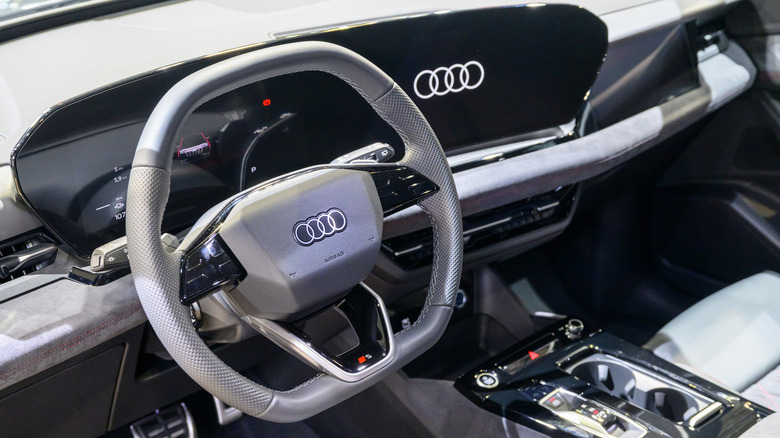
Only partly. The Drive reported that 48% of shoppers in an AutoPacific survey picked dials or buttons over a screen. That's nearly half, yet 60% of respondents also said they like how screens look. Drivers aren't asking for a 1990s dashboard. They want a better balance. As Kelley Blue Book reported, Telemetry's Sam Abuelsamid says physical controls take "a lot of engineering effort," which is why the brands above are keeping screens but bringing buttons back where it counts.
Modern cars pack in a ton of features, and if every one of them got its own button, a luxury interior could start to look like a 747 cockpit. Regulations play a part, too. Since May 2018, new U.S. vehicles under 10,000 pounds have been required to have a backup camera, which puts a screen in the dashboard of nearly every new car. Once there, it makes a convenient home for everything else.
It's not just automakers that are scrutinizing the all-touchscreen dashboard. China's Ministry of Industry and Information Technology has proposed rules that would require physical controls for critical functions in new models starting in 2027. Europe's independent safety testers are pushing in a similar direction. Euro NCAP's 2026 test results came with a headline that says it all: "Buttons are back for basic functions."
Even Jony Ive, designer of the iPhone and the Ferrari Luce, says touchscreens are not the way to go for the future. So it's reasonable to expect a middle ground: screens for the extras, and real buttons for anything you shouldn't have to take your eyes off the road to use.
Can you just talk to your car instead?
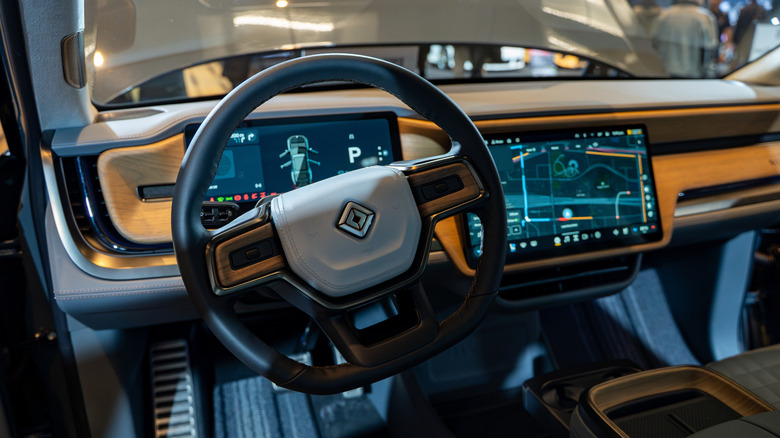
Increasingly, yes, and some carmakers are really going for it. The BMW Neue Klasse iX3 debuts a voice assistant powered by Amazon's Alexa+, the same kind of large-language tech behind today's AI chatbots. And TechCrunch reports that Rivian's software chief, Wassym Bensaid, believes in-car buttons are an "anomaly," and a car is "a fantastic environment for AI." Hey, even Mercedes believes you should be able to have a natural conversation with your car.
The logic behind the claim is sound. If a car can understand what you mean, nobody should have to hunt through a menu for the defroster. We've already established that cars have too many functions today for them to be translated into buttons. Voice can be a lot quicker. Telling a car to play something on Spotify takes less time and attention than going into the menus, typing in the song, finding it, and hitting play. From a safety perspective, voice commands can reduce the time drivers spend looking away from the road, although they won't eliminate distraction altogether.
The same goes for changing radio stations, entering navigation directions, and plenty of other things. Automotive technology is advancing rapidly, and manufacturers like Volkswagen are already building ChatGPT into their voice assistants. Although AI still isn't able to take control directly, it does feel like a natural next step.