

Here's Why The Electric Dirt Bikes From Tractor Supply Aren't Street Legal
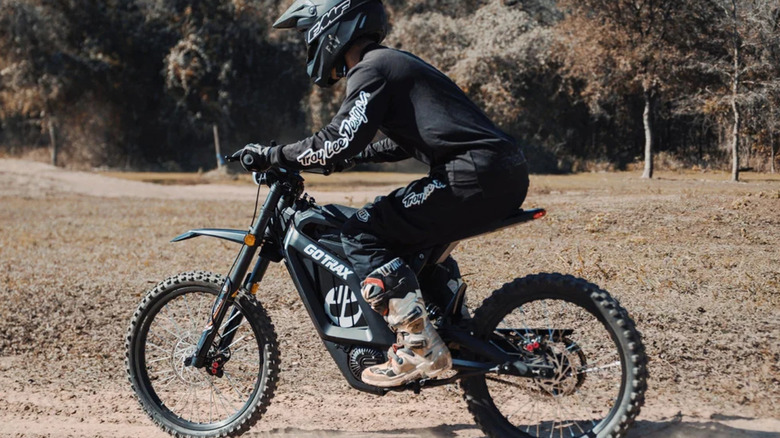
Unless you've been living under the proverbial rock for the last decade, you're sure to have seen the myriad inexpensive electric dirt bikes ripping around city streets and countryside alike. With inexpensive lithium batteries and compact, lightweight electric motors providing wheel-standing torque with a twist of the wrist, these things tend to be both quick and incredibly fun to ride. When it comes to fun-per-dollar, it's difficult to argue that these don't peg the needle squarely in the as-much-as-you-want zone. However, to keep costs low, manufacturers tend to skip most of the equipment and paperwork you would need for them to be legally plated and ridden on the street.
Most of these electric dirt bikes come fresh off the boat from China. You've heard of the big names, like Surron or Talaria, I'm sure. Even American electric motorcycle brand Zero's XE and XB off-road motorcycles are built in China. These days there are dozens of other manufacturers building (or white-label reselling) these machines for distribution through just about every online retailer you can think of.
Take, for example, mini-bike maker Tractor Supply, which offers full-size GoTrax and Drift Hero electric motorcycles on its website, ranging from 800-watt (about 1-horsepower) yard bikes for little kids on up to the 7,000-watt (9-ish horsepower) GoTrax K2. That one is allegedly good for 50 miles per hour and up to 45 miles of range. Depending how far your commute is, and the roads you ride on every day, that could be the makings of an incredibly efficient and fun daily-rider. You know, if it weren't for those pesky laws. So why aren't they street legal, and can you do anything to make them legal?
Why aren't these electric motorcycles street legal?
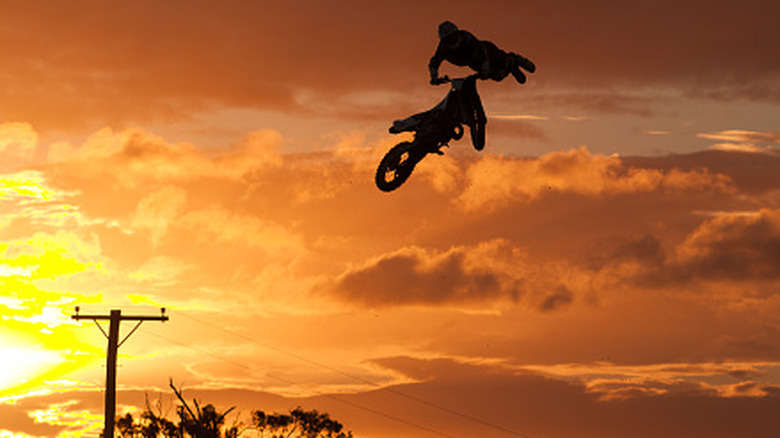
While some manufacturers go through the costly process of registering their machines with the U.S. Department of Transportation and obtaining the correct paperwork to make street-legal electric dirt bikes, the vast majority (including those sold at Tractor Supply) do not. There's a long history of off-road-only dirt bikes, so this doesn't just apply to the electric ones, but riding illegal electric dirt bikes on the street seems to have grown in popularity in recent years.
An off-road vehicle is not typically equipped with a standardized vehicle identification number, and thus can't be tracked or registered as a normal motorcycle would. Without a VIN you can't get your bike registered, plated, or properly insured for legal street riding. Many of these off-road-use-only bikes lack the standard equipment necessary for street legality as well. To be federally street-legal, and therefore considered a motorcycle, requires a DOT-legal headlight, functioning brake lights, mirrors, a horn (audible from 200 feet away), and DOT-legal tires.
At the end of the day, there's a reason street-legal motorcycles are typically more expensive than a non-street-legal dirt bike. It has always been this way, even for gasoline-powered motorcycles. Take, for example, Honda's gas-powered CRF300 lineup. The CRF300L Rally is street legal, with all the requisite components necessary to be so, and it starts at $6,499 plus $600 destination. The off-road-only CRF300F, meanwhile, is $1,700 less total, at just $5,099 plus $300 destination. It makes sense that Honda would charge a premium for a bike that has significantly more components, and that's before you get to the hoops Honda needs jump through to file the correct DOT paperwork. Any old fly-by-night Chinese electric dirt-bike startup can just ship you a bike without any of that at a fraction of the cost.
What do you need to do to make your electric dirt bike street legal?
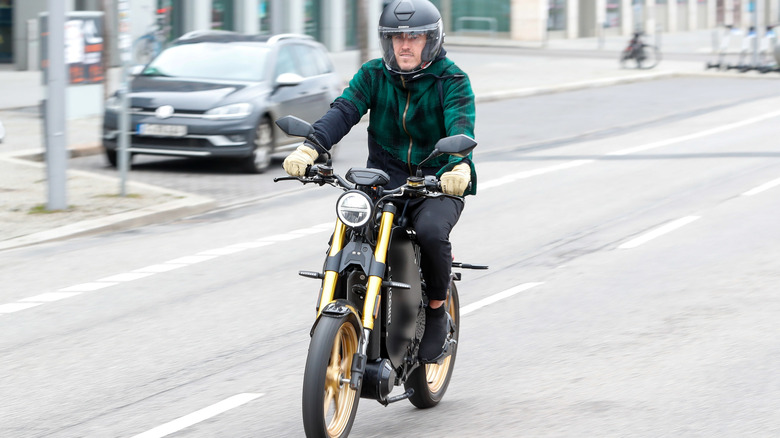
There isn't really a short answer to the question of how to make an electric dirt bike fully street legal, aside from "It depends." Before doing anything to make your off-road electric motorcycle into a street-legal machine, you should consult your local laws because this is hardly a nationally settled matter. The first step in your journey should be to contact your state's Department of Motor Vehicles to get a list of required equipment. Some states allow a more lax interpretation of the law, skipping some of those federally mandated parts. On the flip side, some states are strict, and depending on what model you've purchased, it may not even be possible.
It's tough to say there's a blanket appropriate method of installing all of these components on every kind of bike, but everything required by law should be reasonably easy to install in a home garage with standard mechanic's hand tools. There are thousands of options to choose from in the motorcycle aftermarket. Fork-mounted front light kits, easy-fit rear lights, handlebar-mount mirrors, and the like are the work of an afternoon. Depending on your motorcycle choice, however, you may need to upgrade your 12-volt battery system to accommodate the extra load of the add-ons.
Once you've made the appropriate modifications and gathered the appropriate paperwork for the DMV, you can submit your motorcycle for inspection. Usually this is quite easy, and you'll be assigned an inspector to insure each component is installed and functions properly for state standards. At that point you'll be able to apply for registration and a license plate.
Or, buy a street-legal one in the first place.