

So You've Hit A Deer With Your Car. Now What?
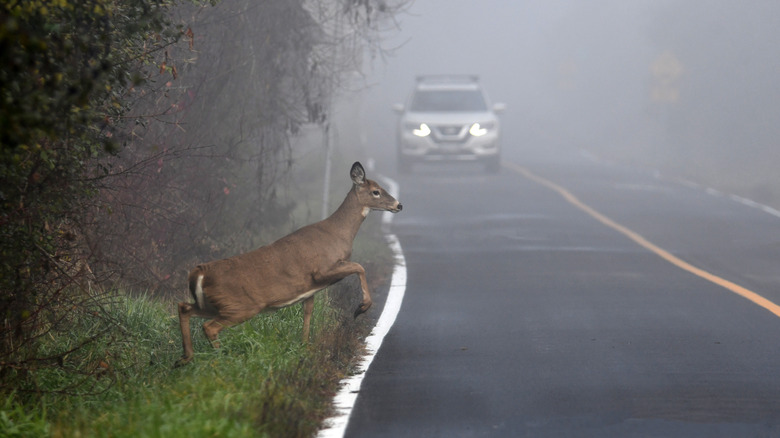
Fall is a magical time of year: The air is alive with the scent of pumpkin spice, the decorative gourds are presented, and, of course, the dang deer won't stay off the roads. Typical fall, right? That last one ain't no joke — just about everyone who has driven in a place with a significant deer population can tell you a tale or two about a run-in with deer. If you're in France, you really need to look out for the drunk deer.
Deer are a hazard drivers have to contend with. Sure, we could put some murder kitties in the forests, because more big cats in forests can reduce car crashes by roughly 75%. Or, we could install crossings to give creatures a safe path over big roads, like they did in California with the world's largest wildlife crossing. But short of that, accidents with deer will happen. State Farm reports that there were more than 1.6 million animal-related collisions between July 2025 and July 2026. It is a real concern.
But don't fret. If the unfortunate accident does happen, the first thing you should do is to ensure your own safety. Move off the road, and turn on your hazard lights so you're not at risk from any other vehicles. Check your vehicle only when it's safe to do so. There's no need to compound the accident by putting yourself in greater danger.
You hit a deer. Now what?
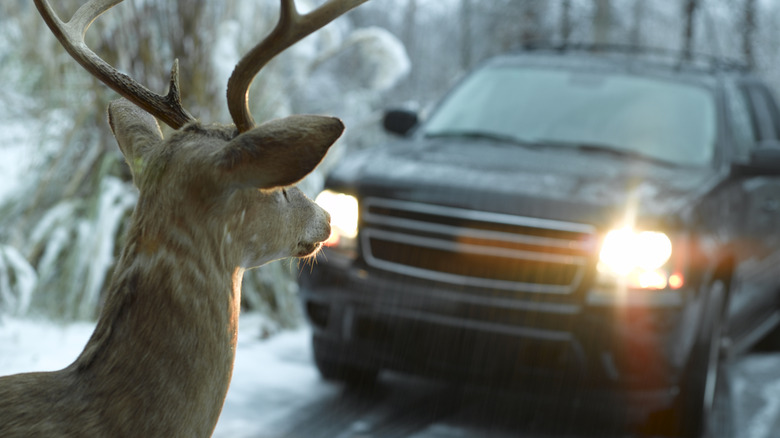
Hopefully, you are in a safer situation now, so be sure to check any passengers and yourself for injuries. Call 911 immediately if anyone is injured. At this point, you may be tempted to check on the deer. If you can see it and it's a road hazard, for safety's sake, report it. You don't want another driver to hit it. Do not attempt to approach or move it! An injured animal is a dangerous animal. If it's not visible, don't try to find it.
At this point, it's not a bad idea to take pictures of the accident in case your insurance asks for it. Your insurance may also ask for an accident report, so it's a good idea to get one. Speaking of insurance, hitting a deer is usually covered under comprehensive coverage if you have it. Swerving to miss a deer and hitting something else is typically covered by collision coverage, but don't do that.
If your vehicle is not drivable, call a tow truck. If you think your car is still drivable, you may be tempted to leave. If there is property damage or if the deer is still a hazard to others, report it. Otherwise, depending on state law, you may be okay to leave. Before you drive off, do a basic check of your vehicle to ensure that it's actually roadworthy. Take a look underneath your vehicle to see if it is leaking any fluids. If it is, do not drive it — you can cause more damage to your engine. Check that the hood is latched securely and will not come loose. Verify the headlights are still working, especially when it's dark out. Simple stuff, but it could save you trouble down the road.
Use caution to avoid hitting a deer
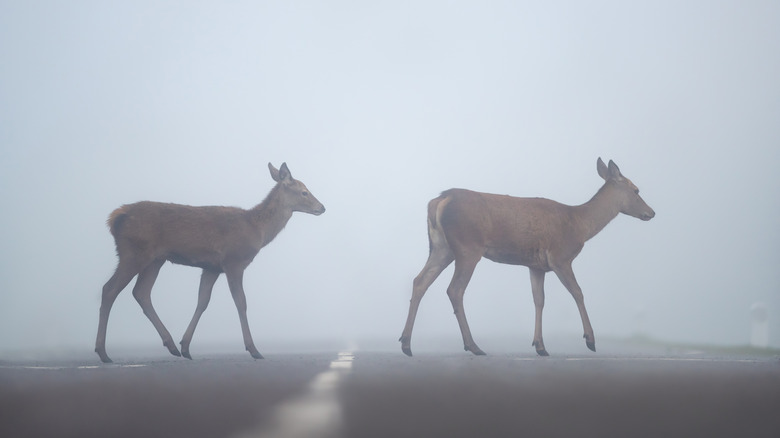
There is no sure-fire way to avoid hitting a deer, but you can reduce your risk by being cautious when you're in an area with an active deer population. Slow down to a speed that will allow you a better chance of stopping before they become hood ornaments. Be especially cautious at dawn and dusk, as deer are more prone to roam at those times of day. Use extra caution when traveling near wildlife crossing signs. No, the deer aren't reading those signs and deciding to cross there – obviously, those signs declare that you are in an area known to have heavy activity. Also, remember that deer tend to travel in groups, so if you see one, others are likely nearby.
Lastly, if hitting that deer is unavoidable, your natural instinct will be to swerve to avoid the animal. Fight the urge to do this. Swerving to miss the deer is often more dangerous, as it can cause your car to roll or result in other unwanted behavior. Quite often, the resulting crash is worse than just hitting the deer. Brake in a straight line, and brace for impact.