

More Big Cats In Your Area Could Reduce Deer-Induced Car Crashes By Nearly 76 Percent
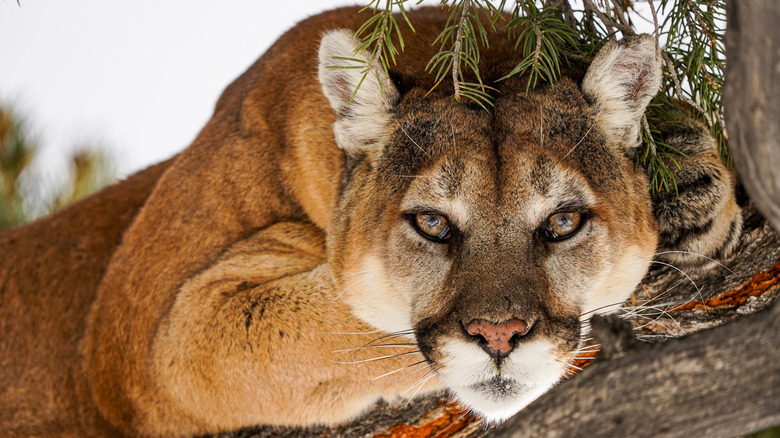
It appears introducing the larger of murden-mittened predators, or big cats, to deer-ridden regions would not only benefits damaged ecosystems, but also decrease chances of vehicles hitting a deer on the road. According to a recent study published in Current Biology, areas that are home to a healthy population of large cats like cougars, helped tamper deer populations and kept them away from the road, which reduced car crashes caused by these hooved creatures by as much as 76 percent.
The study, which began in 2018, took five years of correlated data pulled from 503 cameras and GPS collars on 59 pumas across the state of Washington's Olympic Peninsula. Researchers found that first of all, higher or healthy puma populations helped to keep deer populations away from roadways. Deer populations were already more likely to avoid areas with dense roadways, which is great for populated areas, not so great for rural roadway users.
Pumas are known thanks to earlier studies of their behaviors to avoid human activity, which helps keep a healthy perimeter around human activities, like roadways. Deer in those areas, in response, were found to establish avoidant habits around puma and big cat activity. The deer were also less likely be active in evening and dark hours, times when pumas would be more active. Although deer would avoid prime puma activity, the changes in movements and day-to-day activities would logistically puts deer and big cats in the same area — great for the solitary hunting creature and its meals. It also greatly ends up benefiting humans (and vehicles) by keeping those deer away from roadways as a whole.
Simple solution: More big cats to the eastern half of the U.S.
It turns out pumas, also known as cougars, mountain lions, panthers, and catamounts, are fairly solitary creatures. They don't form packs or prides, only seeking out companionship briefly for mating reasons. Otherwise, they're typically known as "ghost cats" because of their elusive living characteristics within deep, dense forestry, away from humans. They've actually been found to adjust their habits around human activities.
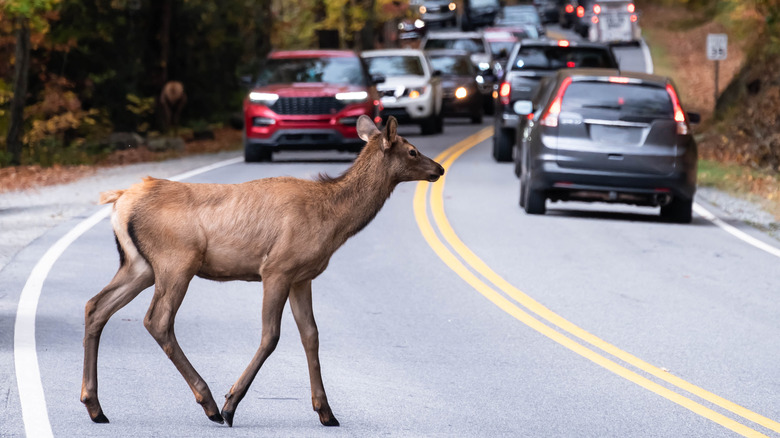
Deer on the other hand have become an increasingly pesky problem, especially in the eastern part of the U.S. where explosive populations are destroying ecosystems, as well as increasing interactions with cars. Data from State Farm, as reported by Wired, found that 1.8 million auto insurance claims were filed from 2022-2023 for incidents involving animals, most being deer. And these large animals don't just destroy your vehicles. The doe-eyed creatures have taken lives in crashes as well. The Insurance Institute for Highway Safety reports more than 200 people died in animal-involved car crashes in just the last year.
If you look at a map of the big cat populations, which are significant throughout North and South America, the eastern portion of lacks a healthy kitty population. It just happens that if you look at a map revealing rampant deer populations, they cover that same, cat-lacking area. What's inherently missing is a top predator, and big cats could be an easy answer to calming deer populations instead of relying on hunters (like in Michigan) which still fails to keep things completely controlled.
Think of it this way, reducing one's chances of hitting a deer is great, and knowing a big cat is thriving is an added bonus. Luckily, it won't affect humans either, as a big cat is a fairly introverted creature. Neither of us want much to do with the other, so our chances of interacting with a puma is fairly low. Everyone wins.