

These 5 Italian Exotics Are More Dependable Than The Finicky Supercars Of Yesteryear
Supercar ownership has been, and likely always will be, quite a scary proposition for newcomers, save for those who have pockets deep enough to not even care how much the next service or repair bill will cost. However, modern engineering and the cross-platform hardware that exists in many a modern supercar makes ownership a little more approachable compared to the exotics that came before them. For example, classic Ferraris like the F355 and Testarossa require engine-out servicing on an uncomfortably frequent basis, while electrical gremlins, rattling cam chains, and inadequate braking systems trouble the pre-Audi-era Lamborghinis.
Now, look at their modern counterparts. The Ferrari 458 Italia is chain-driven and capable of six-figure mileages, plus its modern DCT transmission is impressively durable and free of pricey clutch changes. Meanwhile, modern Lamborghinis share a lot of hardware with mass-market models from within the Volkswagen-Audi group as well as some other mainstream automakers, which, for buyers that know where to look, brings down servicing and maintenance costs dramatically.
To prove our point, this piece covers seven modern Italian supercars that offer a surprisingly worry-free ownership experience — from the aforementioned models through to more entry-level supercars like the Ferrari California. The supercars on this list all utilize proven powerplants that have all been on the market for at least a decade, are typically simple and robust in design, and are backed up by numerous examples with six-figure mileages still on the roads today. As a result, the Italian supercars on this list all have no known major mechanical issues, straightforward servicing and global warranty coverage, and a reputation for reliability among enthusiasts. And above all else, they are way more dependable than many pre-2000 models that preceded them.
Alfa Romeo 8C Competizione
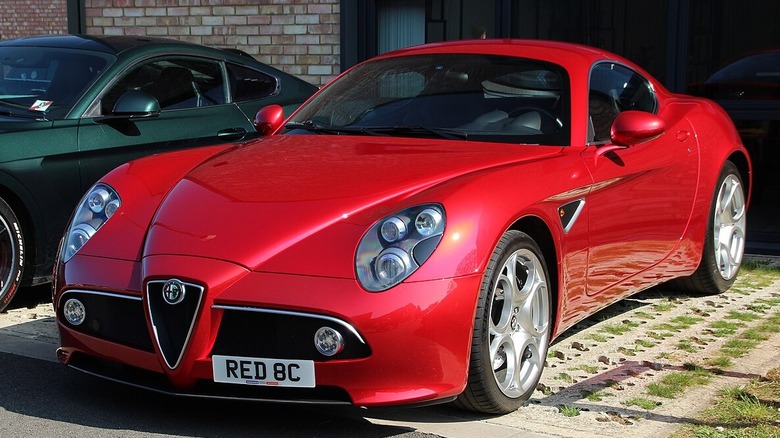
A high-performance, limited-run Alfa Romeo and dependable, all in the same sentence? That's right. Including the 8C wasn't some sort of mistake, and this Alfa's case is actually quite easy to argue. First off, the 8C isn't totally void of faults. Alfa Romeo issued a recall in 2009 that affected the front and rear lower ball joints, and at least one 8C randomly combusted as a result of a suspected electrical gremlin. However, even $70 million 250 GTOs catch fire from time to time, so perhaps that's just part and parcel of Italian supercar ownership.
That aside, the 8C is largely based on a Maserati GranTurismo, rather than being some custom creation featuring heaps of unique parts. It's also motivated by the same Ferrari-Maserati F136 — a notoriously well-built V8 that also featured in the Ferrari F430 and 458. What this means for owners is that finding a specialist familiar with this engine shouldn't be a problem. Though the F136 is considered relatively dependable as long as basic maintenance is kept on top of.
Some of the factors that make the F136 more robust than older Ferrari V8s are chain-driven cams, a completely new, stiff aluminum block, forged pistons and a hardened-steel crankshaft. Owners also appreciate the fact that there's no engine-out servicing. We even mentioned it among the greatest engines of the last decade.
Given the super exclusive nature of these cars, most 8Cs seem to be kept as cherished weekend toys and don't see heaps of use, but the proven underpinnings mean that, given the chance, they could probably cover significant mileage without major hiccups. Compare the F136 V8 to the complex and low-production engines fitted to previous special Alfas like the '70s Montreal, and the 8C looks like quite a tempting prospect.
Ferrari California
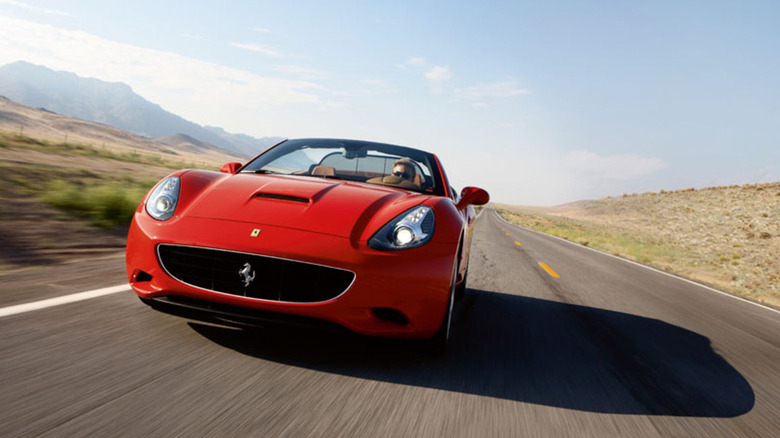
For all the same reasons why the 8C is great, the California is just as good. It's another grand tourer supercar that uses the F136. In this guise, the V8 produces 460 hp and 358 lb-ft of torque from a 4.3-liter displacement. One of the real benefits to the California is that it was sold with the "Ferrari Genuine Maintenance" program packaged in — alongside other contemporary Ferrari models. That provided owners with seven years' worth of free servicing, and it wasn't capped at one service per year.
Owners who exceeded the 12,500-mile-per-annum limit would also be welcome to another service as part of the program. That might seem a little redundant to a shopper considering an early model in 2026, but the peace of mind that comes with knowing Ferrari was so confident in these cars and that early maintenance was carried out to such a high level is not something to be underestimated. Older models, such as the F355 and 360, did not benefit from such a package, as it was only introduced in 2011. Also, since engine-out services on older Ferrari models can cost as much as $25,000, it's also reasonable to assume that they carry a larger risk of having experienced neglectful ownership in the past, with some owners wanting to avoid the hefty service bills.
Further bolstering the California's appeal is the positive feedback often given by current and previous owners. In fact, across a total of 13 reviews currently shown on Cars.com, the California scores 4.8 out of 5 for reliability, with many owners noting in their individual accounts that their drop-top Prancing Horse had been next to no trouble at all.
Ferrari 458 Italia
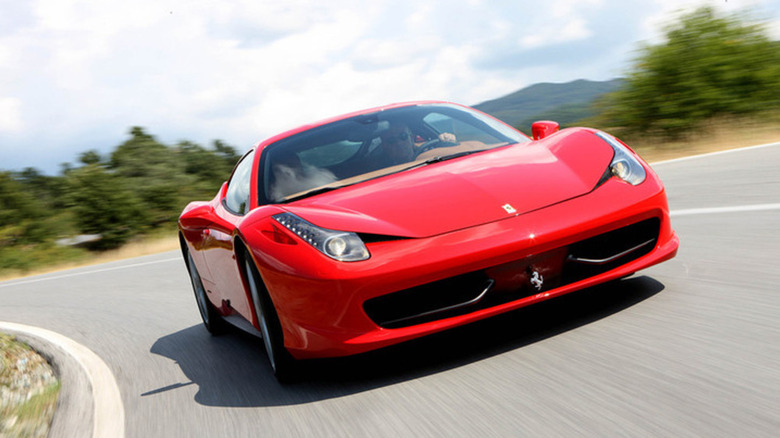
The last F136-powered Prancing Horse on this list (we promise), the 458 Italia did use a different variant of the engine — dubbed the F136FB – and the differences between it and some "lesser" variants are really quite important. Most notably, the 458's F136FB enjoys a slightly larger 4.5-liter displacement, and it also boasts a dry sump lubrication system, as opposed to the more typical wet sump system found in the California. The 458 also boasts a higher compression ratio of 12.5:1 and has its F136FB rear-mid mounted, rather than front-mid. These tweaks ensure the 458 easily walks a game of "Top Trumps," with 570 horsepower and 398 lb-ft of torque on tap.
All that makes it sound like a highly strung and technically marvelous Italian supercar, and that it is. But what's remarkable is that the 458 Italia has proven itself to be a surprisingly dependable machine, with one Japanese example having surpassed 240,000 miles so far (via AutoNext). That ludicrous example may be a one-off, but we found stories of other six-figure-mileage 458s too, demonstrating that these cars genuinely can be relied upon for long-distance or even daily driving.
Naturally, the 458 benefits from the same positives that make both the 8C and California such dependable choices, but it's also worth noting that this later mid-engined car benefits from a few extra years of development, too. Gone is the old single-clutch automated manual of the F430, and in is a more reliable dual-clutch system, which does away with the earlier car's frequent clutch replacements. Plus, a crankshaft-related recall for 2011 and 2012 model year cars fixes the issue of the engine potentially freezing up and gives owners of newer models even more peace of mind.
Lamborghini Huracán
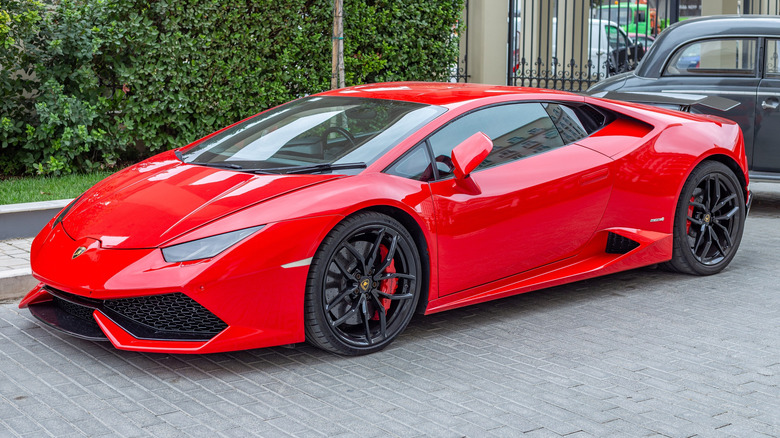
The Lamborghini Huracán debuted back in 2014, and continued in production for the best part of a decade, bowing out with various special editions such as the hardcore but friendly Huracán Tecnica and Sterrato, which offers pure and unfiltered joy both on and off the beaten path. It didn't look to hide its close connection with the Audi R8, the two cars sharing much of the same basic architecture, including the same naturally aspirated 5.2-liter V10. It was a proven engine by the time Lamborghini launched its Huracán, and any known issues had been addressed long before its arrival. In fact, the V10 received little in the way of complaints through the Gallardo years, too.
That V10 was also complemented with a suitably strong transmission. While the Aventador drew early criticism for clunky changes, and the Gallardo's fragile E-Gear system has a tendency to chew through clutches, the Huracán uses a proven and dependable R8 dual-clutch unit.
An ex-rental Huracán came up for sale in 2020 with 188,000 miles, which should stand as a solid testament to the model's durability (via Car and Driver). Its original transmission presumably lasted 180,000 of those miles, with almost 2,000 drivers having been at its wheel. Consistent 5,000-mile oil-service-intervals kept the V10 in rude health.
Speaking of the Huracan's reliability, independent testing has called out everything from the electrical systems through to the overall build quality as being both sound and durable. Ultimately, this Italian supercar with German blood in its veins is about as dependable as a supercar could realistically be. Contrast that with the reputation of older Lamborghinis, especially among those who are familiar with them, and it's not difficult to deduce that the Huracán presents a far more dependable ownership experience in comparison to the Raging Bulls from the past.
Maserati MC20
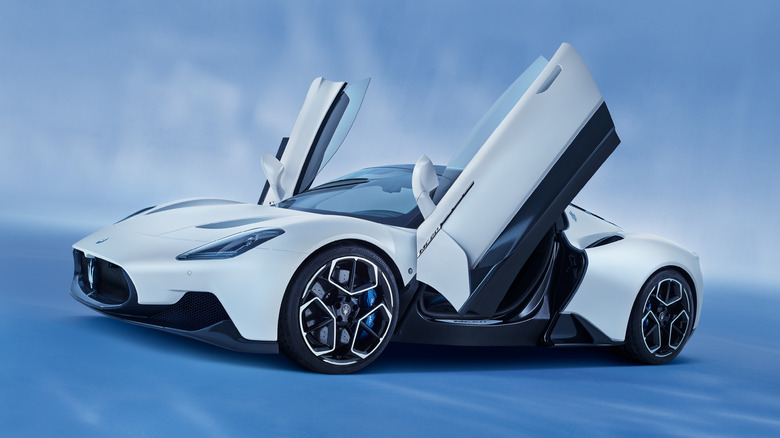
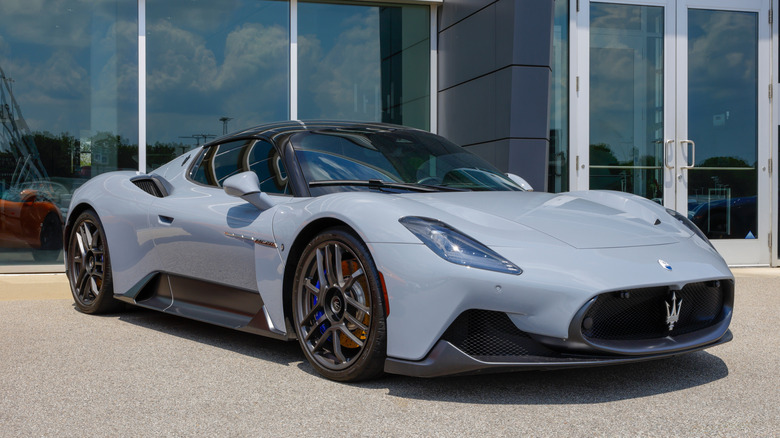
We recently looked at whether Maserati deserves its poor reputation or not, and judging by some pretty disappointing owner reviews, in addition to sky-high depreciation, we concluded that its bad rap is often fairly justified. That's why this one might come as a little surprise. However, the MC20 could be the supercar that bucks the trend for Maserati. It's notably simpler than some key rivals, with no all-wheel drive, hybrid, or rear-wheel-steering systems, and across long-term testing, it's actually proven to be a genuinely dependable steed. This is more than can be said for Maserati models of old, that's for sure.
Undoubtedly one of the MC20's core highlights is the 90-degree Nettuno V6 that powers it. Maserati enjoyed success in the past with similar V6 engines, and this one continues to avoid the hot-vee configuration that many of its V6 supercar rivals use to save space and reduce turbo lag. In other words, it doesn't hide its turbos down in the engine's valley — a design that has been known to accelerate wear in other engines due to excessive heat accumulation, potentially resulting in heat soak and turbo failure. That's a big plus point for long-term Maserati owners. The fact it develops 621 horsepower alongside 538 lb-ft of torque is also a positive — not everything's about dependability, after all.
That said, these are still very recent cars, so there certainly aren't any 100,000-mile-plus examples kicking about yet. Having said that, owners on enthusiast forums such as Maserati Life have boasted about covering 24,000 miles plus since the car debuted in 2022, while others managed to rack up 15,000 miles within just 12 months with zero issues, strongly suggesting that the MC20 is perfectly capable of daily duties.