

How To Tell Your Car's Oil Pump Is Going Bad
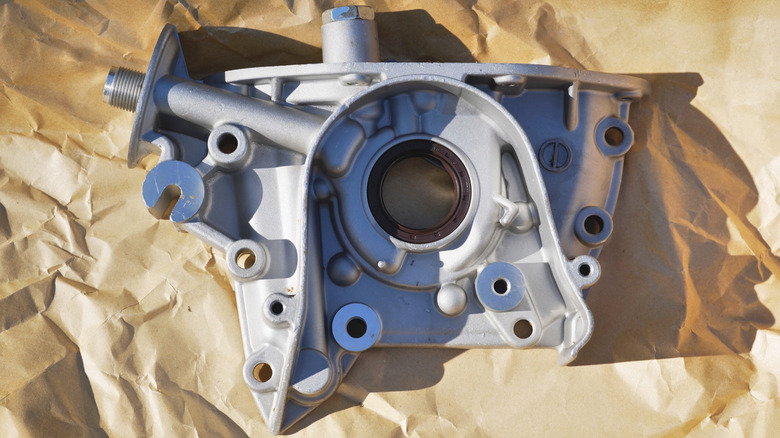
A car's oil pump plays a critical role in keeping the engine running smoothly. The pump circulates pressurized engine oil through the vehicle's lubrication system, sustaining critical components such as the crankshaft, camshaft, bearings, and valve train. The oil reduces friction between moving parts, limits wear, and helps carry a significant amount of heat away from the components it lubricates. If the pump fails to maintain adequate oil pressure, the engine can suffer severe damage, potentially requiring an expensive repair or even replacement.
Oil pumps are designed to last for years, and many can operate for over 100,000 miles with proper maintenance. That said, wear and tear, contaminated oil, sludge accumulation, and prolonged maintenance can affect an oil pump's performance.
Recognizing the warning signs of a failing oil pump early can naturally help prevent a major issue. Low oil pressure, unusual noises, and increased engine temperatures are among the most important symptoms to look out for when it comes to oil pumps. While these signs do not automatically mean a pump is failing, they warrant a prompt investigation.
Warning signs of a failing oil pump
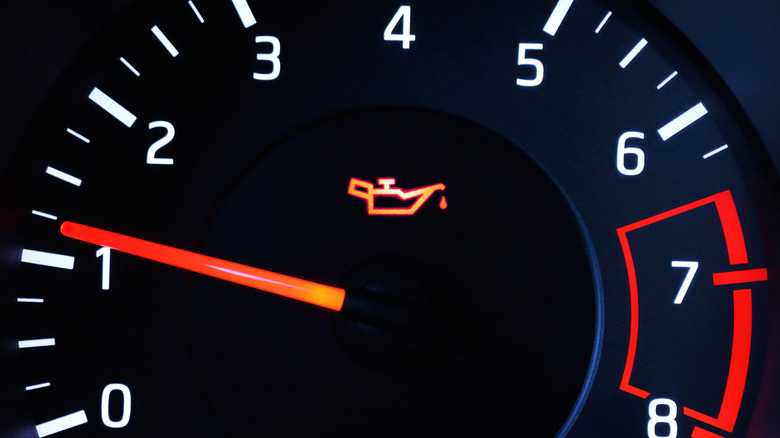
Possibly the clearest warning sign of an oil pump going bad is seeing an illuminated oil pressure light on your instrument cluster. This alert indicates that there may not be enough force pushing oil through your engine's components.
Unusual engine noises are another symptom of a failing oil pump. When the pump cannot deliver enough oil, components like valves and bearings may receive inadequate lubrication and start making contact with one another. This can produce ticking, whining, or knocking sounds, particularly during engine startup or idling. These sounds may grow louder the longer the issue is unresolved. That said, these noises can have different causes, so a proper mechanic's diagnosis is essential.
A faulty pump is not the only possible cause of low oil pressure. Insufficient oil levels, a clogged oil filter, unsuitable oil viscosity, or worn-out engine bearings can produce similar symptoms to a failing oil pump. A faulty sensor may also trigger an oil pressure alert.
Diagnosing, preventing, and fixing oil pump failure
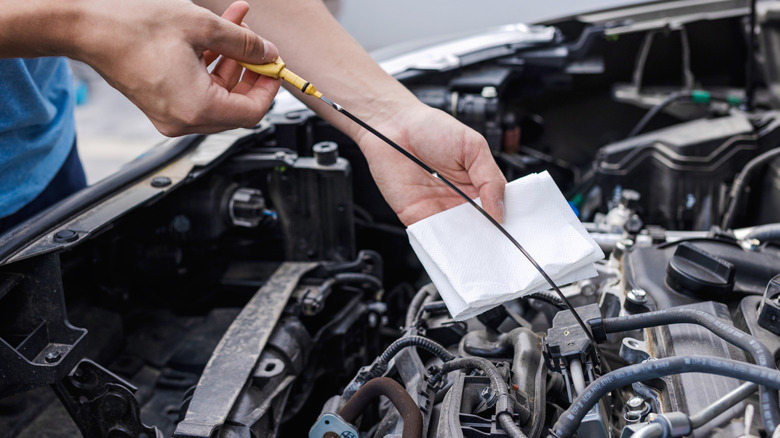
The first step in investigating a possible oil pump problem is to check the engine oil level. If the oil warning light comes on while driving, park on level ground and switch the engine off. Wait a few minutes and check the oil level using a dipstick (pictured above). Remove and wipe the dipstick before fully reinserting it into the metal guide tube. After removal, the oil line should sit between the dipstick's upper and lower markers, or reach the upper marker. If it's low, add the manufacturer-recommended oil and inspect for leaks or excessive oil consumption. If an oil pressure warning doesn't go away post top-up, do not continue driving.
A mechanic can check the oil pressure sensor and its wiring, inspect the filter and pickup strainer, and measure actual oil pressure with a mechanical gauge. If the problem persists, the mechanic may also need to inspect the pump's drive mechanism and the pressure-relief valve.
The best way to reduce the risk of oil pump failure is on-time preventive maintenance. Change the engine oil and filter at recommended intervals, use your manufacturer's suggested oil grade, and avoid running the engine with insufficient oil. Sludge buildup and contamination can also restrict oil flow, and prolonged operation under poor lubrication conditions can accelerate wear on the pump and other engine components, alongside increasing overheating risk.
If your oil pump is no longer fit for use, replacing it can be expensive because the job may require removing the oil pan or timing cover. The final cost depends on your car, parts prices, and labor, but you can end up paying $600 to over $2,000. Additional repairs may be necessary if oil starvation has already damaged some engine components.