

NHTSA Proposes Cyan Lights For AVs, And Other Conveniently Tesla-Specific Changes
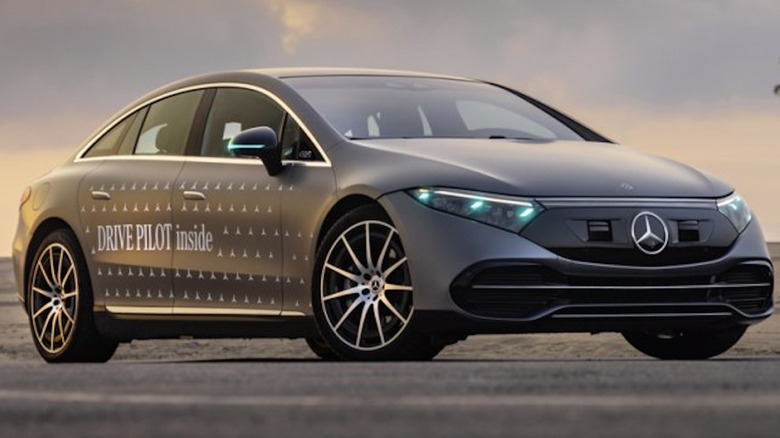
The U.S. National Highway Traffic Safety Administration (NHTSA) has announced more proposed changes to Federal Motor Vehicle Safety Standard No. 108, which governs vehicle lighting regulations. The latest changes, announced Oct. 23, include establishing equipment specifications for vehicles with automated driving systems, including displaying cyan lights to signal when an automated driving system is operational, and removal of the requirement for autonomous vehicles (AVs) with no driver controls to have manually operated turn signals, hazard lights, and headlight beam switching controls or telltales.
This goes beyond the announcement NHTSA made earlier this month that it would modernize U.S. headlight regulations, which addressed headlight glare on other road users, improving performance, updating testing and materials, and modernizing lighting technology with rules for LEDs, dusk sensors, auto high beams, and replaceable light sources.
The Tesla Cybercab is the only car on American roads that does not have physical driving controls like a steering wheel or pedals, and it's currently the subject of a safety probe because of that lack of traditional controls. These proposed changes to Standard No. 108 almost certainly have absolutely nothing to do with the fact that Tesla CEO Elon Musk has donated over $400 million to Republicans this election cycle.
Cyan lights are the big news, but the proposed changes go further
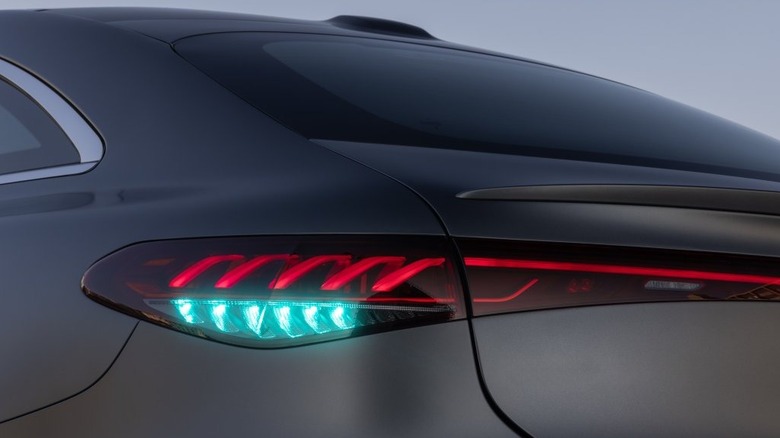
Mercedes-Benz got approval to use turquoise lights on its cars equipped with Drive Pilot, the company's Level 3 autonomous driving technology, in 2023. Mercedes made this decision to let other drivers and law enforcement know that a person is allowed to be distracted while their car is legally in control.
The new proposal will not require autonomously driving cars to have these cyan lights, but it legally establishes what NHTSA calls "an 'if equipped' standard" that regulates light color, as well as setting mounting and visibility rules for companies that choose to use them. If a vehicle is equipped with Automated Driving Systems marker lamps, at least one should be visible from each of the front, sides, and rear of the vehicle, at a proposed minimum height of 15 inches, and the lights can't be brighter than the parking lights.
Other proposed changes include a removal of the headlight testing requirements that currently require headlights in all vehicles to meet performance parameters when tested at 12.8 volts. It also aims to eliminate the current regulation that forces the uppermost light in a vertically oriented headlights to operate as the standard beam, since NHTSA has tentatively concluded that it's possible to provide adequate illumination for safe driving without requiring the low beam to be placed above the high beams.
More changes coming for self-driving cars without manual driving controls
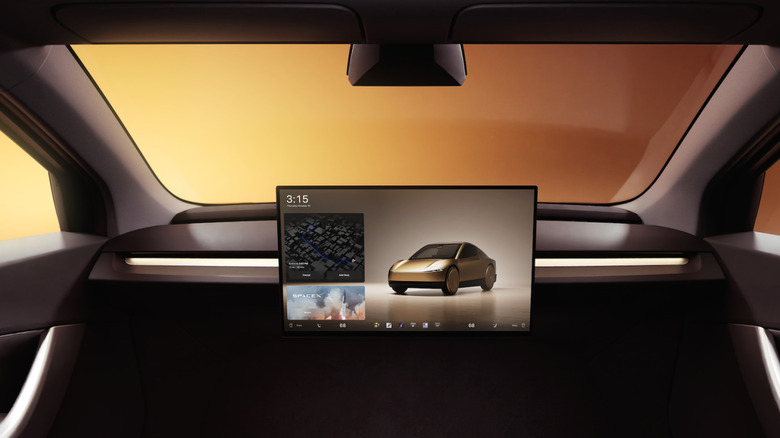
The proposal incorporates what NHTSA describes as "a process to remove unnecessary barriers to technological innovation while ensuring motor vehicle safety is not compromised." It seems the primary "barriers to technological innovation" in autonomous vehicles are the current requirement for all cars to have a turn signal operating unit, as well as the requirement for all vehicles to be equipped with a headlamp beam switching device.
Proposed modifications to the regulation would specify that these changes would only apply to vehicles that are not equipped with manually operated driving controls, so there would be no changes in regulations for vehicles with a steering wheel and pedals.
Finally, the proposal changes the requirements for telltales, which are the sounds and little lights on your dashboard that illuminate when your turn signal or hazard lights are activated, or when your low-beam headlights or high-beam headlights are activated. NHTSA now wants to specify that these telltales are only required for cars with a driver, which it defines as "an occupant of a motor vehicle seated immediately behind the steering control system." By this definition, an autonomous vehicle without a steering wheel cannot have a driver, so it shouldn't be required to have these telltales.
As autonomous vehicle technology comes closer to reality, it's likely that many other NHTSA regulations will have to change, so we will keep you updated as those changes roll out. For now, NHTSA wants your input on this crop of changes; there are several ways to do it, outlined in the Federal Register.