

Why The Hyundai Tucson Loses Almost 7 Cubic Feet Of Cargo Space In PHEV Form
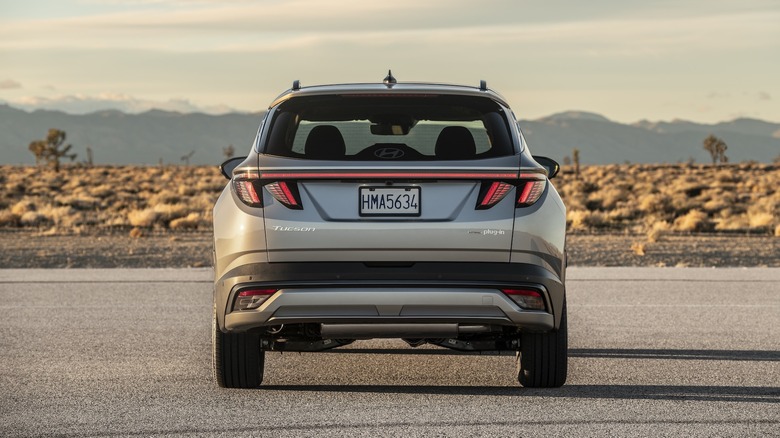
The current Hyundai Tucson compact crossover is available with a pure gas, regular hybrid, or a plug-in hybrid powertrain. If you need every last inch of cargo room, however, the fuel-efficient plug-in may not be the best choice because its cargo area is smaller by almost seven cubic feet. The reason is fairly obvious for those familiar with how electrified cars are built. It's because it has to accommodate the hybrid battery.
Per the official Hyundai specs, the internal combustion and hybrid versions of the 2026 Tucson both have 38.7 cubic feet of SAE-approved cargo room behind the second row of seats. The PHEV, however, has 31.9 cubes, a delta of precisely 6.8 cubic feet or almost 18%. For what we suspect is the same reason, the plug-in hybrid Tucson also gets 1.8 inches less rear legroom than the other Tucsons, measuring 39.5 inches instead of 41.3.
A new one is coming, but we're not getting the PHEV
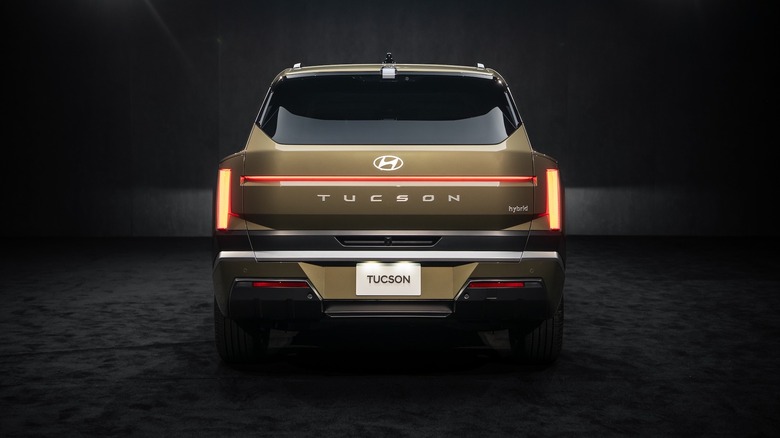
For what it's worth, Hyundai has already unveiled and is preparing to launch the all-new fifth-gen 2027 Tucson. In certain markets, that one will also be available in three powertrains: gas, hybrid, and plug-in. The latter, however, won't be sold in North America, reportedly due to low demand. On paper, though, the new U.S.-spec Tucson will apparently be bigger than the current one, boasting 41.7 cubic feet of cargo room per Hyundai's current literature.
In fairness to the current-gen Tucson PHEV, that lithium-ion battery packs 13.8 kWh worth of energy, delivering 32 miles of electric-only range. And, for what it's worth, the plug-in makes 268 total system horsepower compared to the 231 of the regular hybrid and 187 of the gas. If you're about that part-time EV life, seven or so cubic feet of cargo room feels like a small price to pay. Speaking of which, the 2026 Hyundai Tucson starts at $31,350, while the plug-in version goes for $42,325.