

Hyundai Tucsons Are Pretty Reliable, But These Are Some Of The Common Issues
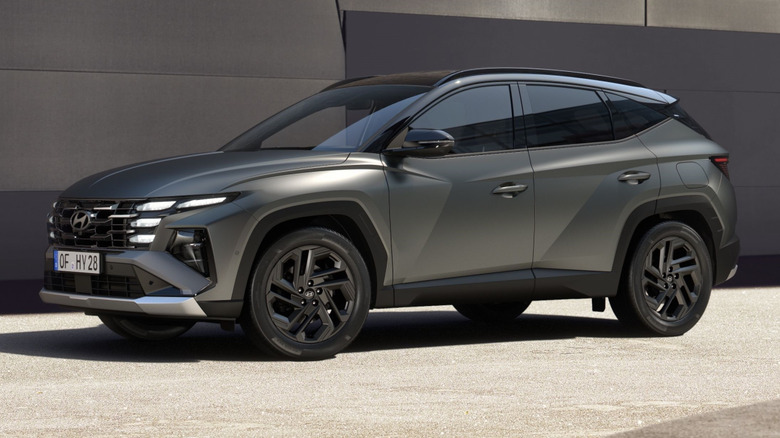
The Hyundai Tucson is generally considered a reliable SUV with precious few flaws. A 2023 survey by Consumer Reports highlighted the compact high-rider as one of the most reliable new SUVs under $30,000. And Tucsons aren't only dependable when new, as evidenced by the fact that they made Consumer Reports' list of the most reliable 3-year-old trucks and SUVs.
It's a view shared by J.D. Power, which previously named the Hyundai Tucson among the most reliable certified pre-owned SUVs around. And while there's still a perception that Korean brands aren't going to last very long, drivers regularly see Tucsons hit 200,000 miles on their original engines and transmissions, with proper maintenance and the right driving style. Heck, some have even exceeded 300,000 miles.
But their journeys can't all have been problem-free. Excessive oil consumption, along with engine and transmission problems, has been known to affect certain versions of the compact SUV, and air conditioning problems aren't uncommon, either. So, if you're considering buying a Hyundai Tucson, these issues are worth knowing about first.
Hyundai Tucson common problems and known faults
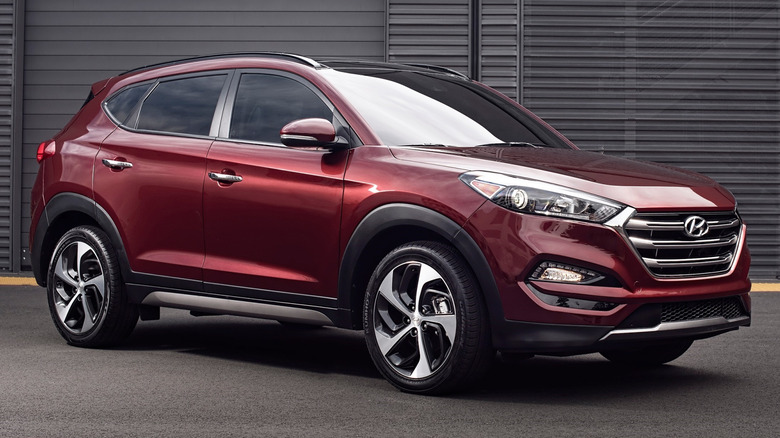
On the whole, the Hyundai Tucson's main problem area is the transmission, which suffers from a mix of issues, depending on the model year. For instance, owners of 2010 to 2015 Hyundai Tucsons have reported issues with the six-speed automatic transmission, including rough or jerky shifting between gears, complete loss of power while driving, gear slipping, and delayed shifting. In certain cases, the transmission may lock in a single gear and refuse to shift into park.
Worse still, 2016 to 2018 Tucsons have far more serious transmission problems, according to CarComplaints. Certain models with the 175-hp, 1.6-liter turbo-four had trouble with the seven-speed dual-clutch transmission (DCT), with owners complaining about acceleration hesitation, lurching from a stop, improper shifting, and refusal to go into gear. One other item that tends to give Tucson owners a headache is the engine — 2012, 2016, and 2017 Tucson models are the worst offenders.
The 2012 model, for one, was available with Hyundai's fault-riddled Theta II engine, which is infamous for connecting rod bearing failures caused by a manufacturing defect – an issue that can increase the risk of potentially catastrophic events such as engine fire, engine seizure, or complete engine failure.
Fortunately, reliability isn't as sore a subject when it comes to the fourth-generation Tucsons, whose gas models use the Hyundai Smartstream 2.5-liter engine. The dual-injected inline four-cylinder engine has so far earned praise for being more reliable than its predecessor, even if it isn't without its issues, which can include excessive oil consumption and leaking fuel injectors.
How much does it cost to maintain a Hyundai Tucson?
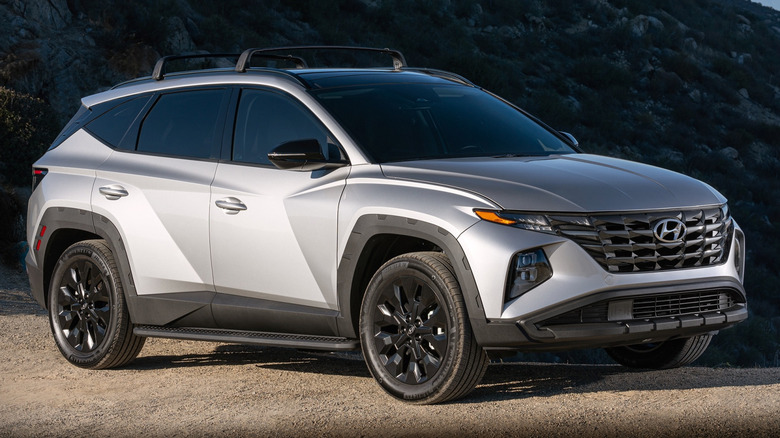
Whether you're thinking of buying a new or used model, the Hyundai Tucson's running costs are below the industry average for SUVs, with maintenance and repair costs totaling about $8,560 after ten years, per CarEdge. Service and repair bills are low initially, at about $349 in the first year, rising to around $1,283 by year 10.
If you're buying a hybrid model, Edmunds data shows maintenance typically costs $5,310 across a five-year ownership period. Edmunds also projects no repair costs until the fifth year of ownership, when they reach $700. Those figures are below what Kelley Blue Book (KBB) projects a new Tucson Hybrid will cost to maintain and repair over a five-year period, with maintenance at $6,624 and repairs at $741.
It's a considerable sum either way, but such spending on repairs and maintenance represents just over 12% of the total cost of owning a Tucson Hybrid, which KBB puts at $59,203. Along with repairs and maintenance, that figure covers costs such as depreciation, insurance, fuel, financing, taxes, and fees.