

How Used Engine Oil Can Get Re-Refined And Become Usable Again
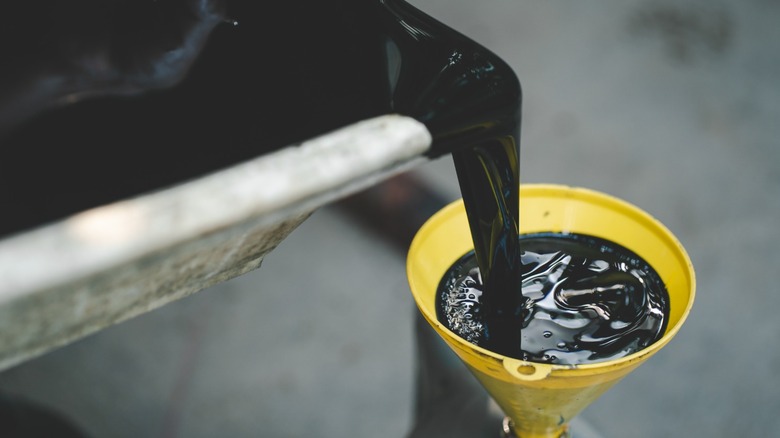
If you're like us, you've made several trips to AutoZone or some other auto parts store to turn in your used motor oil after changing it. Or maybe you've watched the techs at the quick-lube place drain your used oil into one of their big barrels. What happens to that oil? What do they do with it? Well, some of it — as much as 20% according to some estimates – gets refined and is used as motor oil or some other lubricant again. The end product is literally as good as new.
Safety-Kleen's Fallon Refinery can process 28 million gallons of used oil per year. It is turned into such products as base oil which can be further refined into motor oil, vacuum gas oil, V401 industrial fuels, and asphalt. That refinery runs around 80,000 gallons of used motor oil a day, which it refines into about 55,000 gallons of vacuum gas oil which, in turn, is used to make base oil.
The benefits of re-refining used motor oil speak for themselves. And getting your used oil recycled is easy. However, did you know it takes one gallon of used motor oil to make 2.5 quarts of usable lubricating oil? That may sound like a lot, but it takes 42 gallons of crude oil to make the same 2.5 quarts. That's not to say the rest of the oil is put to waste. It's normally used for other petroleum-based products. Still, it's apparent how much more efficient it is to refine used motor oil than crude.
How used motor oil gets refined
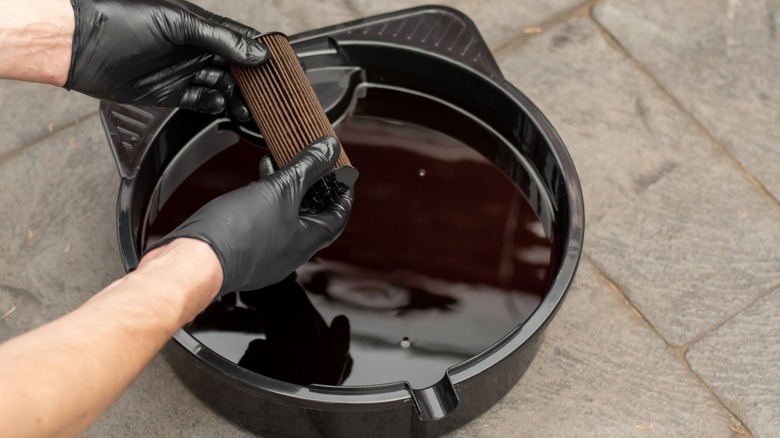
Dirty oil is pretty easy to spot. The dark or black oil that comes out of your oil pan during an oil change looks a lot different from the honey-colored semi-clear lubricant you poured into the engine. By that time, your car's oil has been contaminated with all kinds of gnarly things, like dirt, metal, water, and chemicals. Those contaminants can mess up your car, which is why we do oil changes. But that doesn't mean the hydrocarbon molecules that give the oil its lubricating qualities can't be salvaged. That's where refining comes in.
Re-refining requires several steps, some of which may vary by refiner. In Stay-Kleene's case, the first step is for the oil to be screened for any contaminating chemicals which would interfere with it being refined. Then, any water is evaporated away. Light fuels and glycol are then separated, and the glycol eventual gets refined into another product. Heavy and middleweight fuels are then stripped, resulting in fuels for industrial heating. Heavy materials are removed by a process called vacuum distillation, leaving heavy oil which can be used for applications like asphalt extenders. Hydrogen is used to purge what's left of the used oil of contaminants like sulfer, nitrogen, chlorine, and heavy metals. The end result is a super clean base oil. Once additives are blended in, it's ready for the shelf. According to the EPA, refined used oil is as good as the newly refined stuff.
Not all used oil gets refined
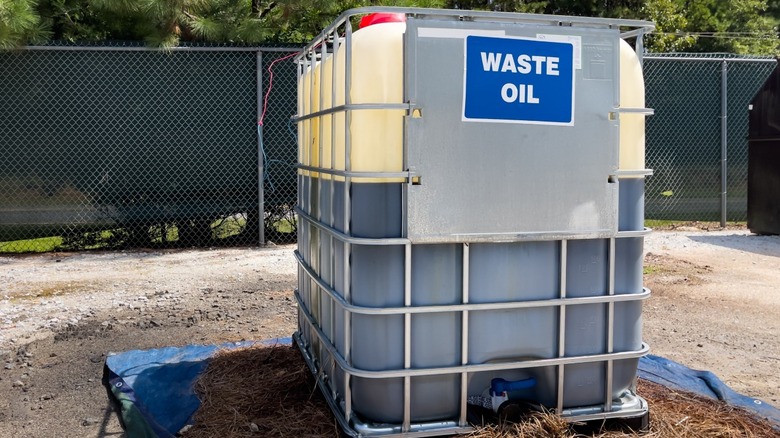
There are numerous benefits of re-refining used motor oil. In fact, it's the EPA's preferred way of recycling oil. But, as we stated before, some say only 20% of used motor oil ends up getting re-refined. Why such a relatively small amount? Not every oil collection spot is near a re-refinery. Some used oil gets mixed with harmful chemicals. The cost of re-refining can be high, especially when it comes to the initial investment in equipment and constructing facilities.
So, what happens to used motor oil that is not re-refined? There are other ways to recycle used motor oil, though they don't have all the upsides of re-refining. For example, contaminants can be removed from used oil on site. But without additives, the oil is not the same quality as brand-new, though it does last longer. Another way used oil can be recycled is that it can be used for feedstock at refineries, where it is made into other petroleum products. A lot of used motor oil is burned for fuel in industrial settings or as heating oil after water and other particulates are removed.
Unfortunately, a lot of used motor oil is dumped on the ground or in water or thrown in the trash. Just a quarter-gallon of oil can contaminate 250,000 gallons of water, and even oil dumped on the ground or in landfills can seep into ground water. So, don't dump it; just take it to a nearby auto parts store that will handle it.